
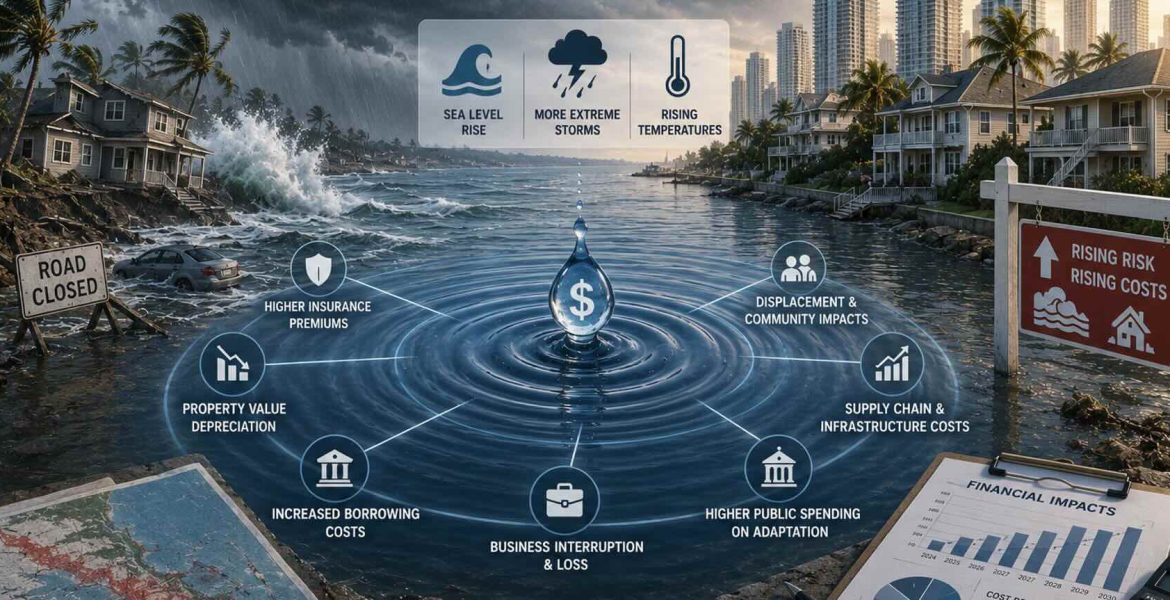
For years, coastal living was mostly associated with lifestyle benefits. Warmer weather, waterfront property, tourism growth, and strong real estate demand helped many coastal communities expand rapidly. That picture has started changing. Today, more homeowners are realising that climate risk affects far more than storm preparation alone. Insurance costs, property values, lending requirements, infrastructure spending, and long-term affordability are all being reshaped by environmental risk in ways that are becoming difficult to ignore. The financial impact tends to appear gradually at first. Then suddenly, entire communities begin feeling it at once.
Insurance costs are becoming part of everyday financial planning
One of the clearest shifts has been the rising cost of property coverage in higher-risk coastal regions. For many homeowners, insurance used to feel relatively predictable. Now premiums are increasing faster in some coastal areas than families anticipated, especially in locations experiencing repeated storm exposure, flood risk concerns, or rebuilding pressures. What’s difficult is that these increases affect more than monthly budgets. Higher premiums influence mortgage affordability, real estate demand, and long-term ownership costs. Some homeowners are discovering that even if they can technically afford the property itself, maintaining adequate coverage becomes much harder over time. That’s one reason conversations around property and casualty insurance have become more connected to broader economic discussions instead of remaining limited to the insurance industry alone. Climate risk increasingly affects entire local financial ecosystems.
The ripple effects extend beyond homeowners
One common misunderstanding is that rising climate risk only affects people living directly on the coastline. In reality, the financial effects spread much further. Local governments may face higher infrastructure costs tied to drainage systems, road maintenance, emergency preparedness, and rebuilding projects. Businesses operating in coastal areas often deal with rising coverage expenses as well. Rental markets shift. Construction costs increase. Lending standards may tighten in higher-risk regions. Over time, these pressures begin influencing migration patterns and long-term development decisions too. Some families choose to relocate entirely after repeated insurance increases or major storm events. Others remain in place but adjust spending priorities because housing-related costs consume more of their income than expected. The changes are rarely isolated to one category alone.
Climate risk is quietly reshaping real estate decisions
Real estate markets are also responding in more subtle ways than people sometimes realise. Historically, buyers focused heavily on location, amenities, and resale potential. Increasingly, insurance availability and long-term climate exposure are becoming part of those conversations too. A property may still look attractive during a short-term market surge while carrying significantly different long-term ownership risks underneath the surface. Some buyers are starting to ask harder questions around flood history, evacuation infrastructure, building resilience, and future insurability before purchasing. That shift changes how coastal property is evaluated financially. The conversation is no longer just “Can I afford this home today?” It’s becoming “Will this location remain financially manageable over the next twenty years?”
Insurance markets are adjusting faster than consumers expected
Part of what makes the current situation feel disruptive is how quickly insurance markets have been forced to adapt. Insurers are reevaluating catastrophe exposure models, rebuilding costs, regional concentration risks, and long-term claims trends simultaneously. In some areas, carriers have reduced exposure or increased pricing significantly because the historical assumptions they relied on no longer align with current risk patterns. Consumers often experience those changes as sudden premium increases or reduced coverage options, but the adjustments are tied to broader market recalculations happening behind the scenes. That’s part of why discussions around how insurance affects coastal areas have become more prominent recently. The conversation is no longer centred only on individual storms. It’s increasingly about long-term financial sustainability across entire regions.
The emotional side of climate risk often gets overlooked
Financial pressure is only part of the story. For many homeowners, coastal living carries emotional significance tied to family history, lifestyle, or community identity. Decisions around relocation, rebuilding, or absorbing rising costs are rarely purely financial calculations. That complexity can make planning harder. Families may feel torn between staying in communities they love and facing growing uncertainty around affordability or future risk exposure. Even people who remain financially stable often describe a growing sense of unpredictability around long-term planning. Climate risk affects more than physical property. It also changes how secure people feel about the future of the places they call home.
Why these conversations are becoming more important
The financial effects of climate risk are no longer theoretical for many coastal communities. Insurance markets are changing. Infrastructure costs are rising. Homeownership decisions are becoming more complicated. Long-term affordability questions are moving closer to the centre of retirement planning, relocation planning, and regional economic development conversations. None of this means coastal living suddenly disappears. Many coastal communities remain highly desirable places to live. But it does mean the financial realities surrounding those areas are changing faster than many people expected. The challenge going forward is not simply reacting to individual disasters. It’s understanding how climate-related financial pressures gradually reshape housing markets, insurance systems, and everyday economic decisions long before the next storm arrives.
Article edited by Mark Webber