
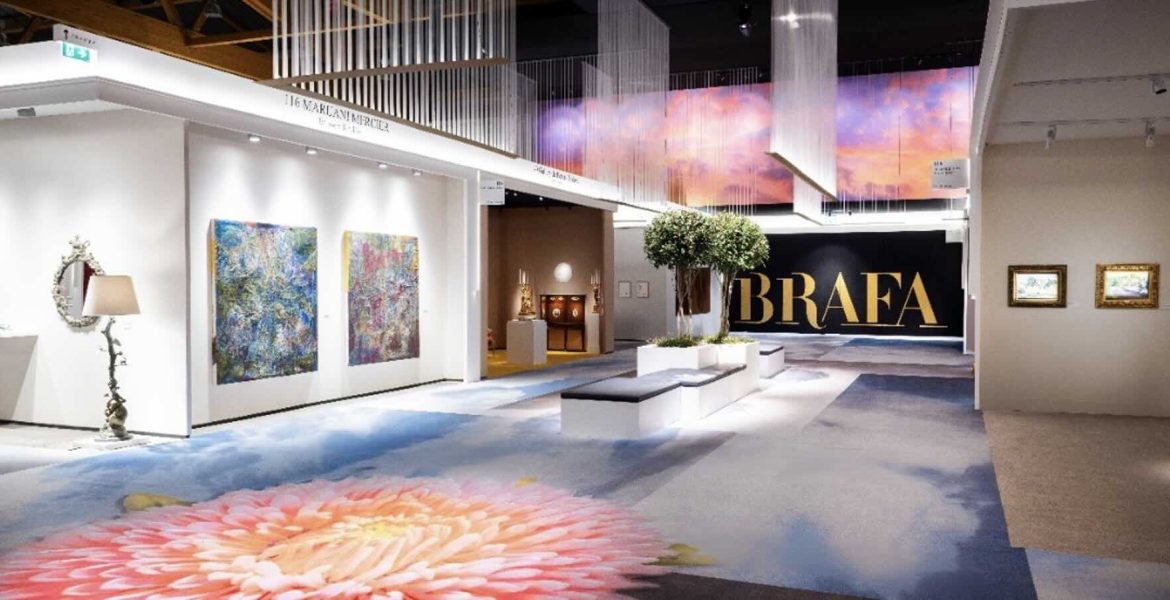
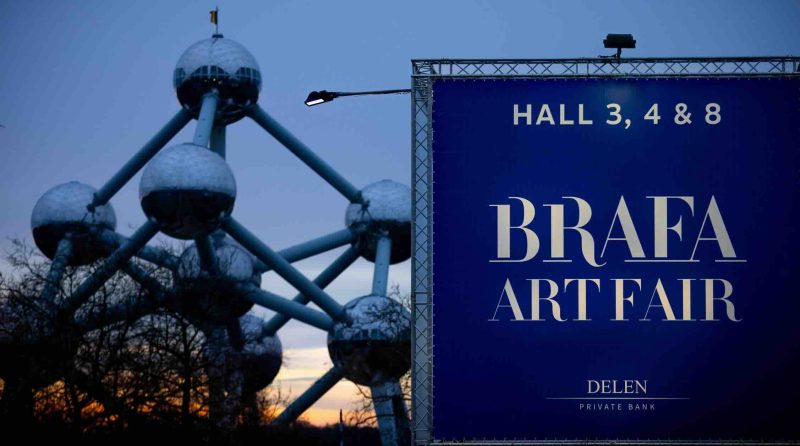
BRAFA has thereby affirmed its status as an unmissable event at the start of the international art calendar, whilst remaining true to its core identity for more than seven decades: eclecticism, quality and a resolutely Belgian conviviality. The event welcomed around 72,000 visitors, confirming last year’s record attendance, and is already looking forward to seeing you next year at Brussels Expo, from Sunday 24 to Sunday 31 January 2027!
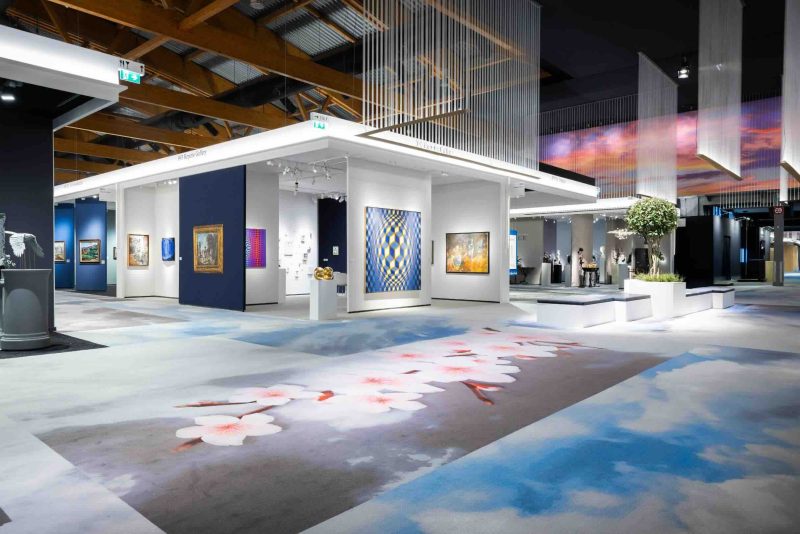
From the opening night onwards, the exchanges proved particularly dynamic, marked by numerous negotiations and several notable sales. Gallerists, collectors and visitors turned out in force in an atmosphere that was both discerning and welcoming, in which prestige was never tainted by intimidation. Although the most expensive works were not always the first to be sold, the number of sales was nevertheless very high. This confirms that collectors continue to enrich their collections, whilst new enthusiasts are also taking their first steps into the art world. From the very first days, the modern sector was a resounding success, with several galleries reporting advanced negotiations and significant sales. Van Herck-Eykelberg sold works by major figures such as Pierre Alechinsky, René Magritte and Dan Van Severen, as well as several pieces by James Ensor and Léon Spilliaert. The gallery described the experience of the Fair as “very positive,” confirming the ongoing market appeal of the big names in modern art.
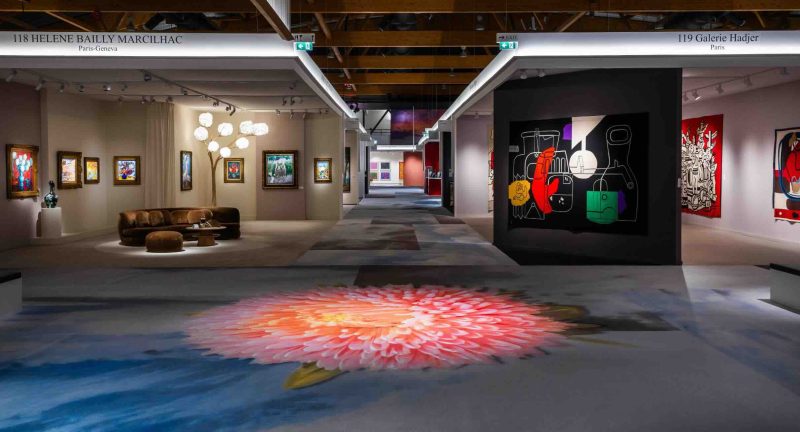
Martos Gallery was also particularly enthusiastic after its first participation. The New York gallery sold no fewer than ten works by Keith Haring, including one for $500,000, met many new collectors and has already expressed its intention to return next year. The contemporary sector was not left behind. Several works presented by Almine Rech found buyers, with prices ranging from a few thousand euros to over €250,000, demonstrating the Fair’s ability to combine artistic excellence and accessibility: a ceramic piece by Miquel Barceló (€80,000–100,000), a sculpture by Hans Op de Beeck (€70,000–90,000), a painting by Javier Calleja (€250,000–€275,000), a sculpture by Johan Creten (€70,000–€80,000), a work by Minjung Kim (€70,000–€90,000), a piece by Taryn Simon (€35,000 – 40,000), a painting by Vivian Springford (€150,000 – 200,000), a painting by Thu-Van Tran (€45,000 – 50,000) and a painting by Paul de Flers (€25,000 – 30,000). “This first participation at BRAFA was a very positive experience for the gallery… Brussels holds an essential place in the history of Almine Rech, and it seems natural to us to actively contribute to the vitality of the local scene”, says Gwenvael Launay, partner and director of the Brussels gallery.
Gallery Sofie Van de Velde also recorded sales of works by Jean Brusselmans, Raoul De Keyser, and Jozef Peeters, for prices ranging from €30,000 to €150,000, as well as numerous contemporary pieces starting from €3,400. Rodolphe Janssen Gallery made several sales at the Fair, including a drawing by Paul Delvaux (between €90,000 and €100,000), sculptures by Thomas Lerooy (€18,000 to €23,000), drawings and paintings by Matthew Hansel (€4,500 to €40,000), and paintings by Léon Wuidar (between €30,000 and €45,000). Galerie Alexis Pentcheff sold several works, including pieces by Bernard Buffet, Janssens and Gruau, as well as a sculpture by André Masson, the prices of which have not been disclosed. For his part, Samuel Vanhoegaerden, who had focused on a solo show devoted to Bram Bogart, said he was very satisfied with his participation: the exhibition was a great success with visitors and attracted new customers, mainly from Belgium, France and the Netherlands, who appreciated the quality of the works on display. Galerie Taménaga sold six works by the Italian artist Enrico Tealdi (born in 1976), for prices ranging between €7,000 and €15,000, as well as a couple of important works by Georges Rouault, including “Le Docte” and a study, acquired by Belgian private collectors. Meessen also enjoyed considerable success with the sale of approximately ten works by Lea Belooussovitch, bearing witness to the sustained interest in living artists at this edition.
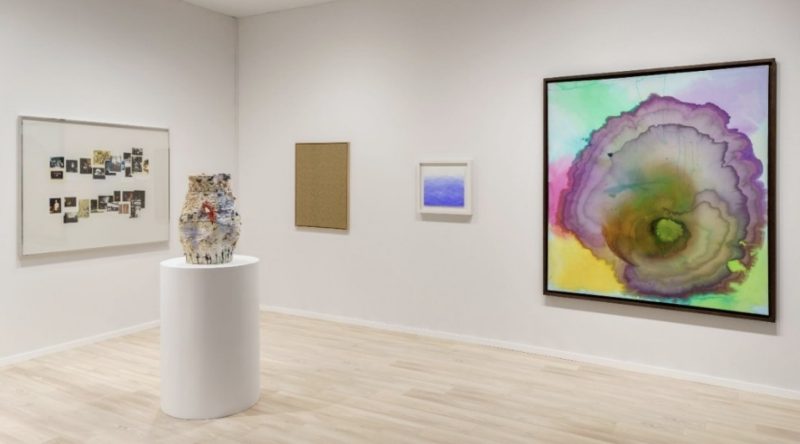
“This year’s Fair revealed a particularly robust and dynamic market. We offered works with a wide price range, from €10,000 to €500,000, covering a great variety of artistic periods. Whereas in previous editions our sales were more frequently in the low five-figure range, this year we were particularly encouraged by collectors’ confidence and their appetite for important pieces. The atmosphere was remarkably enthusiastic, with sustained engagement from visitors throughout the Fair,” says David Stern of the Stern Pissarro Gallery. “Among the artists whose works were sold this year are Renoir, Chagall, Hartung, Corneille, Delvaux, Zadkine, Calder, Herbin, Dufy and Lélia Pissarro.” Finally, De Brock has noted that it sold exclusively to new clients, mainly Belgian, with a few German collectors as well, an encouraging sign of audience renewal and a broadening of the collector base.
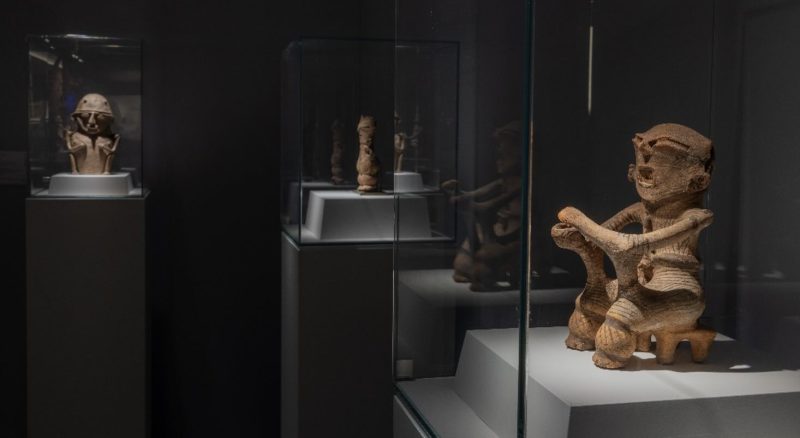
Non-European Art attracted considerable interest, with notable sales of ritual and sculptural pieces from Oceania, the Americas and Asia, ranging in price from a few thousand to tens of thousands of euros. At Galerie Flak, several works found buyers, including a Hopi Kachina doll (Arizona) for €35,000, a Maori ear ornament (New Zealand) for €4,000 and a Malangan ritual decoration (New Ireland, Papua New Guinea) for €10,000. Claes Gallery, which specialises in tribal art, presented a highly elegant collection combining African works with those of the contemporary American artist Kenneth Noland (1924–2010). This dialogue clearly bore fruit, with strong sales of African sculptures, such as a remarkable Yaouré mask from Côte d’Ivoire (€30,000 to €60,000) and a Dan Mano mask (nearly €150,000). A large painting by Noland also found a buyer for a very significant price. Galerie Hioco recorded very good sales this year, notably a Gandhara capital for €80,000. Grusenmeyer-Woliner was not to be outdone, selling a dozen major sculptures also from the Gandhara region, as well as a spectacular triceratops skull to a Belgian collector. Stone Gallery, which specialises in fossils and minerals, described this edition as the best fair it has taken part in to date. Serge Schoffel sold approximately forty pieces at various price points, including a spectacular pat-karo fibre mask representing the son of Tamandua, from a tribe in the state of Pará on the banks of the Rio Chiché in Brazil, and a Tonkongba mask from Guinea from the Jacques Kerchache collection. Non-European art continues to attract a relatively young clientele, particularly from the Netherlands, France, Germany, and central and northern Europe, generating new contacts and prospects for the Fair.
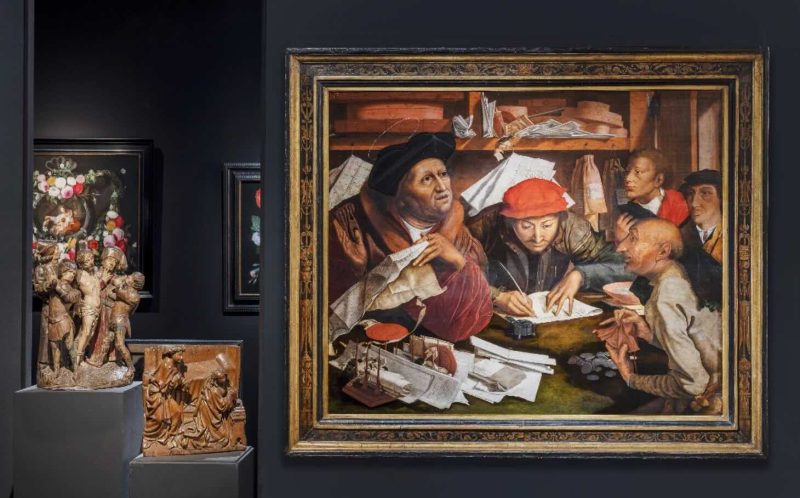
The Old Masters sector demonstrated both its strength and its vibrancy. Several sales were concluded at the preview, demonstrating collectors’ continued interest in high-quality Old Master drawings and paintings. The renowned Geneva-based dealer De Jonckheere reported particularly strong sales, notably to Belgian and French clients – including new collectors – and sold a pair of paintings by Van Kessel II and a work by a member of the Bruegel dynasty, to name a few. Klaas Muller, chairman of BRAFA and a renowned specialist in Old Masters, sold no fewer than thirteen paintings, including an impressive piece depicting Hunting Trophies by Frans Snyders and a charming double portrait entitled “Portrait of Lady Bagster with her Son”, painted in 1649 by Cornelis van Ceulen. His cousin Jan Muller Antiques, from the same dynasty of Old Master specialists, presented an exceptional painting, “The Triumph of the Eucharist”, by Jacob Jordaens. Probably conceived as a preparatory study for the monumental altarpiece now housed in the National Gallery of Ireland (Dublin), the work was sold on the first weekend of the Fair for approximately €200,000. Jan Muller also concluded the sale of other works, with prices ranging between €75,000 and €125,000. Arnaud Costermans sold a remarkable view of Venice by Apollonio Domenichini, better known as the master of the Langmatt Foundation, for approximately €80.000.
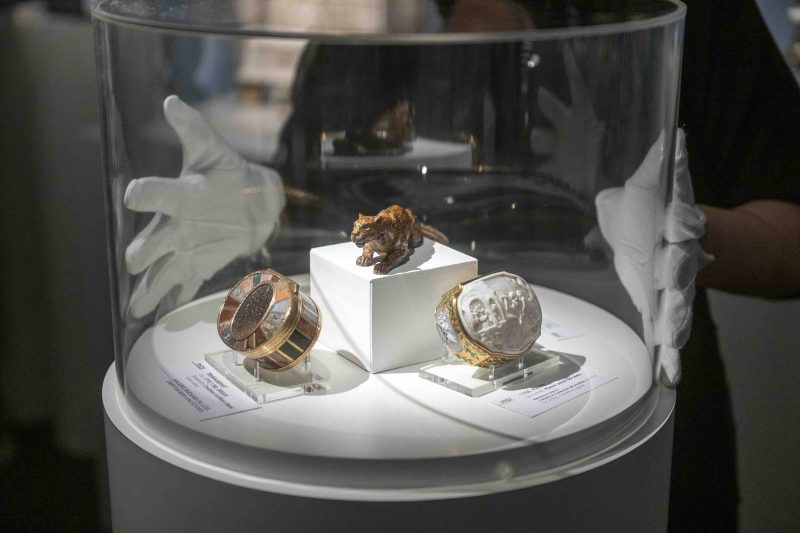
This diverse offering was rounded out by Goldsmithery and Antiques, with regular transactions and a considerable interest in rare pieces reflecting a market attentive to craftsmanship and the history of objects. Amongst the notable sales, d’Arschot & Cie presented an Augsburg cup in its catalogue at €40,000. Francis Janssens van der Maelen also shone at the close of this edition. By the middle of the Fair, he had already sold 30 art objects, mainly Art Deco silver, to a wide clientele from all over Europe, including Italy and Spain. 70% of them were new customers. Selling prices ranged from €30,000 to €50,000. Germany’s Christopher Kende, from Kunsthaus Kende, was very pleased, having sold several major pieces.
The Decorative Arts sector also attracted sustained interest. De Wit Fine Tapestries exhibited a fragment of tapestry entitled “Marie du Rosaire et donateur”, whilst Mearini presented a Presbyterian fence pillar. Both found buyers, and the former will likely be displayed in a Belgian museum. Galerie Haesaerts-le Grelle, founded by Laurent Haesaerts and Alexis le Grelle and specialising in late nineteenth and early twentieth century decorative arts, was very satisfied with the results of its first participation in the Fair. Their main piece, a copper and brass chandelier, circa 1904–1905, by Belgian designer Gustave Serrurier-Bovy, found a buyer and will take pride of place in a turn-of-the-century Brussels home. Laurent Haesaerts and Alexis le Grelle are very pleased because they have sold to a new clientele, including several people in their thirties: another good sign for the future. Hoffman Antiques from Stockholm made several impressive sales of neoclassical Scandinavian furniture. Vagabond Antiques from Petworth, UK, is also very proud of its first participation in BRAFA. It sold a large number of works of art and furniture. It says it is extremely satisfied with its new clientele on the continent. It presented a carved marble from Siena on a black marble base, priced at €18,000, as well as a Swedish mirror attributed to Burchard Precht.
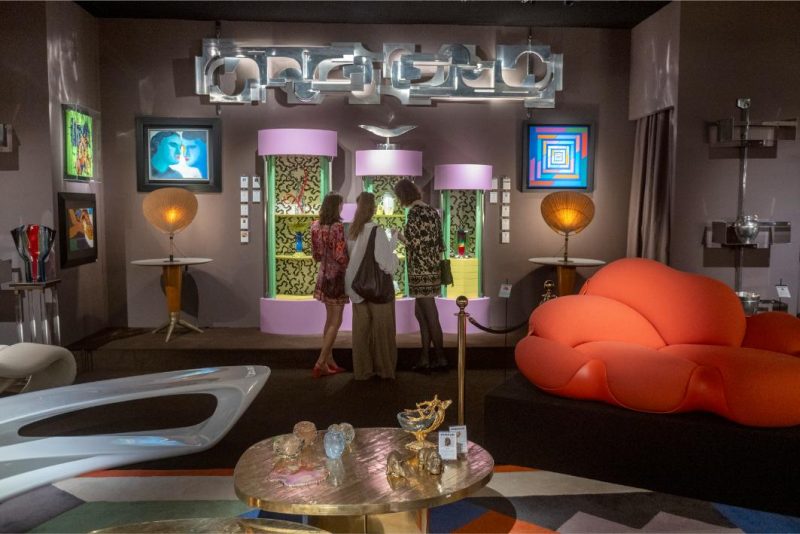
In the Design section, Galeria Bessa Pereira attracted a diverse clientele, including Portuguese and Belgian collectors as well as private clients, confirming the growing interest in design at the Fair. robertaebasta sold its remarkable cocoon chair by Louis Vuitton, ed. 8/8, for a price between €50,000 and 60,000. BRAFA also attracts the attention of European museums. A charming double portrait entitled “Portrait of Lady Bagster with her Son”, painted in 1649 by Cornelis Van Ceulen, was sold by Klaas Muller, BRAFA chairman, to the Musée du Luxembourg.
Other galleries also attracted the interest of museums. Galerie de la Présidence is in discussion with a notable museum on a work by Eugène Boudin. Finally, Galerie Jean-François Cazeau has proved that BRAFA is an ideal forum for exchanges with museums: their elegant painting by Kees van Dongen was selected at the Fair by the Van Gogh Museum in Amsterdam for their upcoming exhibition Van Gogh and the Fauves. The presence of museums at BRAFA highlights the close collaboration between the Fair, curators and museums, confirming BRAFA’s role as a privileged platform for artistic and cultural exchange. Although the Fair extends beyond Belgium’s borders, it retains its human dimension. Belgian, French, Dutch and Luxembourgish collectors were particularly well represented, alongside visitors and stakeholders from the art world from all over Europe, America and Asia. The quality of the welcome, the attention paid to visitors and the desire to offer tailor-made experiences were unanimously praised by gallery owners, who emphasised the relevance of the meetings and the quality of the exchanges.
Here, prestige is never at odds with proximity. Conversations flow naturally, discoveries are made without pressure, and art is shared in a spirit of openness and dialogue.
Discover more @ Brafa Art Fair
Article edited by Karl Brown