
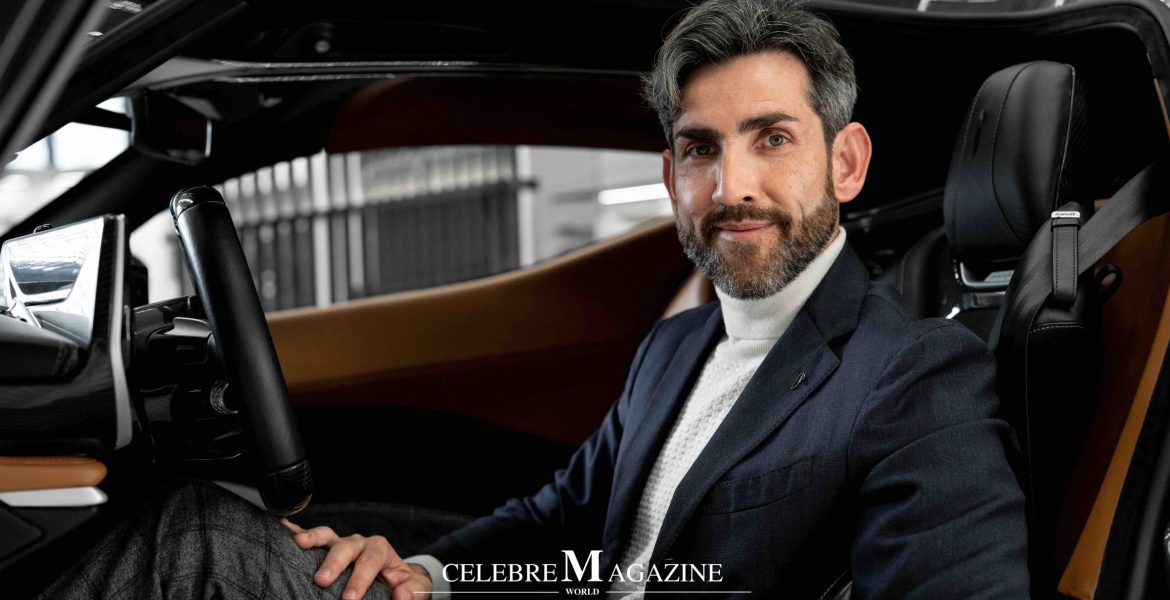
There is a moment, in those places where design meets vision, when the past ceases to be an archive and becomes living material. It is precisely what one feels on entering Pininfarina’s spaces in Turin, where the legacy of a name that has shaped the world’s automotive aesthetic now confronts a new ambition: to redefine the very notion of contemporary luxury. At the helm of this transformation is Paolo Dellachà, the new CEO and General Manager of Pininfarina, an executive with extensive experience in the automotive sector and an avowed passion for the cars born under the Pininfarina name, ever since, as a boy, he studied their silhouettes on the posters pinned to his bedroom wall. Today, at the head of the historic design house, his task is to steer the marque into new territories: architecture, yachting, product design, and new international markets, all while preserving the DNA that has made the brand iconic.
We had the opportunity to ask Mr Dellachà a few questions in order to better understand his vision and mission.
Mr Dellachà, what does it mean today to take the helm of Pininfarina?
It means taking on a considerable responsibility towards an extraordinary history, but also towards the future. Pininfarina is not merely a name tied to the automotive world: it is a culture of design, a conception of design as the synthesis of beauty, function and innovation. When you walk into a place like this, you immediately sense the weight of the past, but my task is not to be the curator of a museum. It is to turn that legacy into energy with which to build the next chapters. Of course, it is important to do so with respect, mindful that one is stepping into a history that has defined a global aesthetic. Yet respect alone is not enough. A certain clarity of mind is also required: the understanding that a brand like this cannot live off its own reflection. It must go on producing vision.
“Vision” is a much-used word. In your case, what does it mean in concrete terms?
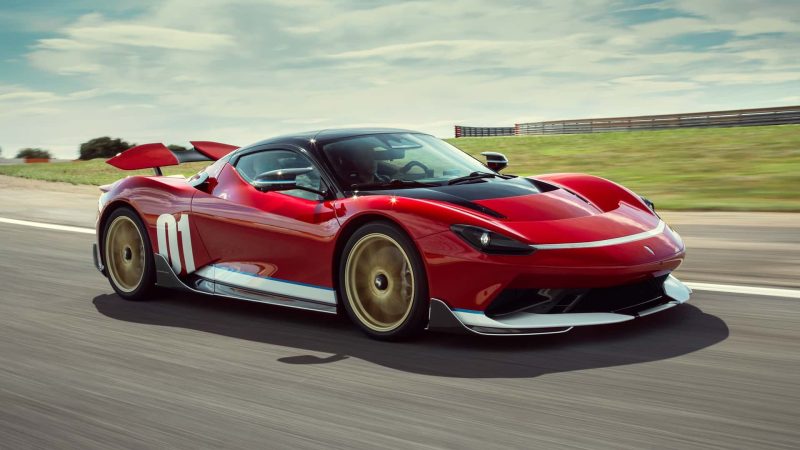
It means making decisions with a long horizon. Design is everywhere today, but not everything is relevant. Our aim is not to have a presence in many fields, but to have a coherent one. When Pininfarina takes on a project, it must be recognisable, not through some superficial style, but through an approach. A chair, a yacht, a tower or a hypercar must all speak the same language. Our identity is far broader than people often imagine. Naturally, we are associated with iconic cars, but today we express ourselves across a great many fields.

So what is the Pininfarina approach today?
It has remained remarkably stable over time. We are talking about proportion, balance, formal purity, and elegance. Almost classical elements. What changes is the context. Today, we work far more on spaces and experiences: architecture, hospitality, and branded environments. The point is no longer simply to design something beautiful, but to create a coherent system of sensations.
Is this shift towards experience a response to the new concept of luxury?
I would say so. Contemporary luxury is not accumulation. It is a selection. It is a perceived quality. People want to live with objects and in places that tell a story, that have a strong identity, though never a loud one. Above all, they are looking for authenticity. For us, that means designing less, but better.

How does such an iconic brand evolve without betraying itself?
That is probably the most delicate challenge of all. The easiest mistake would be to chase trends. But trends age very quickly. Pininfarina must go on being contemporary without becoming ephemeral. For me, design must have a quality that feels almost inevitable: it has to look right even many years later. True luxury today is longevity. It is creating something that retains its desirability, relevance and coherence over time.
In this landscape, how much does being Italian count?
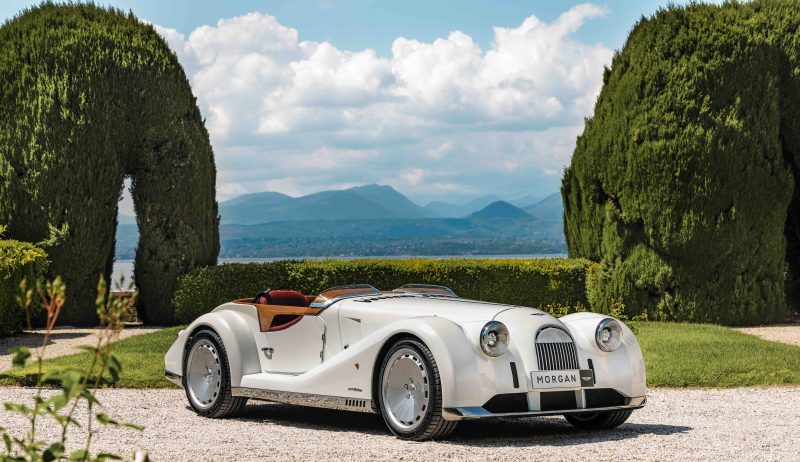
It counts a great deal, but not in the stereotyped sense. Italian design has a unique capacity: we know how to combine industrial culture, emotion and craftsmanship. It is not only aesthetics; it is the strength of the project itself. This is something that, in international markets, is still perceived as distinctive. In that sense, Italian design still holds an enormous competitive advantage.
What is your own personal relationship with the idea of beauty?
For me, beauty is not decoration. It is balance. When a project is truly successful, it produces a sense of naturalness: nothing seems forced, nothing seems superfluous. I believe that is the most authentic definition of elegance.
What value does technological innovation hold in your work today?
An enormous value, but technology cannot become an end in itself. Technology is an extraordinary tool for improving performance, sustainability and the user experience. Our task is to humanise innovation and to make technology almost invisible, integrating it in a natural way. The user should perceive harmony, not technological effort. If design loses its central role, the product becomes cold and anonymous. AI, for instance, can accelerate processes and simulations. But intuition, the sense of proportion, the ability to recognise the emotion in a line: that remains profoundly human.

You come from a strong automotive background. How much does it shape your leadership?
A great deal. The automotive world is a hard school: deadlines, quality, engineering, execution. It taught me that creativity and discipline are not opposites. On the contrary, the finest results are born precisely from the tension between them. I bring that mindset to Pininfarina: great visionary freedom, but with a keen focus on concrete implementation.
Which markets are you watching most closely?
The Middle East, Latin America and Asia represent areas of strong growth. They are markets that show a great sensitivity towards Italian design and a rising demand for premium projects with a strong identity. But what truly interests us is not chasing numbers: it is finding partners who share our vision.

Pininfarina is approaching its centenary. How do you envisage this milestone?
Not as a celebration of the past, but as a manifesto for the future. The centenary will be the occasion to show how a historic brand can reinvent itself while remaining true to who it is. I should like it to be seen as the beginning of a new chapter.
If you had to define your idea of the Pininfarina of the future in three words?
Beauty. Courage. Vision.

Our thanks go to Mr Paolo Dellachà for this exclusive interview, granted to the readers of Celebre Magazine World and to all lovers of the world bearing the Pininfarina Signature. Thank you.

Article edited by Massimo Basile
Editor & Founder