
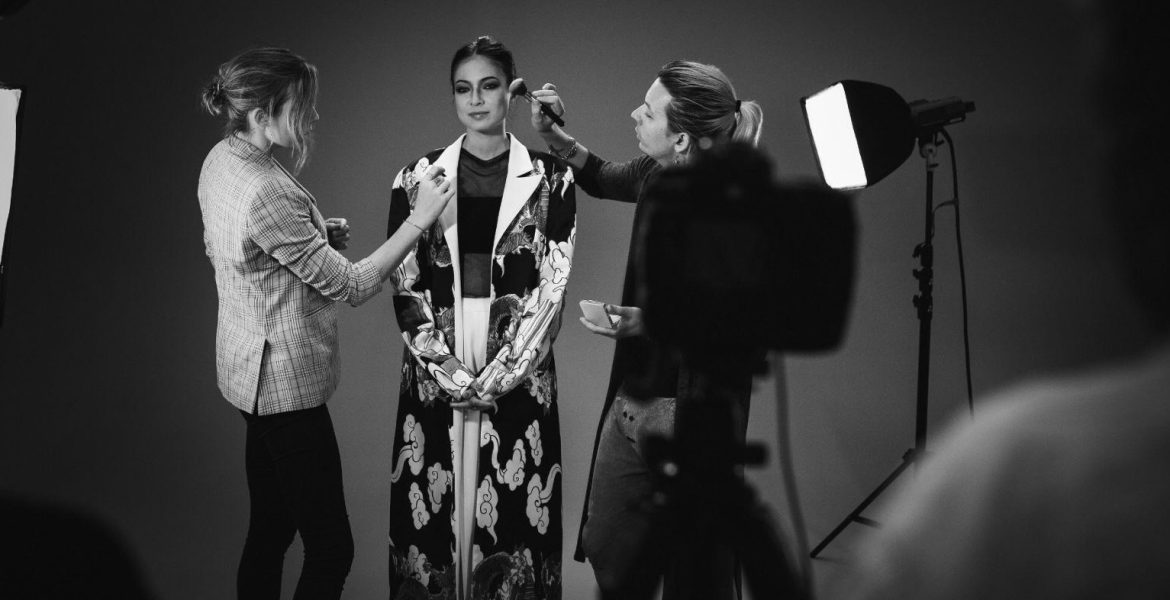
Fashion is not just about the clothes we wear. It is a way of speaking without words, a visual language built from colour, texture, and attitude. Some people talk about fashion, others live it quietly, but the people who make it come alive on camera are the ones who teach us how to see it differently. Photographers have always been the storytellers, the ones who give clothes a soul, a personality, and a place in the world. When we flip through magazines, scroll online, or even notice a stylish person on the street, much of what we feel comes from the photographers who made us look twice, made us pause, and made us feel something.
Where fashion photography began
In the early twentieth century, fashion photography was stiff and formal. Images looked like careful portraits, or illustrations frozen in time. Clothes were displayed, yes, but they did not speak. It was not until photographers began experimenting with movement, light, and emotion that fashion became more than an object. Suddenly, a photograph could tell a story, capture a moment, and make the viewer imagine themselves in it.
Carrie Mae weems and fashion through identity
Carrie Mae Weems has been a powerful voice in photography for decades, using her camera to explore identity, culture, and social issues. While she is often celebrated for her conceptual and narrative work, her influence on fashion imagery is undeniable. Weems brings a storytelling approach to fashion, showing clothing not just as decoration but as a marker of personal and cultural identity. Through portraits that often feature Black women and men in striking, stylized settings, Weems highlights how fashion communicates more than style; it conveys history, aspiration, and individuality. Her images challenge the traditional fashion narrative, insisting on visibility and depth. Including Weems in the story of fashion photography reminds us that the visual language of style has always been shaped by diverse perspectives, and that women of color have been central to expanding what fashion photography can say.
Miyako Ishiuchi and the subtle art of fashion
Miyako Ishiuchi is celebrated for her deeply personal and textured photography, often exploring memory, objects, and the passage of time. In the context of fashion, her work reminds us that clothing carries stories and histories, not just trends. By photographing garments, accessories, and the people who wear them with extraordinary intimacy, Ishiuchi reveals fashion as a living, breathing element of human experience. Her approach is quietly revolutionary. She doesn’t simply capture what someone wears; she captures how a person exists in their clothes, the traces of life embedded in fabrics, and the emotions woven into each image. Including Ishiuchi in a discussion of fashion photography shows that the language of style is enriched by photographers who see the depth beneath the surface.
Diane Arbus: beauty of the unusual
Diane Arbus did not work in fashion in the traditional sense, but her influence is felt throughout the industry even today. She had an extraordinary ability to notice what others might overlook: the unusual, the quirky, the moments that feel raw and real. Her portraits often captured people living on the edges of society, and in those images, she revealed a kind of beauty that is entirely unconventional. In fashion, Arbus’s perspective is a powerful reminder that true style does not always follow rules or fit neatly into expectations. The most compelling images are often the ones that surprise us, challenge our assumptions, or show something unexpected. Arbus encourages photographers to slow down, observe closely, and look for moments of authenticity. Her work shows that beauty can exist in imperfection and that individuality can be more striking than perfection. By embracing the unusual, fashion photography can move beyond surface aesthetics and tell stories that are deeper, more human, and unforgettable. Even designers, stylists, and models who work within high-fashion settings can draw inspiration from her vision, understanding that it is personality, emotion, and character that give clothing its ultimate power on camera.
Gordon Parks: intersection of fashion and culture
Gordon Parks was not only a trailblazer as one of the first Black photographers for major publications, but he also brought a unique perspective to fashion photography. His images were more than clothes on a model; they told stories about identity, culture, and society. Parks had an incredible ability to combine elegance with raw emotion, capturing both glamour and the lived experience of his subjects. Working for magazines like Life and Vogue, Parks photographed celebrities, musicians, and fashion models, often highlighting their individuality and personality. His work expanded fashion photography beyond mere display of clothing to a platform where culture and style intersected. Through his lens, fashion could be daring, socially aware, and deeply human. Including Parks in this story reminds us that the photographers shaping fashion’s visual language were diverse, each bringing their own lived experience to the art of image-making.
Annie Leibovitz: stories behind the style
Annie Leibovitz is a master at transforming fashion photography into narrative art. Her images are never just about what someone wears; they are about who that person is, where they are, and the story they carry. Leibovitz showed that fashion could be deeply personal, capturing moments that are intimate without being intrusive, bold without feeling forced. Every outfit in her photographs has context, and every gesture, gaze, or background choice adds layers of meaning. Her work reminds us that fashion is inseparable from identity. A dress is more than fabric; it is a symbol of character, confidence, or mood. Leibovitz’s approach teaches photographers to look beyond the clothing, to explore the human being wearing it, and to create images that resonate emotionally. The best fashion photography, according to her example, is about storytelling as much as style.
Edward Steichen: first touch of art
Edward Steichen understood that fashion could be more than documentation. He believed it could be art, and his images reflect that belief in every frame. Steichen’s photographs were elegant, moody, and often cinematic, full of atmosphere that seemed to extend beyond the edges of the print. He did not simply show clothing; he created moments that felt alive. You could sense the air around the model, feel the texture of the fabric, and sense the subtle rhythm of the scene. What Steichen taught photographers was that fashion photography is about context as much as style. The pose, the light, the setting, even the shadows, all contribute to a story. Clothing is transformed when captured this way, becoming part of a larger narrative about movement, space, and emotion. Steichen’s work continues to remind fashion photographers that elegance is not just in the garment but in the entire visual world surrounding it.
Richard Avedon: emotion in motion
Richard Avedon brought energy and feeling into fashion photography in ways that were entirely new. He was fascinated by movement, by the fleeting expressions people make when they think no one is looking. In front of his camera, models did not just stand or pose; they ran, jumped, twirled, laughed, and sometimes even cried. Avedon showed that fashion is never static. It is alive, it is dynamic, and it is inseparable from life itself. Looking at his work, you can almost hear the music that might have been playing during the shoot, feel the wind brushing past the model, and sense the immediacy of the moment. He made fashion feel human, spontaneous, and real. Avedon’s legacy teaches photographers that capturing a fleeting emotion or movement can make an image unforgettable. The garments tell one story, but the energy and feeling behind them tell another, and he proved that both are essential.
Helmut Newton: power of provocation
Helmut Newton challenged the conventions of fashion photography in ways few others dared. His work could be shocking, playful, or daring, but it always demanded attention. Newton pushed boundaries, forcing viewers to reconsider ideas of glamour, beauty, and desire. His photographs were not passive displays of clothing; they were provocative narratives that made fashion feel alive, dangerous, and thrilling. Newton’s genius was in his audacity. He understood that a photograph could unsettle, excite, and captivate at the same time. His models often exuded strength, mystery, or rebellion, and the images were layered with subtext that went beyond surface aesthetics. For photographers, Newton’s work is a lesson in courage: fashion is not just about prettiness, it is about attitude, presence, and the ability to create tension and intrigue in a single frame.
How photographers shaped celebrity fashion
Fashion photography does not exist in a vacuum. Many of the images that define how we see style today were also deeply connected to the people wearing the clothes. Photographers like Richard Avedon and Helmut Newton did more than capture outfits. They captured personalities. Their work transformed celebrities into style icons. Consider how Avedon photographed models and actors with movement, emotion, and narrative. Those images helped define the red carpet culture we follow today. Newton’s bold and provocative shots influenced how stars posed, dressed, and presented themselves to the world. Even Diane Arbus, known for her unconventional portraits, showed that celebrity fashion could be about character and story, not just glamour and perfection. These photographers demonstrated that fashion is not just what you wear. It is how it interacts with presence, personality, and public perception. The visual language they developed continues to shape how magazines, campaigns, and social media frame celebrities in style, showing that behind every outfit there is a story waiting to be told.
Why their legacy matters
These photographers did not just take pictures. They shaped how we think about fashion. They taught us that a single photograph can hold a mood, a story, and a feeling all at once. They challenged conventions and encouraged risk-taking. They remind us that clothes do not exist in isolation. They exist in culture, in movement, and in emotion.
Fashion photography today
The influence of Steichen, Avedon, Newton, Diane Arbus, and Leibovitz is still visible in every corner of fashion. When we scroll Instagram, leaf through magazines, or notice a striking ad on the street, we are seeing echoes of their vision. Their work is a reminder that fashion is about curiosity, imagination, and the courage to see the world differently. Every photographer who picks up a camera today is building on the foundation they created. They are free to experiment, to provoke, to delight, and to tell stories that are fresh and personal. Fashion photography is alive because of them, and it continues to evolve every day. Looking at their work, we realize that fashion is more than clothes. It is about people, stories, and moments captured forever in light. And thanks to these visionaries, we can see that beauty, style, and expression have no limits.
Article edited by Mark Webber