
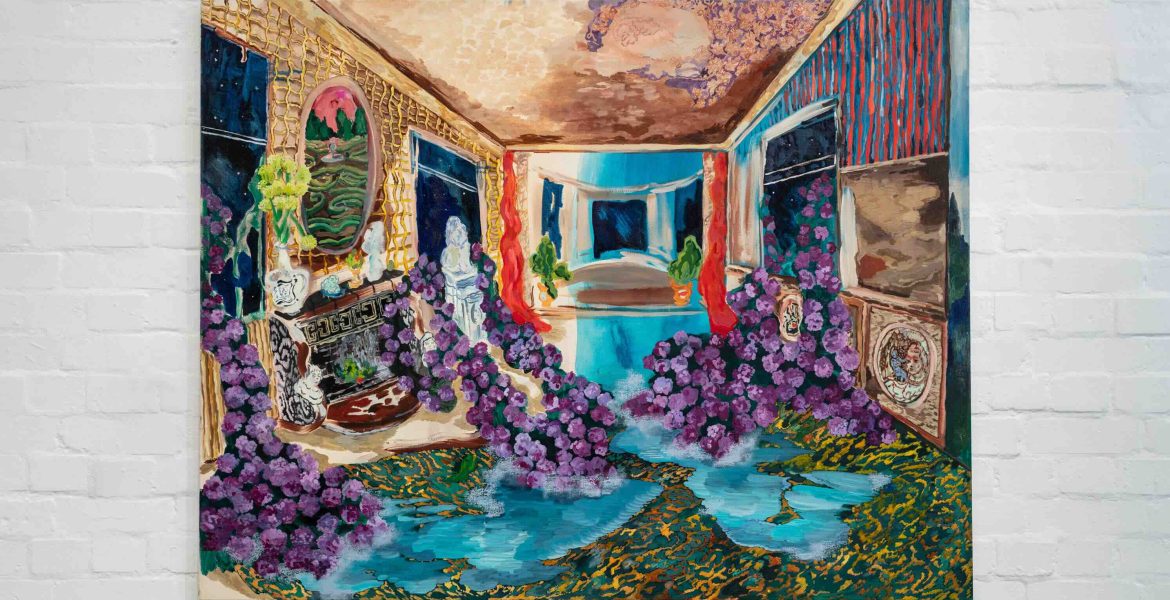
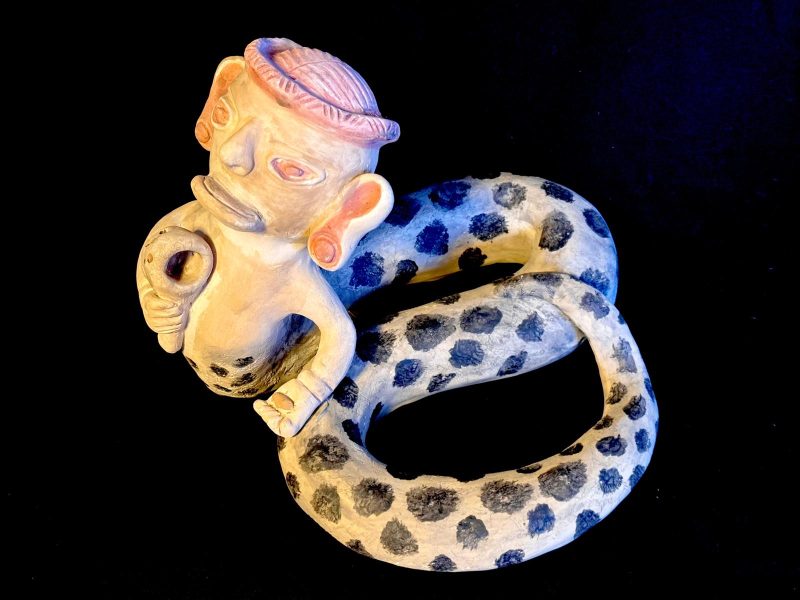
Among the exhibitions in the CFA (Conceptual Fine Arts) Gallery Residency Programme 2026 in Milan is one resulting from a collaboration between CFA itself and Elizabeth Xi Bauer in London. It is called “No Hay Banda” and is a group exhibition curated by Maria do Carmo M.P. de Pontes, showcasing works by Brazilian ceramicist Vandria Borari, Slovak multimedia artist Petra Feriancová, Finnish painter Karoliina Hellberg and Italian artist Sofia Silva.
This exhibition brings together four artistic practices that treat silence not as an absence, but as a fertile creative condition: ranging from ceramics to painting and photography, these works arise from small gestures carried out with patience, without seeking to be spectacular. Rather, they are based on attention, listening, observation and allowing time to take its course. It is an exhibition with a message that, if not provocative, is at least thought-provoking, where doing little or even nothing is interpreted not as a withdrawal but as an essential act of expression.
The title of the exhibition draws on the iconic scene from David Lynch’s film “Mulholland Drive,” where the line “No hay banda! And yet we hear the band. It is an illusion” clearly exposes the illusion of performance, framing it as the central pivot around which the worlds depicted by the director – the real, the dreamlike and the imagined – revolve. This is also due to the human tendency to believe in deception, or at least to succumb to it emotionally, even after being warned that it will be nothing but a deception. Fuelled by this spirit, the exhibition transforms silence into a space where attention is heightened by the value of time devoted to contemplation, presenting stillness and restraint as conscious artistic choices.
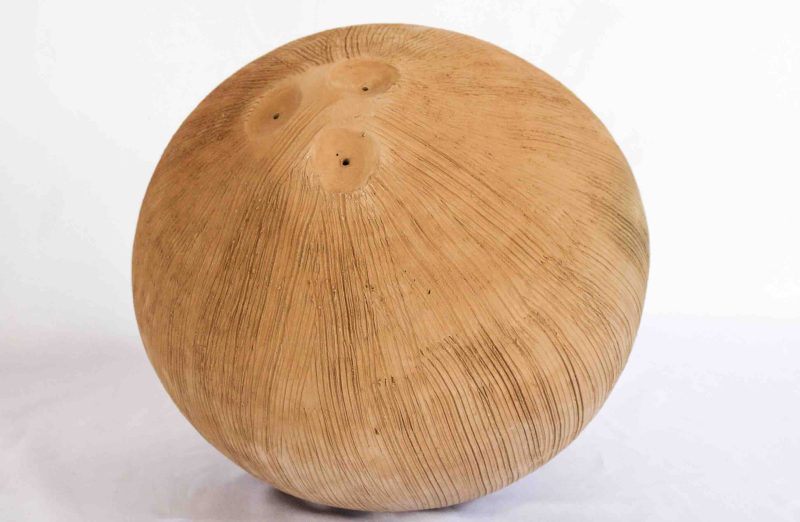
Vandria Borari is an Indigenous ceramic artist from the Borari territory in Alter do Chão, in the Brazilian Amazon. Her practice is rooted in ancestral systems of knowledge and the longstanding relationships between humans, plants and the forest, understood as a living organism. For No Hay Banda, she presents “Yupirungáwa,” which means ‘origin’ in the Nheengatu language, a body of work developed through a dialogue between indigenous knowledge and archaeobotanical research. It comprises four monumental ceramic sculptures depicting four different types of Amazonian seeds, modelled on botanical finds unearthed at archaeological sites in the Lower Amazon, enlarged to human scale and finished with pigments that evoke the charred texture of the discovered seeds. These works invite the viewer to learn from the rhythm of nature through a body of work that highlights the forest as an interdependent system shaped by time and the passing down of knowledge through the generations.
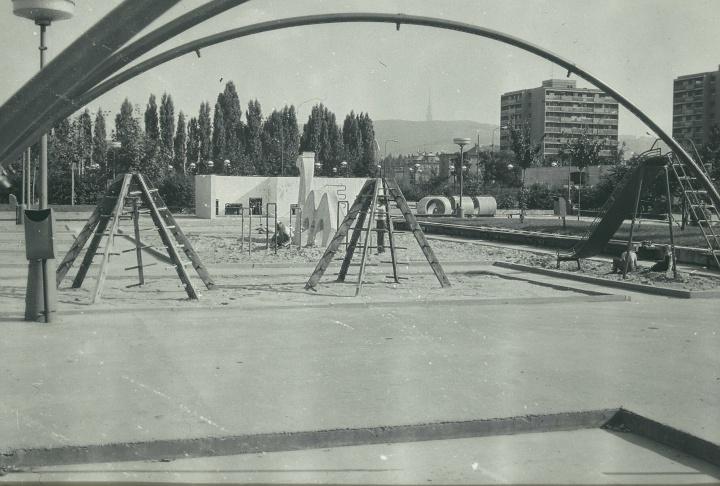
Petra Feriancová’s “Playgrounds” presents itself as a quiet reflection on the observation of lived experience. Developed over many years, the project brings together archival material and photographs, returning to public playgrounds as places where memory, action and abandonment intersect. The series spans several generations: some images were taken by Petra’s father in the 1970s, whilst others were taken by the artist herself more than forty years later. Once spaces for play, these structures appear stripped of their original function and transformed into stages for reflection rather than activity. For Feriancová, the playground becomes a place for wandering and mindful observation, experienced differently at various stages of life, including motherhood; she eschews linear narratives, allowing meaning to emerge instead through accumulated observation and the slow passage of time.
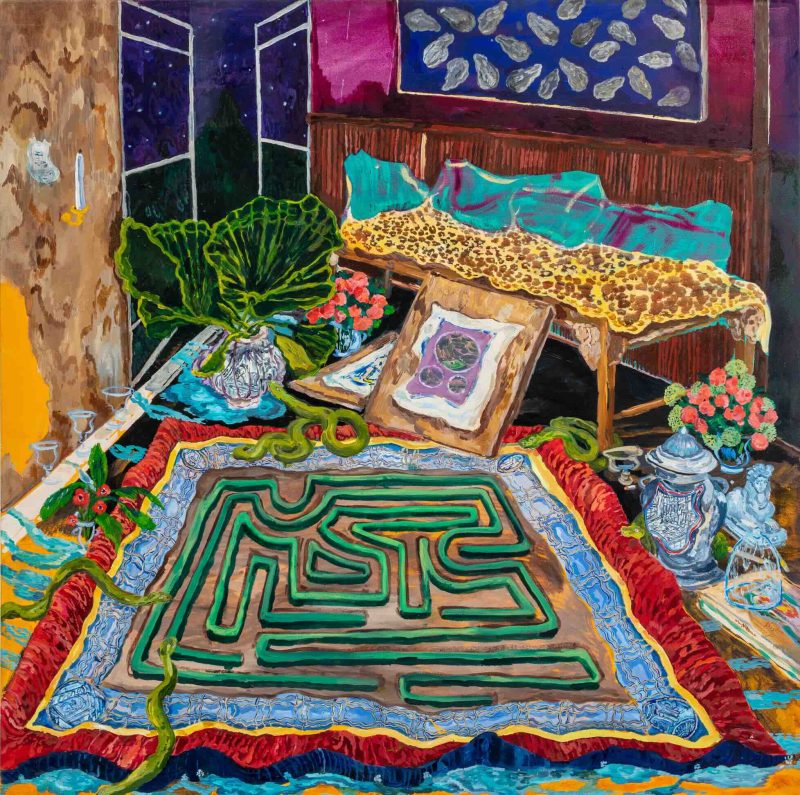
Karoliina Hellberg’s work immerses the viewer in a pictorial universe shaped by repetition and resonance. Her paintings interweave dreamlike narratives with the fabric of everyday life, drawing on motifs such as interiors, plants, animals and fabrics that oscillate between memory and imagination. Working in the space between fantasy and memory, Hellberg employs intense colours and a confident brushstroke to blur the distinctions between foreground and background, flatten perspective and subtly destabilise the way we move through the image.
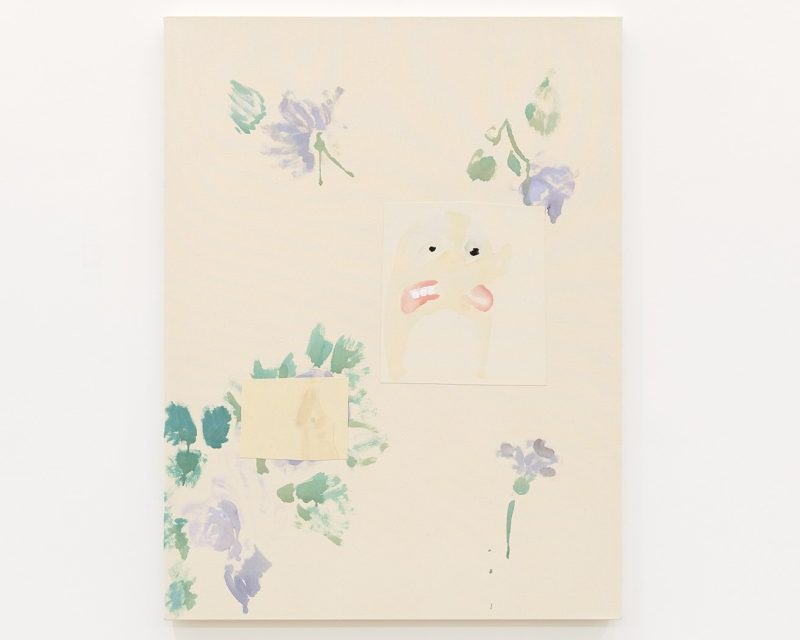
Sofia Silva’s compositions reflect a process that moves forward and back through painting, cutting and the abandonment of fragments. Her works unfold in sober, uncluttered spaces, where light and surface are treated with measured precision. “Camera bianca” (White Room, 2026) depicts an intimate domestic setting where the silhouette of branches arranged in a vase emerges along a slender line of light. Derived from an archive photograph of Venini vases, the composition remains minimalist yet carefully modulated, inscribed with the phrase ‘con tutto il cuore’ (with all my heart), taken from a Catholic prayer of confession. Devoid of a specific time or place, the painting unfolds within a space defined by absence.
The exhibition approaches silence as an active state to be sought out, in contrast to an environment overloaded with distractions and information that makes it difficult to concentrate. Viewers are invited to listen carefully, to live with uncertainty, and to perceive meaning as something that is constructed gradually. It is all decidedly more philosophical than visual.
“No Hay Banda” – Conceptual Fine Arts (CFA), Milan
29th May-26th June 2026
Open Tuesday through Friday, 3-7 pm or by appointment.
Cover Photo: Karoliina Hellberg, Labyrinth, Elizabeth Xi Bauer
Article edited by Claudia Chiari