
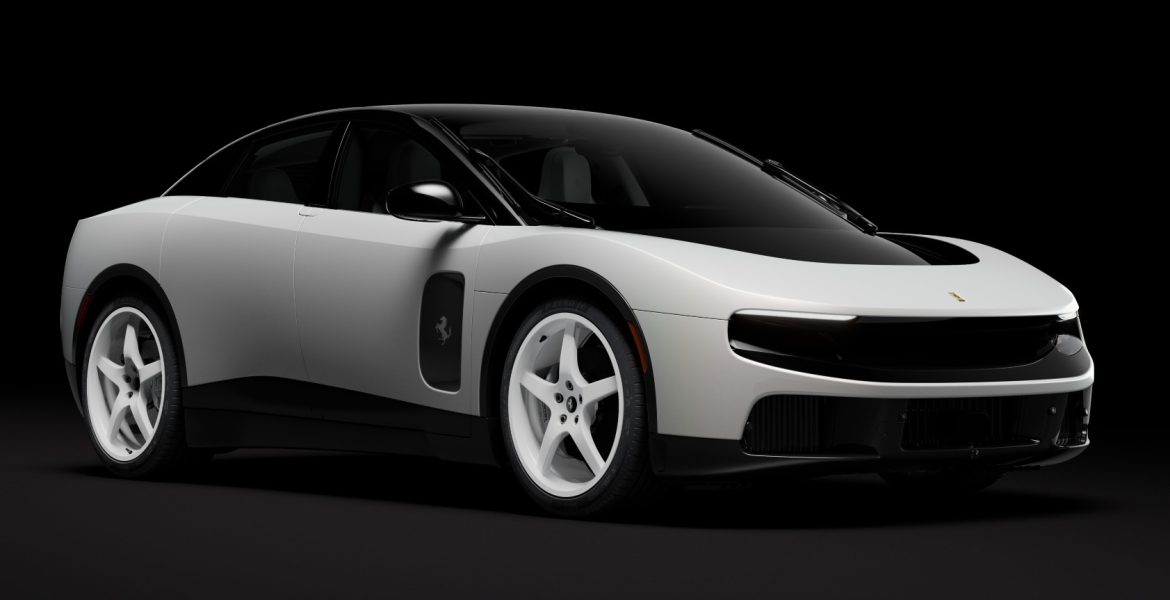
Ferrari’s $40 million auction night: why the world’s wealthiest chase the next high-stakes bid
The paddle went up at 9:47pm. Nobody in the Monterey saleroom breathed for the next four minutes. By the time the gavel finally dropped, a one-off Ferrari Luce, the marque’s first electric car, had sold for $40 million. That’s not a typo, and it’s not even close to a typical estimate. According to CNN Business, the final hammer price beat pre-sale expectations by roughly 36 times over. Bidders weren’t buying a car at that point. They were buying the story, the scarcity, and the right to say they were the one who didn’t blink. What happened in that room on August 16 wasn’t really about horsepower. It was about something older and stranger: the specific thrill that grips a person once they’ve decided a number is no longer the point.
The anatomy of a saleroom adrenaline spike
Auctioneers will tell you the room changes at a certain price point. Below a few million, bidders are still doing math. Above it, something else takes over. Call it competitive momentum. Call it sunk-cost pride. Whatever the label, once a collector has publicly committed to a number, backing down starts to feel like losing, even if losing just means keeping $38 million in your account. CNBC reported that global classic car and art auctions cleared more than $600 million in early 2026 despite serious geopolitical turbulence at the time, which tells you something. Economic anxiety doesn’t cool this market. If anything, it sharpens the appetite. Money that feels unstable elsewhere gets funneled into things that are tangible, rare, and photographable. The Luce wasn’t even the first Ferrari to rewrite the record books this way. Ferrari auction prices have been climbing in violent, headline-grabbing leaps for decades, not gradual ones. This is where the psychology gets genuinely interesting, and where it starts to look familiar to anyone who has watched a poker table, a sports book, or a late-night online session spiral past the point of rational stopping.
When the rush follows you home
The same neurochemical loop that keeps a bidder’s hand in the air past $30 million doesn’t stay confined to a Sotheby’s tent. It’s the same loop that keeps a player at a blackjack table for one more hand, or a bettor refreshing live odds at 2am. Recreational high-stakes play has exploded in the last few years precisely because it offers a compressed, accessible version of that Monterey adrenaline spike. No private jet required. No black-tie dress code. Just a screen and a decision to keep going. Texas sits in an unusual spot here. The state has no legal in-state online casino framework, yet plenty of Texans with disposable income and a taste for that same rush go looking anyway. For readers curious how that actually works in practice, an overview of Texas online casinos is typically where the search starts, since it lays out the legal gray zone, the offshore platforms Texans actually use, and what separates a reasonably safe option from a reckless one. Gambling carries real financial risk regardless of the stakes on the table. Anyone exploring these platforms should only ever wager what they can genuinely afford to lose, and resources like GamCare exist for a reason.
Scarcity is the actual product
Strip away the branding and what Monterey buyers were really purchasing was exclusivity itself. Ferrari’s Special Projects programme, which produced the recent CZ26 one-off unveiled during the same Car Week, exists entirely to manufacture this kind of scarcity on demand. One buyer. One car. No waiting list negotiable. That’s not new for the brand. Ferrari has smashed its own auction records repeatedly across the decades, going back to a $38.1 million sale that once felt unbeatable. Every time the ceiling gets raised, it resets what “rare” is worth to the next generation of buyers. NBC News covered that earlier record at the time, and reading it now feels almost quaint given where the number sits today. Ferrari’s own Q2 2026 earnings leaned hard into this exact strategy, with the automaker raising full-year guidance on the back of personalization and bespoke commissioning rather than volume. The lesson executives clearly learned: scarcity sells better than availability ever will.
The buyers behind the paddle
Who actually spends $40 million on a car they may never drive? Not always who you’d expect. Collectors in this bracket increasingly skew younger, tech-adjacent, and global. Some are longtime marque loyalists chasing a complete set. Others are newer money looking for a physical asset that photographs well and holds cultural weight in a way a stock portfolio simply doesn’t. TechSpot noted that the Luce’s price still trails the all-time auction record held by a 1955 Mercedes-Benz 300 SLR, which sold for roughly $142 million back in 2022. That gap matters. It means there’s still headroom, and headroom is exactly what keeps this entire market moving. Nobody wants to own the second-most-expensive car in history when a bigger record feels reachable. Charles Leclerc taking delivery of his own custom Riva superyacht earlier this month is a smaller-scale version of the same instinct. Win big, celebrate bigger, and make sure the celebration is one nobody else can replicate.
What the next bid actually costs
Here’s the part collectors rarely say out loud. The rush fades within days. The next auction always looks better than the last one. That’s the pattern worth watching, whether you’re tracking a Monterey saleroom or a much smaller stakes table somewhere else entirely. The dollar amount changes. The psychology underneath it barely does.

Frequently Asked Questions
Why did the Ferrari Luce sell for so far above its estimate? Auction houses often set conservative estimates to generate bidding momentum. Once two or more determined buyers commit publicly, price becomes secondary to winning. Scarcity, brand prestige, and the desire to own a genuinely one-off piece all pushed the Luce dramatically past its projected range.
Is the classic car and collector auction market still growing in 2026? Yes. Despite economic uncertainty earlier in the year, combined art and classic car auction totals topped $600 million, according to CNBC’s reporting. Wealthy buyers increasingly treat rare physical assets as a hedge against volatility elsewhere in their portfolios.
What is Ferrari’s Special Projects programme? It’s Ferrari’s bespoke commissioning arm, responsible for one-off cars like the CZ26 unveiled during Monterey Car Week. Each vehicle is built to a single client’s specification and never replicated, which is central to why these commissions consistently break auction records.
Does the $40 million Luce sale beat the all-time car auction record? No. The all-time record remains a 1955 Mercedes-Benz 300 SLR, which sold for roughly $142 million in 2022. The Luce sale is still historic as the highest price ever paid for an electric car at auction.
Why do wealthy collectors keep chasing bigger auction records? Part status, part genuine passion, and part psychology. Once someone has broken a record themselves, the next one becomes the new benchmark to beat. Scarcity, competitive pressure in the room, and cultural bragging rights all compound to keep pushing prices upward.
Monterey Car Week will keep producing nights like August 16 for as long as scarcity remains the most valuable commodity money can buy. The next record is already being quietly discussed in a handful of private garages right now, and somebody in that room already knows they’ll be the one raising the paddle when it happens.
Article edited by Nathan V.
Luxury markets and collector culture writer, 9 years covering auction houses.