
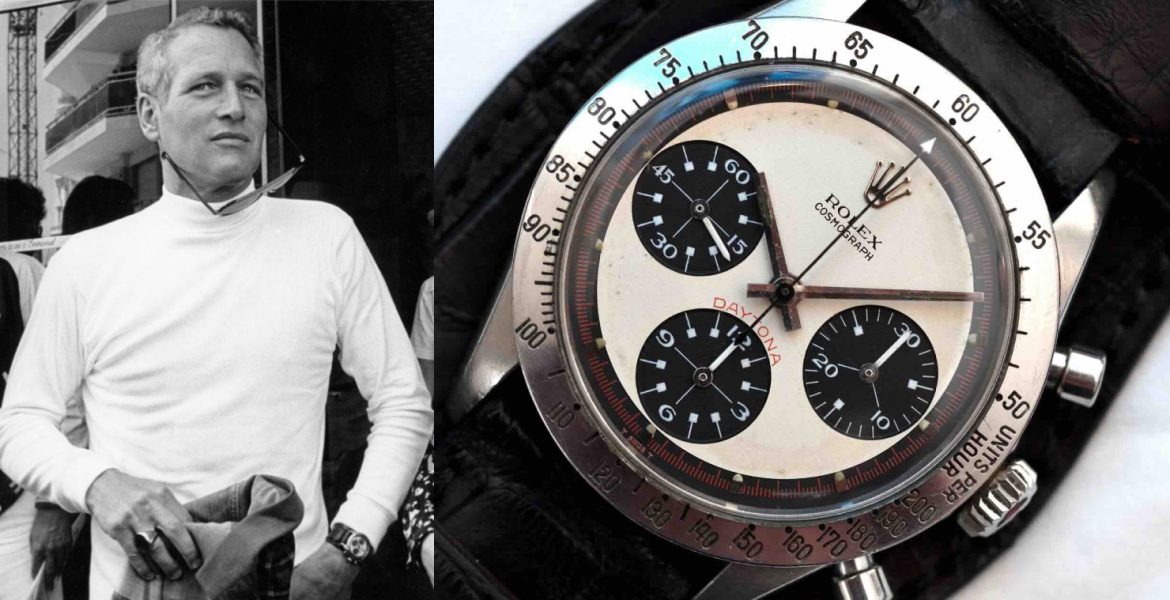
On the fond de boîte, three words: Drive Carefully Me
There is a moment in a race that belongs to no one. It is that suspended instant between the engine’s idle and the roar that splits the air, the second before the start. In that precise moment, the driver does not look at the track. He looks at his wrist. The Rolex Cosmograph Daytona was not made to sit behind glass. It was made on the circuit, and for the circuit. It is 1963, the era of heroic motorsport in America, when speed was not something one watched on television. It was something one felt in the very marrow of one’s bones. Rolex was already there, on the wrists of explorers. But the racetrack was a different matter entirely. A different question altogether. Hans Wilsdorf understood this before anyone else. And so the Cosmograph was born. Its original name was Le Mans. Then came Daytona, a name already synonymous with the watch as official timepiece of the Speedway since 1962.
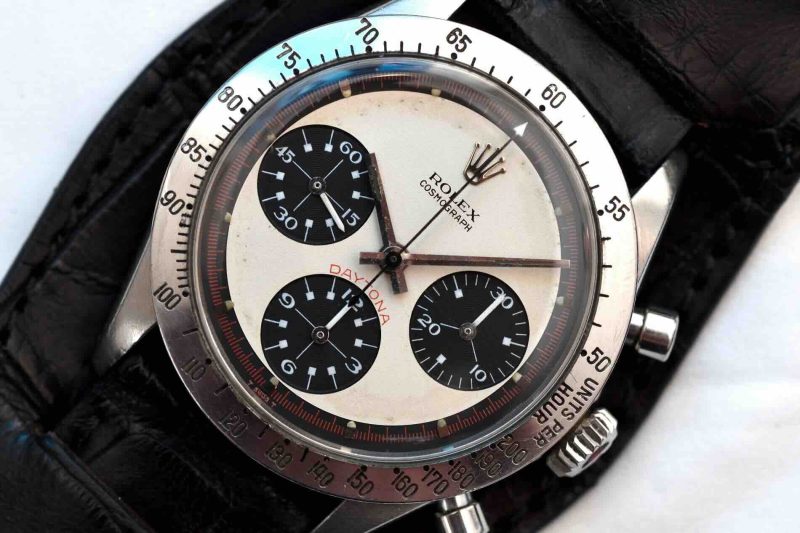
The Daytona’s dial requires no explanation. Three registers in a symmetry that seems almost too precise to be quite real. A bezel that speaks only in numbers, of speed, of distance. A crown that fits between the fingers with that solid, dense sensation that certain objects possess and others never will. Beneath a scratch-resistant crystal lies a movement entirely manufactured in-house: conceived, built and regulated in Geneva. Seventy-two hours of power reserve. At its heart beats a mainspring in paramagnetic alloy, sapphire blue, impervious to magnetic fields and fluctuations in temperature. The Cerachrom bezel is black ceramic, hard, matte, immune to scratching and fading. The Oyster case withstands depths of up to 100 metres. The Superlative Chronometer certification demands rather more than most.
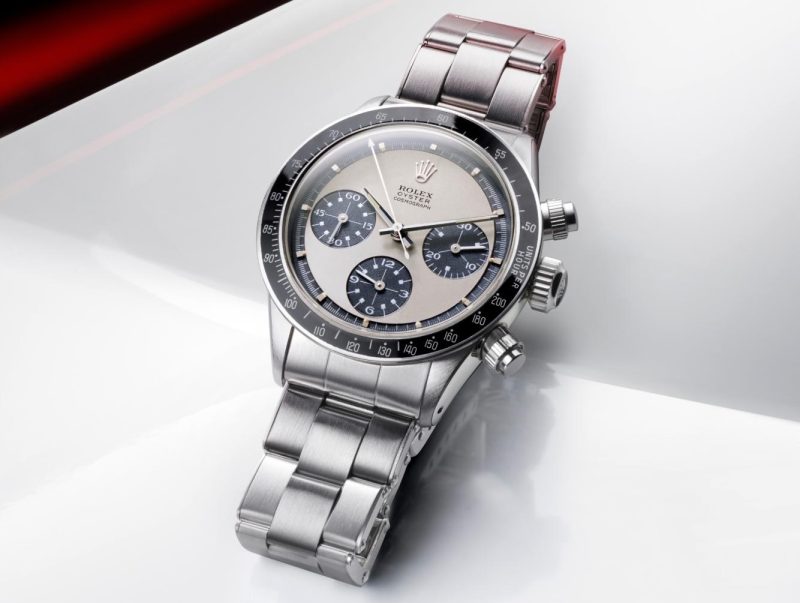
The history of the Daytona contains an irony that only time itself could have fashioned. At the moment of its launch, the watch simply did not sell. It sat in shop windows. The clientele of the 1960s wanted something rather quieter. The Daytona was too much, too bound to the world of motor racing, which the bourgeois public observed from a respectful distance, yet without any great familiarity. Then he arrived, and the Daytona stopped looking for its audience.
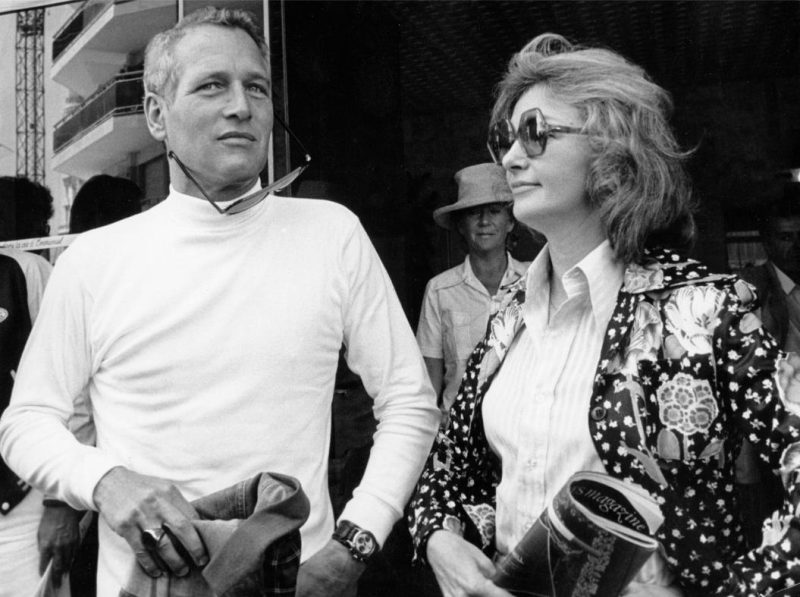
When Paul Newman began appearing in magazines with a Cosmograph on his wrist, something shifted. Not every great love is written on paper. Some are engraved in metal, in small letters, in a place that no one sees unless they are looking for it. Joanne Woodward needed no introduction. And she understood that her husband lived two lives. One declared. One on the track. Paul Newman trained in earnest, raced in earnest, and won. At the age of seventy, he would become the oldest driver to take a class victory at the 24 Hours of Daytona. And so Joanne gave him a Rolex Daytona Ref. 6239 with an exotic dial in ivory and black. On the caseback, she had three words engraved: real, private, absolute: Drive Carefully Me.
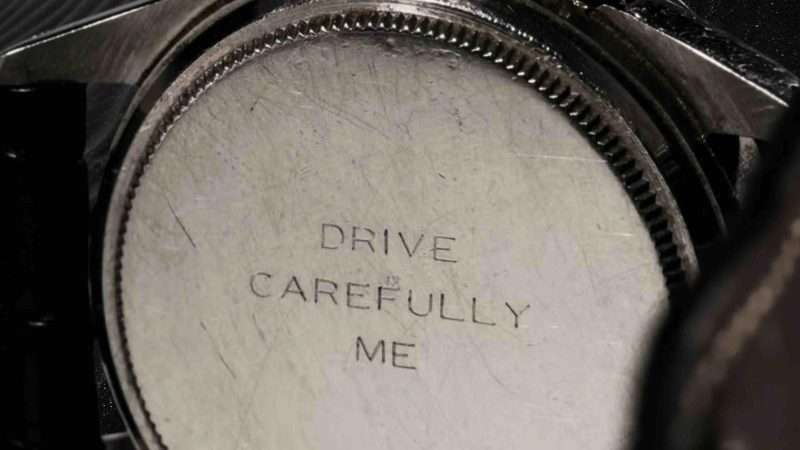
Newman wore it every day for fifteen years. From 1969 to 1984, on the wrist of one of the most photographed men of the twentieth century. Then he took it off. And for a long time, no one knew what had become of it. The story of that watch disappeared into silence. Until 2017, when it resurfaced in New York, in the saleroom at Phillips, before seven hundred people standing and a global audience following online. The auction lasted twelve minutes. It opened at ten million dollars. When the hammer fell, the final figure was $17,752,500, the highest price ever paid for a wristwatch. It was proof that three words engraved on the caseback of a watch nobody had wanted to buy could be worth more than almost anything else in the world.
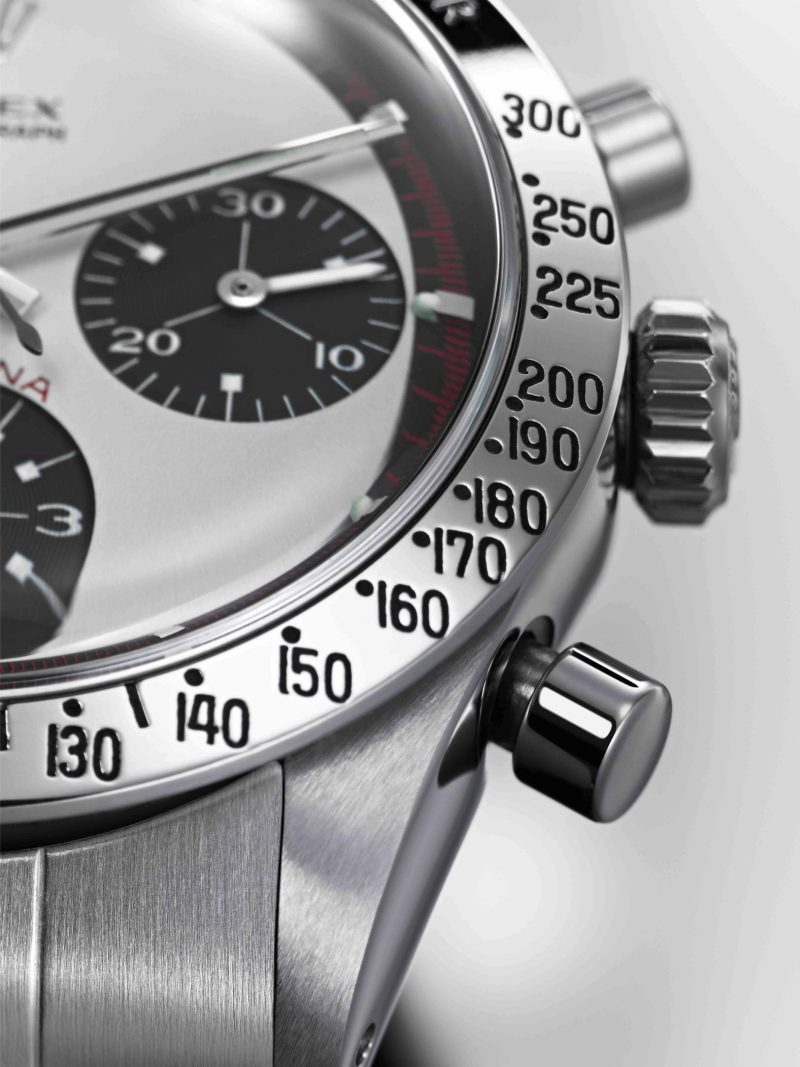
The Cosmograph Daytona today has ceased to be a tool for measuring time. It has become time itself, in its most coveted form. The current collection is a study in character. The Daytona in steel with a black ceramic bezel. One in yellow gold paired with a black technical elastomer strap. The version in white gold with a dark sunray dial. And then the 950 platinum, with its chestnut-coloured bezel and transparent crystal caseback.
On the fond de boîte of any Daytona there is a space waiting to be engraved with a timeless message. The story yet to be written. The name of the one who will wear it. The words that someone, one day, will find the courage to engrave. Drive Carefully Me.
Article edited by Gianmaria Garofalo