
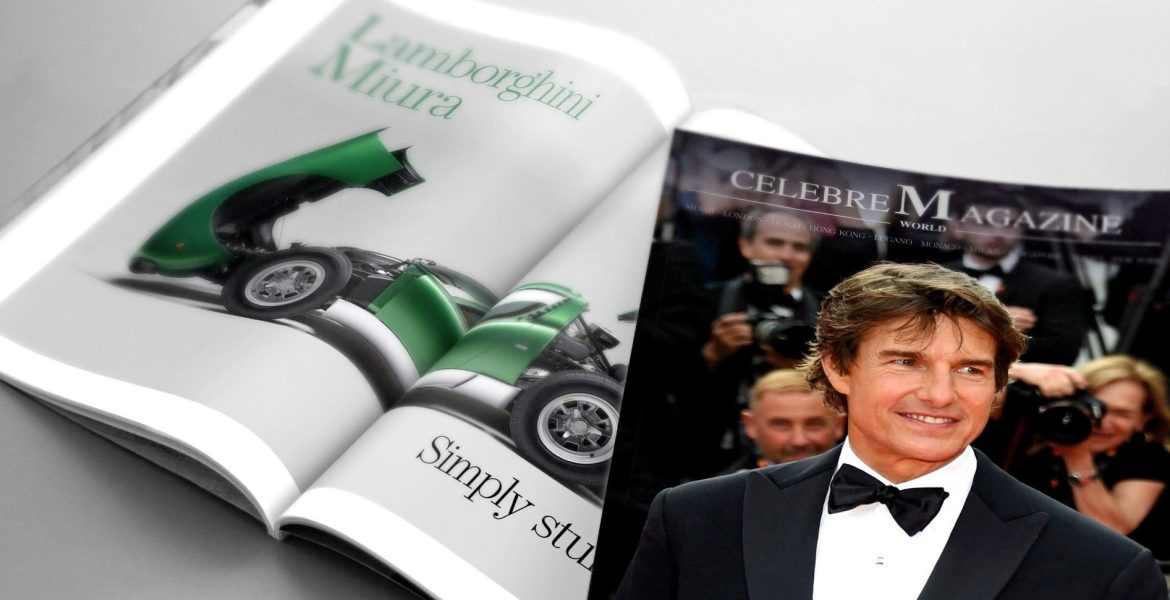
One of the most extraordinary cars in the world celebrates its 60th anniversary: the Miura. Elegant and refined, sensual and aggressive, unique and iconic. To talk about it is to describe a sculpture of irresistible allure. Its volumes are characterised by generous yet never excessive wheel arches, and by inimitable details such as the headlamps with eyelashes that evoke feminine beauty, the horizontal slits on the door pillar leading to the air intake while concealing the handle, the transverse lower vents above the engine that create plays of shadow, and the tail with a subtly hinted elegant spoiler achieved by subtracting volume from the rear bonnet.
After the 350 GT of 1963, the dynamic Ferruccio Lamborghini set his designers to work to create an object never seen before. The team of young engineers included Gian Paolo Dallara and Paolo Stanzani. They were tasked with creating a lightweight chassis, equipped with a 12-cylinder engine derived from the 400 GT and mounted in a transverse mid-engine position. This marked the genesis of all Supercars; before it, no other car had adopted such an architecture. The bare mechanised chassis was unveiled at the Turin Motor Show on 3rd November 1965. It was a clear manifesto to communicate to customers, but more importantly, to the competition, Lamborghini’s intentions.
On this occasion, a tailor was sought to dress this magnificent chassis, and the synergy between Ferruccio and Nuccio Bertone left no room for reconsideration: the request was crystal clear; the new car had to be ready for the Geneva Motor Show in 1966. And so it was. Thanks to Bertone’s craftsmanship, they created a car of extraordinary formal balance, unique and timeless. The design was by Marcello Gandini, with contributions from all the artisans of the atelier. Even more incredible is the fact that the running prototype was completed in about three months, honouring the agreements made. A car that was unconventional in every sense, enchanting and simply beautiful. The Miura laid the foundations for a fruitful collaboration between Lamborghini and Bertone.
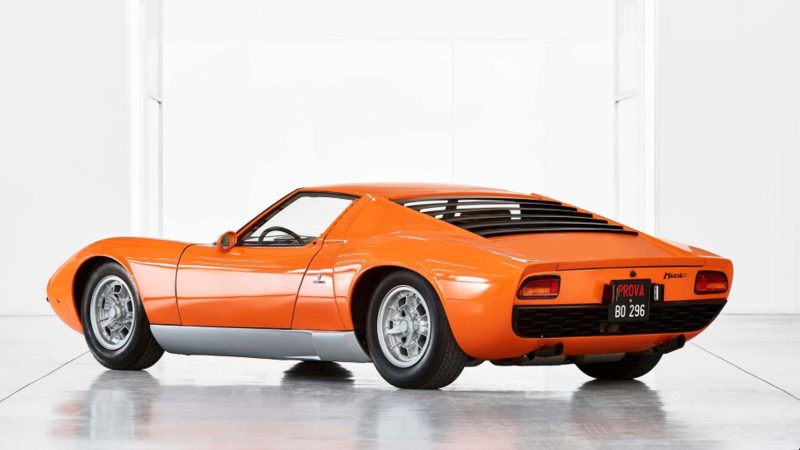
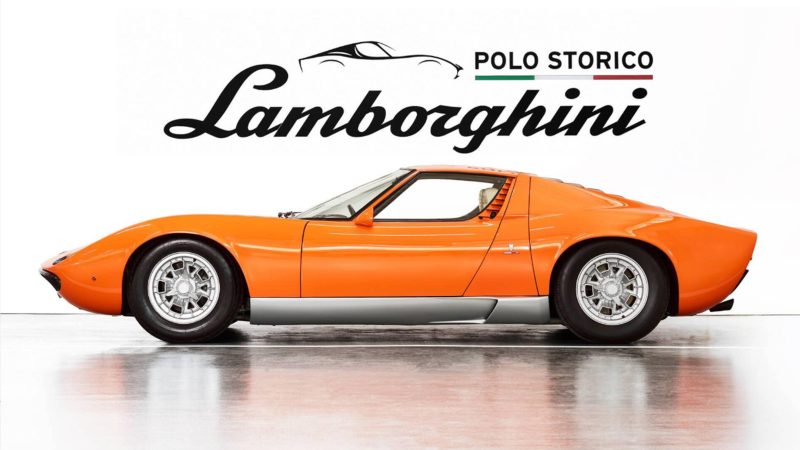
Observing a Miura is a privilege, a unique spectacle. One is captivated by a magnificent work of art. It evokes the same feelings experienced by visitors when they saw it for the first time. So low it seemed to have arrived from another planet. The chosen colour was pastel orange, with contrasting aluminium elements and integrated air intakes, alloy wheels with five generous holes, and two exhaust pipes cut at an angle. On the front bonnet, there were two grilles, one functional for the fuel cap. The prototype featured a transparent rear window, which was immediately replaced in the production model by the characteristic full-width slats.
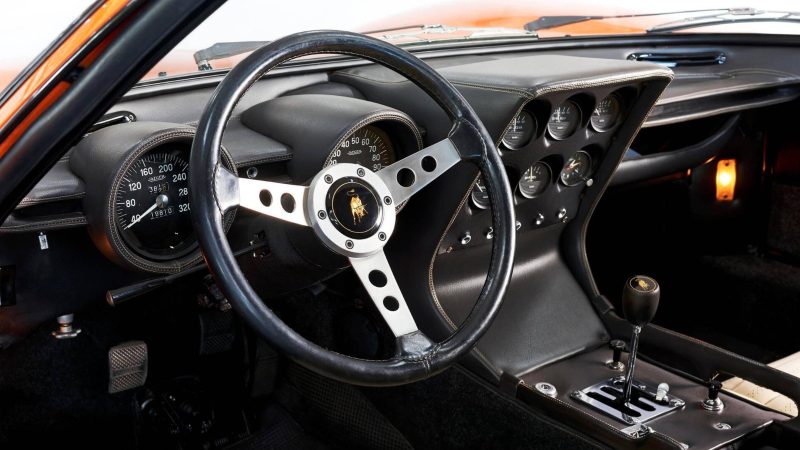
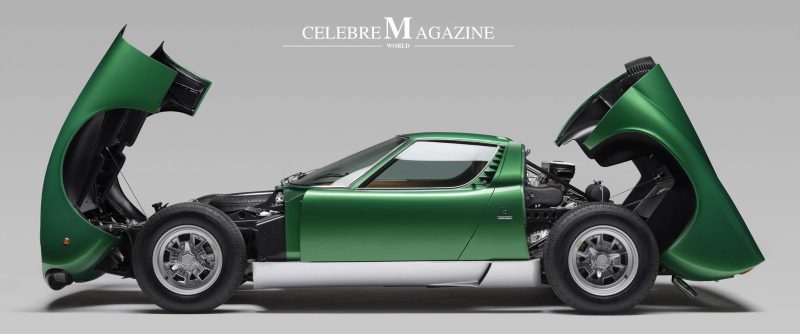
Stunning enough to turn heads. Inside, the instruments are telescope-style, the central console is embossed with additional instrumentation, the gear selector, and the monocoque seats with a leather-trimmed beam element topped with headrests. On the headlining, secondary buttons evoke the controls of an aircraft. The Miura, with its bonnet open, retains all its charm thanks to the practical and theatrical clamshell opening, which makes the mechanics easily accessible while showcasing the beauty and attention to detail of the technical components.
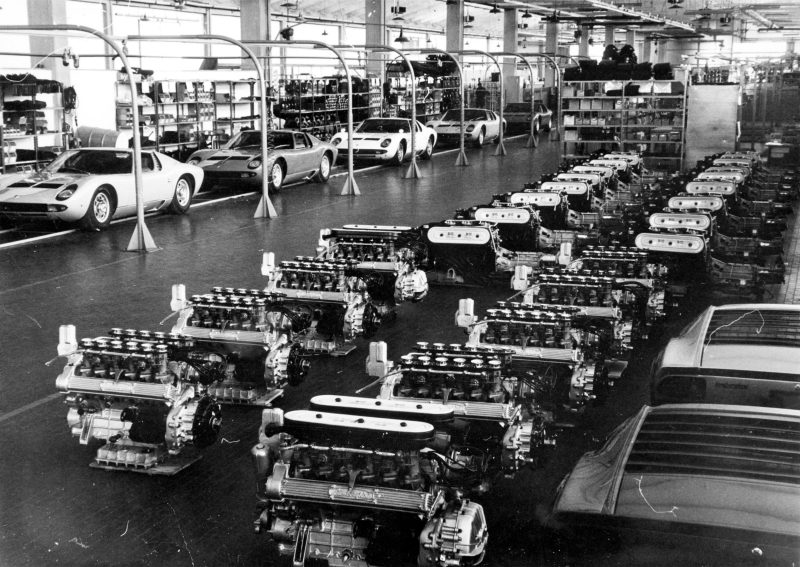
The 60° V12 engine, with a displacement of 3929 cc, delivers 350 hp. It is equipped with four Weber triple-barrel carburettors of 40 mm. It was the fastest road car ever with a top speed of 276 km/h. A total of 763 units were produced from 1966 to 1973. The Miura was highly sought after by famous figures worldwide, including industrialists and celebrities. A car, a symbol of its time, that contributed to elevating the owner’s status. Today, it retains its allure, finding a place in the most beautiful collections. I have always likened the Miura to a female figure of irresistible charm, an ethereal beauty capable of captivating at first glance.
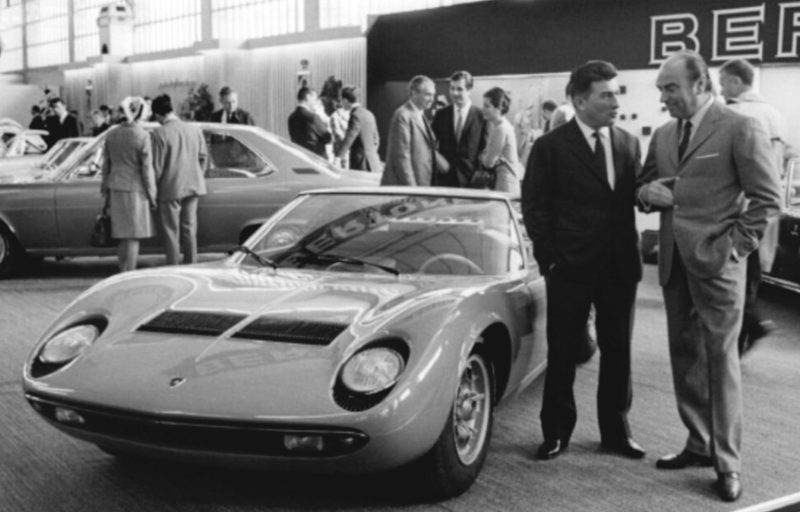
Ferruccio Lamborghini named it Miura in honour of the famous bull breeder Don Eduardo Miura Fernandez. A Miura glides effortlessly along the wonderful roads of the Via Emilia. If I close my eyes for a moment, I enjoy imagining myself in 1966, perhaps strolling under the arcades of a small Emilian town, while the rumble of the V12 echoes deeply amplified by the vaults, turning to see Ferruccio at the wheel. A whiff of smoke from his ever-present cigarette wafts out of the window, and then it’s gone, disappearing like a flash.

Article edited by Antonio Erario