
On 20th September, 2023 a special pre-congress report was released. This report, prepared by the CIBJO Coral Commission headed by Vincenzo Liverino, addresses the persistent knowledge gap present not only among consumers but also within significant segments of the industry.

This knowledge gap often confuses precious coral species with other varieties, including reef corals affected by global warming and ocean acidification.
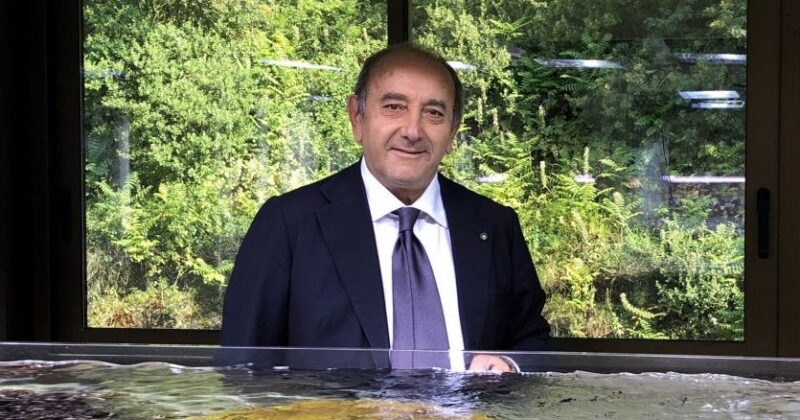
Mr. Vincenzo Liverino, President of the CIBJO Coral Commission
In the report, Mr. Liverino stresses the importance of promoting precise coral terminology outlined in the CIBJO Coral Blue Book. This terminology restricts precious coral classification to just three groups belonging to the Corallidae family: Corallium, Pleurocorallium, and Hemicorallium.
Mr. Liverino points out that this definition excludes the majority of coral species, including those occasionally used in decorative items, which CIBJO defines as ‘common corals.’ He adds that the Blue Book definition also excludes thousands of other species, including shallow-water reef corals enduring the extreme stresses of climate change.
“Communicating these trade definitions is critical, since many industry colleagues and consumers are under the erroneous impression that the corals found in jewellery are sourced in colonies located in shallow waters, like the Great Barrier Reef” Mr. Liverino writes: “The corals defined by CIBJO as precious live in totally different ecosystems, and in much deeper and colder waters.”
The practice of grouping all types of coral together was influenced by Thai authorities’ decision over a decade ago. They banned all trade in the material following the magnitude 9.0 Great Tohoku earthquake off the northeastern coast of Japan on March 11, 2011. The resulting devastating tsunami inflicted considerable damage on the local reef coral ecosystem.

Mr. Rui Galopim de Carvalho, Vice President of the Coral Commission
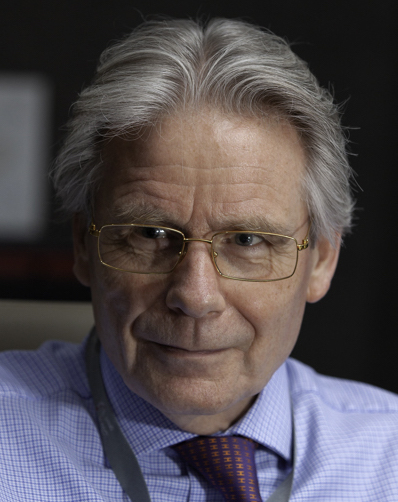
Mr. Kenneth Scarratt. Vice President of the CIBJO Coral Commission
“CIBJO has been reaching out to the authorities, requesting that they consider the fact that the species affected by the natural disaster are not those used as gem materials in jewellery manufacturing, which is a very strong industry in Thailand” the Coral Commission President notes. “We have pointed out that precious corals do not live in the same ecosystem as those that were impacted by the tsunami, and, according to CITES, are not considered endangered species.”
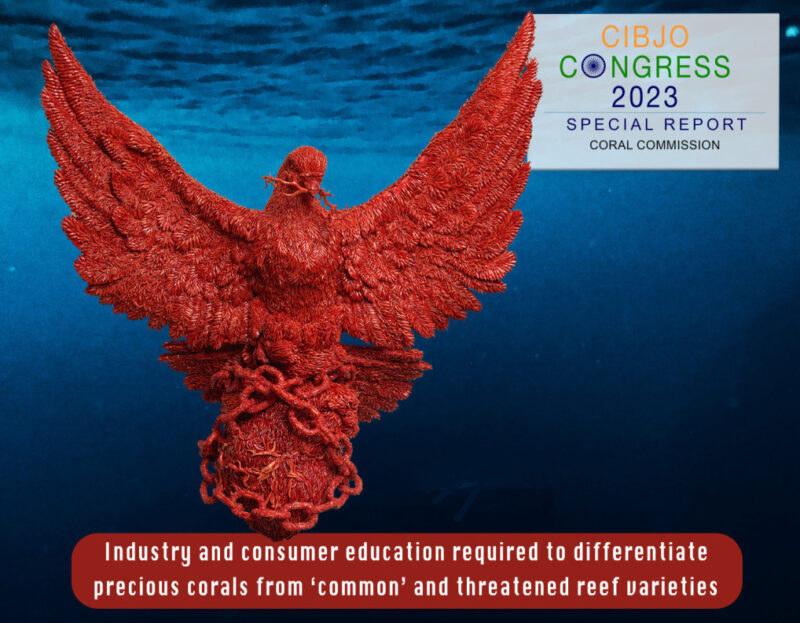

To download a full copy of the CIBJO Coral Commission’s Special Report, PLEASE CLICK HERE.
Article edited by Laura Astrologo Porché
Instagram: @journaldesbijoux