

Interview with Professor Paolo Bongarzoni, PhD. Vice-Rector of the Swiss School of Management in Rome.
How many times has this question been posed?
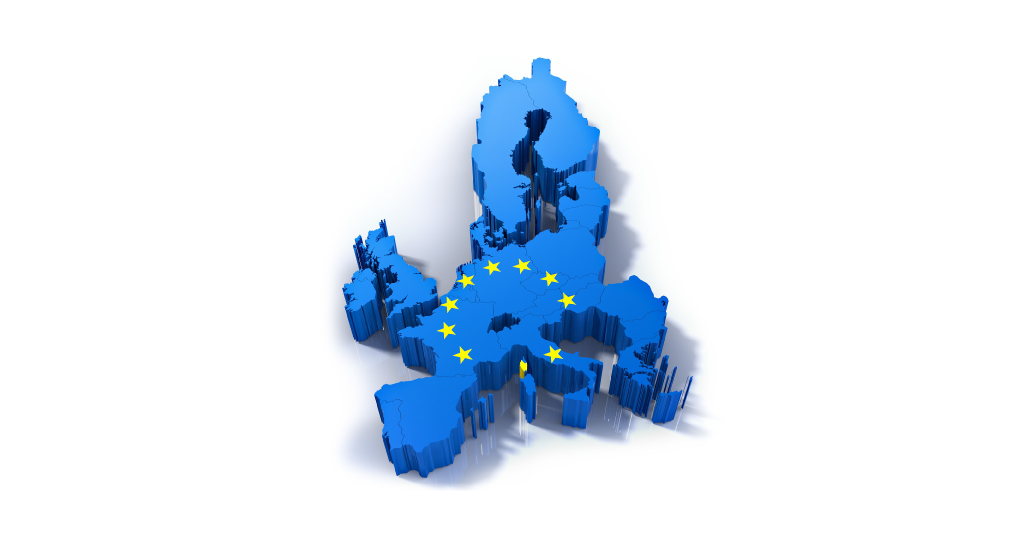
In the 1950s the European Coal and Steel Community (ECSC) was born with the initiative of Italy, Belgium, France, West Germany, Luxembourg, the Netherlands. In 1992 the European Union was born. Many great leaders were involved such as Schuman (French), De Gasperi (Italian), Spaak (Belgian) and Adenauer (German). Today the 2 main players are the French President Macron and the German Chancellor Merkel.
Merkel and Macron often launch concrete proposals for interventions in various sectors, immediately after shared with the institutional leaders of the European Union. In your opinion, Professor Paolo Bongarzoni, is this what has happened recently with the French/German proposal on Recovery Fund?
In my opinion, the proposal for the Recovery Fund presented on 27 May by the President Ursula von der Leyen, could be a positive thing France and Germany are the two most important countries in EU (economically and politically) and their agreement represents a first serious and concrete commitment to face the European crisis. The resources involved will be made available to all the countries that suffered the most in this emergency and will be covered by the EU budget (thanks to a contribution from all the states). The hope is that the Recovery Fund will be the first of several solidarity instruments, other than ordinary loans.
According to you, are there 2 “driving” countries in Europe?
Germany and France are the countries with the highest numbers in Europe (population, GDP, number and importance of roles covered, the net contribution to the EU budget, highest rating). Whenever these two countries take a joint initiative, important decisions have followed. Their agreements were strengthened by the 2019 Aachen Treaty which promoted and formalized Franco-German institutional meetings.
How should be considered initiatives taken by a limited number of players?
Because of the numbers above indicated and the historical partnership, the “Franco-German alliance” represents the centre of decisions taken in Europe in recent years. This is also supported by the fact that, in the Recovery Fund proposal, Germany will obviously bear the greater burden of these funds guaranteed by the EU budget. In addition, in the past Germany and France have played a mediating role among the countries of the Southern, Northern and Eastern Europe.
 It seems that Italy, despite its important economic strengths, is not at the center of the main proposals. Is this the case in your opinion?
In my opinion yes. My impression is that Italy decided to be part of EU on the basis of too optimistic promises (prices stability, high employment levels, sustainable development, economic/territorial/social cohesion, solidarity between the Member States) not corresponding to the current situation, where the standard of living seems much lower than that of 20 or 30 years ago. Expenditures for productive investments and the possibility of borrowing were limited by the adoption of the Maastricht parameters (3% Deficit / GDP and 60% Debt / GDP). Free movement favoured large companies and penalized the competitiveness of small/medium-sized companies (which represent more than 10% of the Italian GDP). Government expenses are covered by tax revenues (in absence of a coordinated tax policy at European level) and with the access to free capital market; according to many studious, the passing of monetary sovereignty and Bank of Italy’s powers to the European Central Bank (as well as the spread mechanism, as the difference between the rate of German bonds and bonds issued by other countries) contributed to a liquidity and solvency crisis, to the depression of demand and to international speculation. Many companies don’t invest in Italy for well-known reasons and the local system is not so efficient.

Focusing on Macron and Merkel’s proposal of € 750 billion… What does this proposal consist of? Are these proposal details well defined and precise? Could you give an explanation of this proposal?
This proposal, as a result of an agreement between Germany and France, represents an initiative for the EU annual budgets and will help to finance the regions and sectors most affected by the pandemic crisis. The modalities of this proposal were adopted by the European Commission during the presentation on May 27 of the “Next Generation EU” plan (a € 750 billion intervention), that would reinforce the Community Budget or the Multiannual Financial Framework 2021-2017 ( € 1,100 billion). The total budget 2021-2027 would, therefore, reach € 1,850 billion, to which should be added the approved measures on workers’ safety (SURE of € 100 billion), for businesses (EIB of € 200 billion) and MES (€ 240 billion) for a total of € 540 billion. The main line of the “Next Generation EU” fund is represented by the “Recovery and Resilience Facility” of € 560 billion (€ 310 billion for transfers and € 250 billion for loans) set up to support (without conditionality) the priority investments for a lasting recovery (especially in Green Economy, Digitization and other important sectors affected). It will be up to the Member States to prepare national recovery and resilience plans which will be approved by the Commission; the release of these funds will, therefore, take place gradually according to the progress of the approved projects.
In addition, the Commission has also proposed the modification of the 2014-2020 Financial Framework by integrating it with € 11.5 billion (React-Eu) which will be useful to cope with the emergency already from 2020. The next objective is to reach an agreement “Next Generation EU” and on the Budget 2021-2027 in the next European Council. In details, the “Next Generation EU” fund of € 750Bn (of which € 250Bn of loans) will be collected by the European Commission through the issue of bonds (also purchasable from the European Central Bank) guaranteed and repaid by the European Union Budget (the Commission will temporarily raise the own resources ceiling to 2% of GDP). The distribution of funds to the Member States (~ € 172.7Bn for Italy of which € 90.9Bn of loans) will be made according to the needs of States affected by the pandemic crisis and not based on rigid parameters (e.g. GDP). Each State will contribute to the repayment of the funds in the following years, according to its share on the European Budget.
The positive aspects are that the bonds are guaranteed by the Commission’s budget, that funds are distributed according to post Covid-19 needs and that the proposal comes from the two pillars of the Union (France and Germany). As anticipated, it will be possible to introduce minimum taxes and important subsidies for the benefit of sectors such as health and research (e.g. prevention plans), environment (e.g. fighting against climate change), business digitalization and synergies between European companies. The loans will be guaranteed by the issue of EU bonds (maximum thirty years) and the repayment will take place in 2028-2058. The hypothesis of issuing “perpetual bonds” (for which only interests are paid) was rejected. The feeling is that the funds available for Italy, in combination with other discussed loans (MES “light”, EIB, SURE) may not be sufficient to cope with such a compromised economic situation. This also confirmed by what has already been allocated in other continents.

Why Austrians, Dutch, Danish, Swedish … are critical to the Franco-German proposal, especially for the Italian position? Is Italy been doing so bad from an economic and financial point of view? How come to these reactions against Italy? How are Germany and France compared to us?
At the time of the initial Franco-German proposal, Northern Europe countries gave their counter-proposals, always focused on short term loans, to be refunded, with interests and with the condition of reforms to be carried out. After the EU meeting on May 27, some of these countries reiterated that the decisions on the “Recovery Fund” should be taken unanimously and that an appropriate negotiation period will be necessary. The positions of these countries arise, in my opinion, from the lack of trust in Italy, due to the difficulties Italy could encounter in the processes of use/repayment. This is confirmed by the fact that these countries have asked, in their counter-proposals, for an involvement of the European Court of Auditors. It must be said that Italy contributed to this situation. Many of the European loans have not been completely used in the past due to the difficulty of attracting adequate investors to Italy, due to the excessive bureaucracy in accessing funds and for their use in the short term and non-structural initiatives.

Is this also due to the “Rilancia Italia” decree? According to some economists and politicians the RILANCIA ITALIA measures are judged as a set of expenditure items and not of development as instead would be required by many parties. What do you think of it?
I agree, but we must deal with limited cash resources; many other countries can afford to supply their business enough funds to cover workers’ salaries (and therefore avoid dismissals). The instruments included in this decrees (tax credits, amortizations / super amortizations, tax reliefs, capitalizations, public guarantees to banks, use of the redundancy funds and social safety nets) could be fine but there is a need for immediate cash injections in order to stimulate the demand. We have already a sovereign debt 2,400 billion Euro. The Italian decrees concern 55 billion. Euro. Many companies are in crisis, and the reopening of some sectors (such as Tourism, Catering, Entertainment etc) will not exceed thirty per cent. International analysts already predicted a drop of the Italian GDP by the end of the year (1 GDP point is about 17 billion).
Is it possible that the situation is so terrible and nobody realizes that there could be dramatic consequences for the State finances, for the welfare state, for the schools, for research, for the health system? Can we ask your opinion about this situation? Could you come up with some tangible proposals to get out of this situation?
Like many other people, I am a supporter of demand policies. Depressing the demand with excessive tax pressure, with so much bureaucracy and with the lack of a long-term productive investment plan is like owning a beautiful sports car in the garage and pretending that, without any maintenance, it works properly. Productive investments must enhance the enormous resources that Italy has (historical-cultural, artistic, natural and manufacturing heritage); at this purpose, there are synergy models operating within several sectors, already used in other countries less virtuous than Italy.
Banks should be in a position of being able to transfer resources, as far as they are concerned, to productive activities, promoting the competitiveness of local companies; in this context, a strong public intervention aimed at the banking and production activities (e.g. digitization) is required. Concerning the monetary policy, the European Central Bank must be able to operate as the Central Banks did in the past and to act as a lender of last resort. More investments should be done in education and research, safety and health; all these fundamental expenses have not been taken into particular consideration over the last years due to some European austerity policies. Many resources can be freed from the reorganization of the public offices and the streamlining of bureaucracy. The reform of justice and the adequate use of private savings for the purpose of restructuring public debt are current topics that have not yet been adequately addressed. If free access to the capital market is the only option, it is necessary to adopt actions aimed at improving the rating of Italy and therefore its convenient access to credit.
On the other hand, it is essential to re-discuss the whole structure of European parameters which currently limits deficit spending and debt for productive investments. If the Europe Union will survive, it’s necessary a higher level of coordination (in term of fiscal policy, productive investments, health and employment policies). In my opinion, it is not acceptable that, thanks to the EU parameters and regulations, some European countries are wealthier, while others are almost in bankruptcy. I am sure that this awareness will be considered by the European Union in the coming years (the Recovery Fund could be the first step) otherwise there won’t be long the conditions to go on.

What should Italians expect or should they fear in October?
The feelings of the main categories representatives (e.g. small to medium-sized companies) do not seem very optimistic. Certainly, there is a commitment to continue and reopen the activities immediately, even if the prospects of the economy will be visible only in the medium term (eg. September / October). In phase 2, some entrepreneurial realities (mainly related to tourism) preferred to wait, in order to avoid incurring variable costs in presence of uncertain turnover; this was also due to the restrictions on the free movement of potential customers (both for legislative and psychological reasons). In particular, the psychological aspect cannot be predicted in term of volume and duration.
A negative element is represented by the coverage of the high fixed costs, in the presence of inadequate solutions offered by the Government. Following the reopening, a business with a cost/revenue structure below the break-even point will continue to operate only if at least the fixed costs are covered; otherwise, the most plausible solution is the business closing. Again, according to the data collected by the trade associations, from a revenue point of view, the monthly data are obviously worrying, due to exceptional situation in relation to other past crises (-80% / 90% turnover only in April).
Concerning the GDP projections, based on the first-quarter data (-4.7%) and the negative forecasts for the second, there are more or less pessimistic estimates for the year-end figures (-10% / – 15 % of GDP) which will also be linked to the flexibility in the implementation of the decree. These data match the predictions at European level in case of a “second wave of COVID” (-16% of GDP). Concerning the unemployment data, the feeling is that in September Italy will be able to get a clearer picture of the situation due to the current use of the redundancy funds and the social safety nets. The effects on layoffs and therefore on the unemployment rate seem therefore postponed. In other international contexts (eg. the USA), characterized by different legislation, the situation is much clearer already right now.
Article edited by Egidio Pedrini