
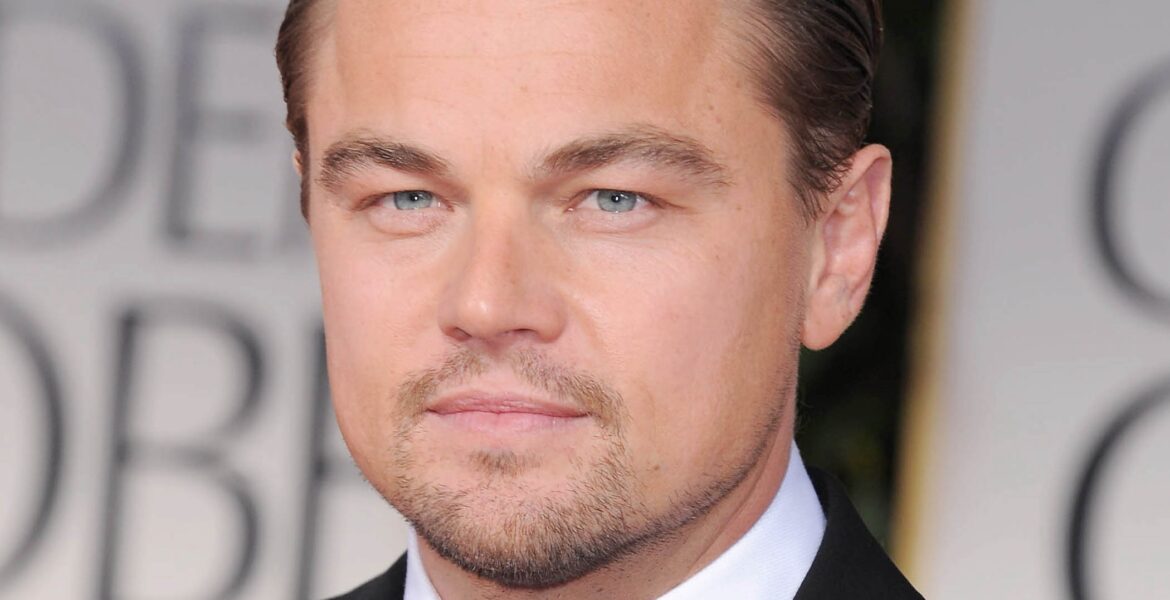
The story goes that he kicked in his mother’s womb while she was standing in front of a work by Leonardo da Vinci in the Uffizi Gallery. Nomen omen, as the Romans would have put it, because Leonardo would become the name of Hollywood’s enfant prodige. His mother, Irmelin, who is German, and his father, George, who has Italian origins, divorced when he was still a baby, but they both always supported him in his career, and he has a special relationship with them nonetheless. “Thank you to my parents. Without you, none of this would have been possible,” he said in an emotional voice on the stage of the Dolby Theatre, holding the gold statue he only won in 2016 with “Revenant,” breaking a curse that had lasted for too long. By his own admission, he is extremely ambitious and does not hide the fact that he grew up in a difficult area of East Los Angeles: the almanacs report that he made his debut in the show “Romper Room” at the tender age of three but was apparently removed from the set because he was too lively.

Opportunity came knocking when he played Johnny Depp’s autistic brother in “What’s Eating Gilbert Grape,” which earned him his first Oscar nomination. This was followed by another exceptional performance in “This Boy’s Life” with Robert De Niro, in which he stood out for his rebellious spirit and the fact that he was not intimidated by playing opposite the giant of the cinema. By the time he was twenty, he had already worked with Sharon Stone, Gene Hackman, Russell Crowe, Meryl Streep and Diane Keaton. He was the heartthrob Montague in Baz Luhrmann’s eclectic “Romeo + Juliet,” while his perfectionism, which has become proverbial, like the roles he has turned down, led him to reject the part of James Dean because of his lack of experience. His moment of consecration came in 1997 with James Cameron’s timeless blockbuster “Titanic,” in which he played the penniless artist Jack Dawson, an idealist, a romantic, and needless to say extremely handsome, alongside Kate Winslet in the part of the aristocratic Rose. The film has a tragic ending when he dies for her, saving her in all the ways he could possibly have saved her while she carries on living for him. The film won a record eleven Oscars. There was no nomination for DiCaprio, but Leomania immediately spread. From that moment on, it would be impossible to come across anyone who did not know his name.

He is unusually versatile and prefers tormented characters who almost always come to an ill-fated end: men who are desperate, obsessed, in love or evil, and multifaceted antiheroes like the smuggler in “Blood Diamond.” The early 2000s saw the creation of his Appian Way Productions and the iconic Scorsese-DiCaprio partnership when he replaced De Niro as the director’s pupil. The titles they made together that were produced by the actor include “The Aviator” and “The Wolf of Wall Street,” in which Leo reached his highest expression as an actor. He has been directed by Spielberg, Nolan, Clint Eastwood, Tarantino and Luhrmann again, in a scintillating “The Great Gatsby,” and he never holds back: “I don’t know if people realise it, but when I’m acting, I throw myself into it until my last drop of energy.” What about outside the cinema? On his Instagram profile, which is entirely dedicated to ecology, he describes himself as an actor and environmentalist. He founded the Leonardo DiCaprio Foundation when he was only twenty-four and has kept his word over the years: “In the beginning, I was dedicated to taking off as an actor.

When I succeeded, I decided I wanted to take responsibility. It was a promise.” He has directed and acted in documentaries on the subject and played the astronomer in “Don’t Look Up!” as the head of a team that discovers a meteorite on a collision course with Earth, but which no one takes seriously. DiCaprio, who almost never gives interviews or releases statements, immediately went to work to talk about climate change as the key to interpreting the film.

When he is not working, he stretches out his public appearances and literally disappears off the radar with his ever-present jeans, white T-shirt and baseball cap. He lives in New York, where he and his historic group of friends known as the “Pussy Posse” run around undisturbed far away from the star system, and it appears that when he is in a restaurant, he may be far from polite with the customers or generous with the waiters. He always has beautiful models by his side whom he never talks about. Only two things are certain: they have never been more than twenty-five, and he prefers to have his mother on the red carpet rather than them. Leo may be fifty in November, but he remains an eternal boy.
Article edited by Claudia Chiari
Celebre Magazine world Editorial Director