

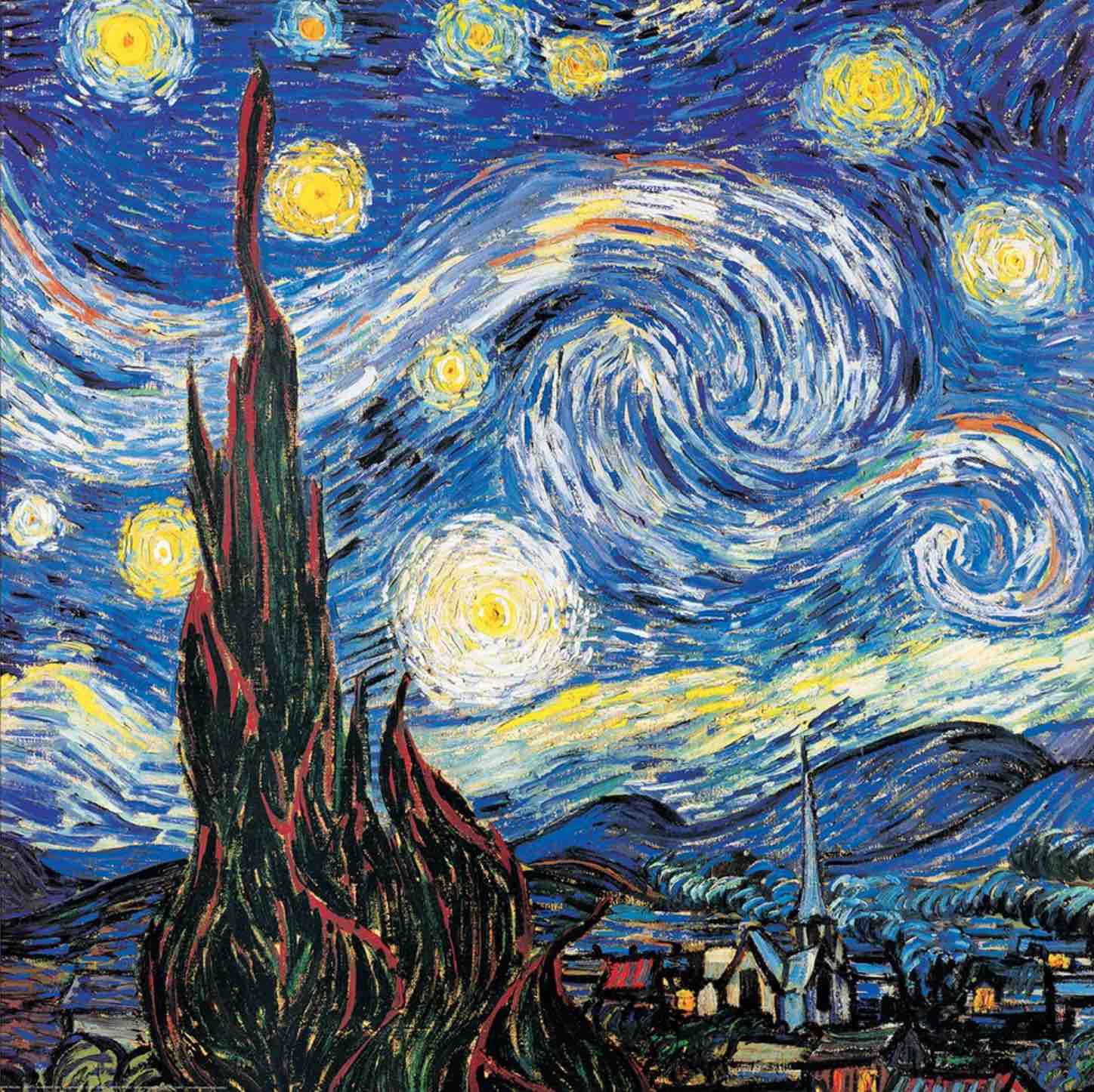
So much has been written, so much has been said, and so much more remains to be discovered in Van Gogh’s masterpiece “The Starry Night”. Crazy, nonconformist and visionary, with an emotional instability that conditioned his relationship with the surrounding environment and exasperated his conflict with it. His great feeling of exclusion favoured his predisposition to art, which allowed the birth of his artistic genius.
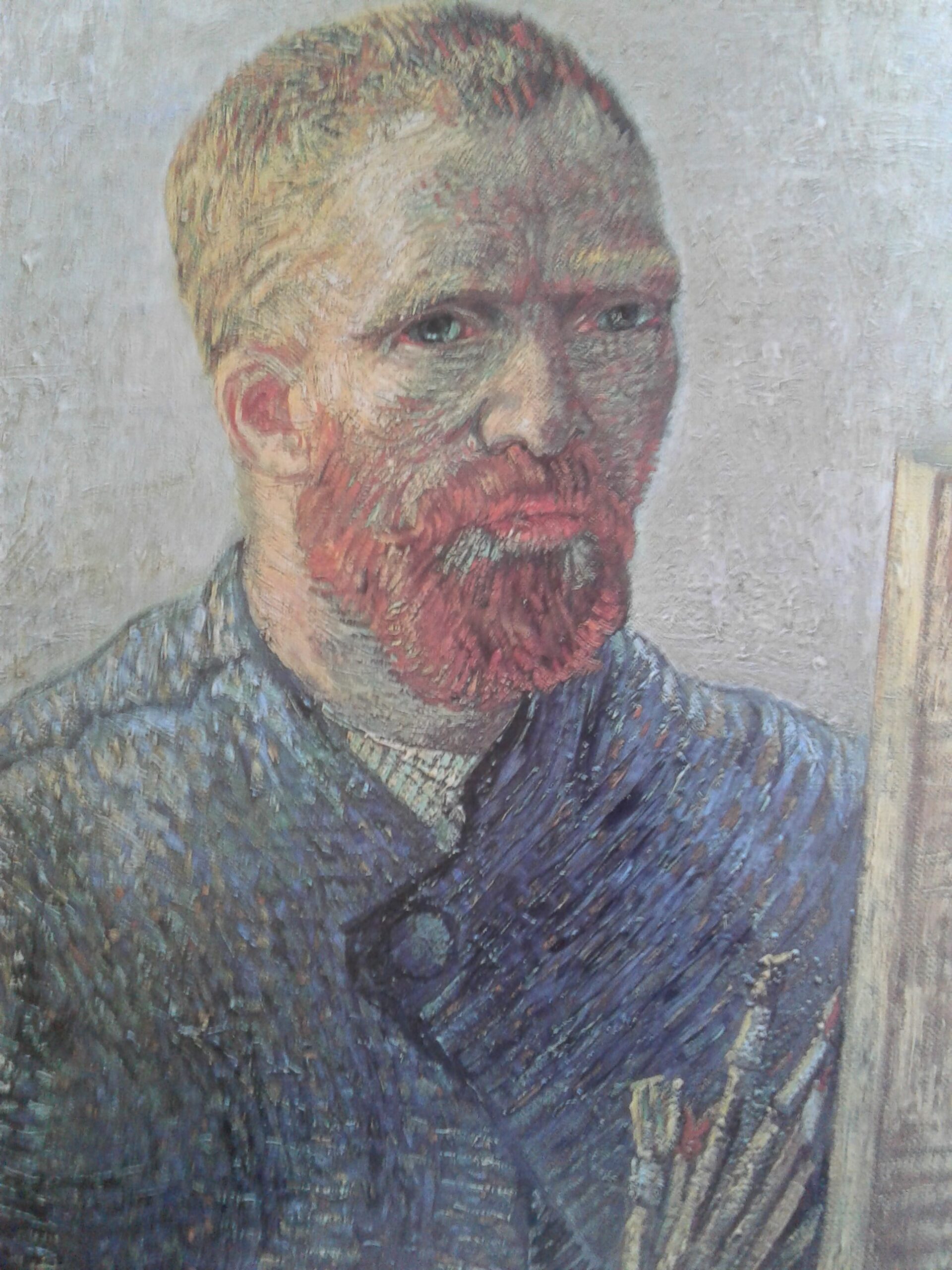
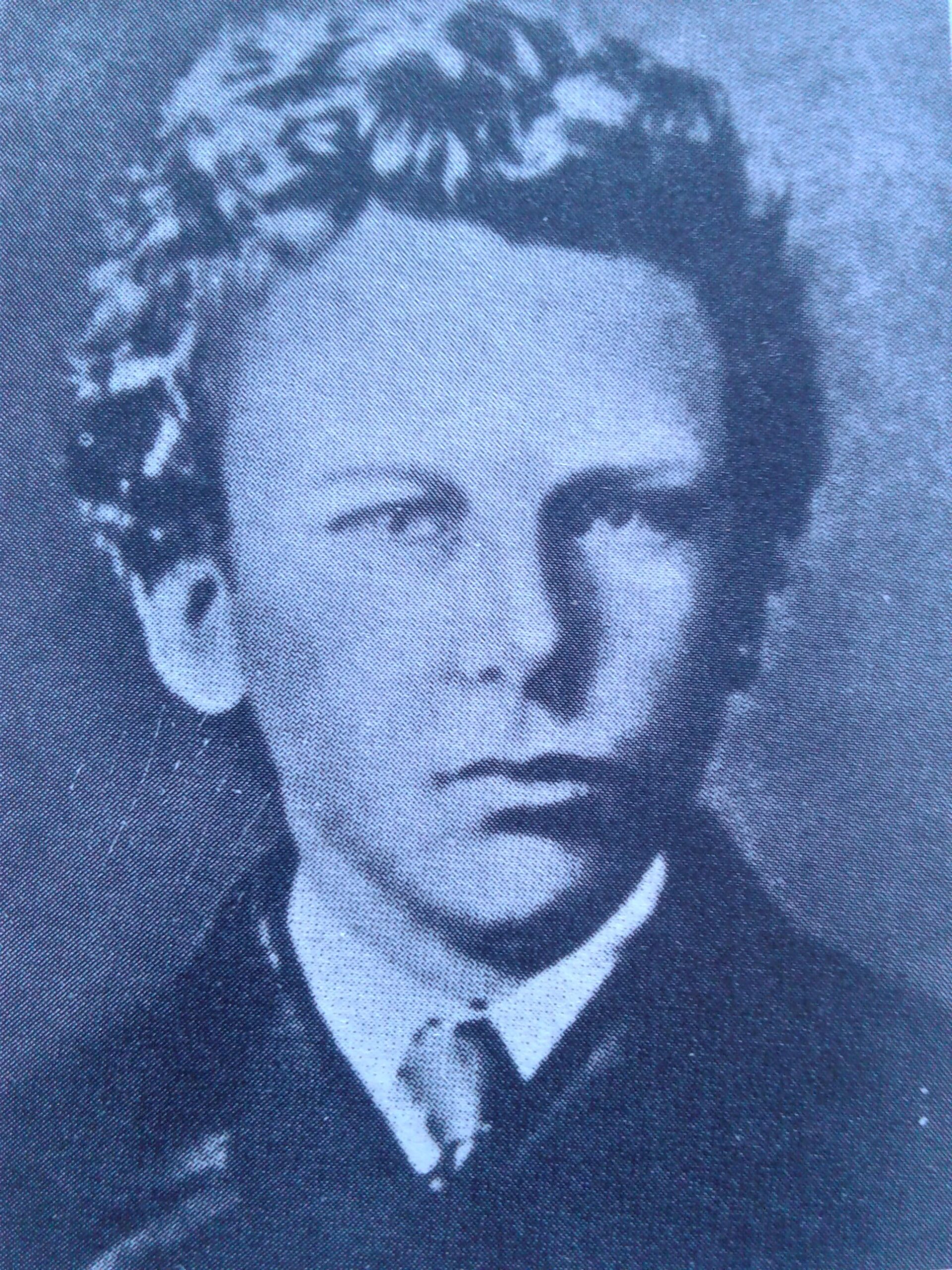
He represented in the art scene one of the most original figures, capable of fighting against the hostile world that didn’t belong to him. Vincent Willem Van Gogh was born on March 30th 1853, in Groot Zundert’s presbytery, in the Netherlands, near the Belgian border. He painted “The Starry Night” (oil on canvas, 73X92 cm) in 1889, when he was hospitalised in the asylum of Arles, creating a mysterious and surprising masterpiece at the same time that, in this day and age, still does not cease to amaze us.
But why, in addition to the artistic value itself, is this painting brilliant? 1889, the year in which it was painted, tells us why. At that time, astronomical observatories did not yet exist. The first one was the observatory of Mount Wilson, and it was built in 1905, giving an early reconstruction of the stars as Van Gogh had partially interpreted them. Vincent senses the incapacity of the sky to contain all the celestial bodies in the cosmos, confirmed further on by the Shapley observatory, which reconstructed the first model of the structure of a galaxy in 1918. Vincent had already seen the stars as bodies animating a nonstatic universe, forming a harmonious whole of infinitely distant worlds full of light and torment.
He wrote to his brother Theo, with whom he had a profound spiritual bond: “I fight with all my energy to counter and dominate my work as an artist, telling myself that if I win, it will be the best lightning rod for my loneliness”. It seems like pictorial fervour was something that possessed and dominated him. Was he a genius? Easy to say today, but who knows what Vincent would have replied at the time, since his contemporaries made fun of his art. The only painting he managed to sell was the one purchased by his beloved brother Theo, who, to please him, lied to him by telling him that he had sold it to a collector interested in his pictorial talent.
Maybe he wouldn’t answer anything. Perhaps he’s standing one of those painted stars up there, in some distant universe, laughing at those who didn’t understand him as an artist. One more artist misunderstood in life, like many before him and others after him, who teach us that it is not always wrong to be mad, especially when madness sees everything that reason ignores.
His brother Theo died six months after Vincent’s death, so his paintings became the property of Theo’s partner, who sold them for a few pennies. Somehow “The Starry Night” arrived in New York in 194,1 and now it is jealously preserved at the MOMA and finally loved as it deserves.
Article edited by Maria Basile