

On 25 March 1957 in Rome, the founding treaties of the European Economic Community were signed. The Treaties were signed by the governments of Italy, France, Germany, Belgium, Netherlands and Luxembourg. That European Community stood on the deep ruins caused by two World Wars, and to finally start a process of growth and cooperation between States, with the firm intention of averting a third conflict. With the signing of the Treaty of Maastricht on 7 February 1992, signed by the representatives of 12 countries, a path is undertaken to transform what was merely an economic alliance into a Continental Federal State, which formally entered into force on 1 November 1993, the date of the official establishment of the European Union.
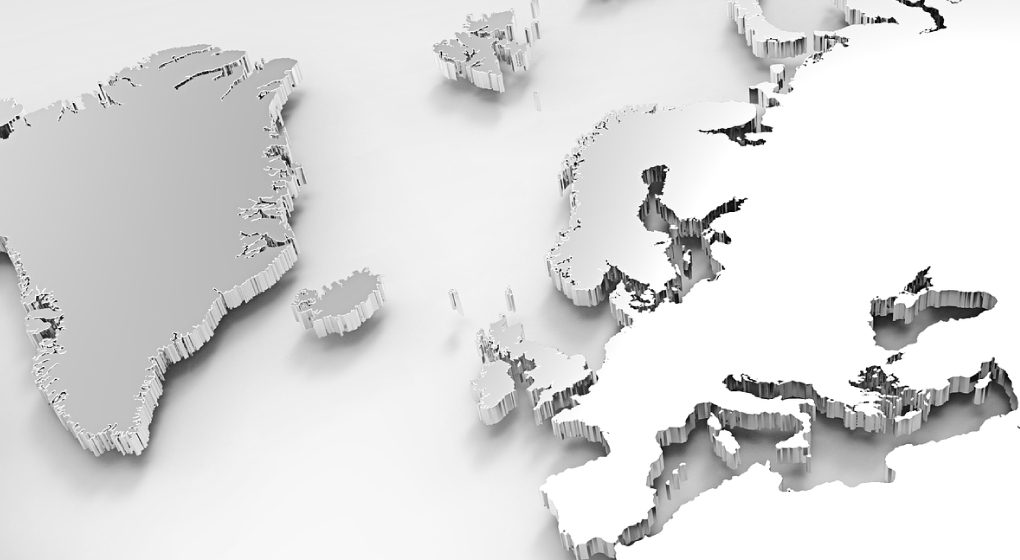
The meaning of the European Union from the point of view of law and international relations, is defined as a regional international organization of economic and political integration, endowed with legal personality. The current EU is an entity that cannot be easily defined. It could be classified as a Continental Federal State, a definition that has wide margins of error; it does not have governing bodies able to exercise direct power on the territory of the states that make it up. All the provisions of European law, issued before they come into force, must be previously transposed into the laws of the individual states. Even the treaties on the existence of the Union is based are not valid as long as the States do not consider acceding to them.
If a State decides to leave the Union, as the United Kingdom did recently, it merely withdraws its accession to the treaties, with all consequences that this entails, of course. Technically and legally, the European Union is not a federation of states because, in this situation, the member states lose their external sovereignty, which is delegated to central power; the states of the European Union maintain certain prerogatives such as maintaining international relations, surrendering parts of their sovereignty to the community institutions.

The brief historical excursus of the birth of the European Union was necessary to understand better the frictions that daily undermine the very existence of the Union, especially in this unexpected moment, where the coronavirus has laid bare national selfishness, lack of coordination and, above all, the absence of a medium-long term strategic project. We can undoubtedly say that in recent years, the international conjunctures, the speculative processes operated by financial holding companies and the economic difficulties inherent in the short-lived policies of some Member States, have caused cracks. This crack appears to be incurable, having, among other things, found unhoped-for allies in a well-stocked audience of “sovereigns” which seems to be growing more and more every day, fed by extremely rigid financial policies which block the paths of development and work.

In Europe, there has been a complete abdication of economic policy, and this imbalance has particularly mortified the weaker states, reinforcing the hegemony of those in northern Europe, which are known to be prone to budgetary rigidity. This process has set in motion a perverse mechanism that can be explained by borrowing the reaction process from the chemistry when assigning the role of positive catalyst to the rise of “populism” and the proliferation of “sovereigns”, and that of negative catalyst to the farcical control mechanisms of the Union’s economy.
The ‘Old Continent’ largely shows its age, the cracks of a Europe unable to improve over time, clinging to outdated concepts and mechanisms. Such phenomena are not only present in recent history because of the actions to be taken to combat the coronavirus pandemic, but also in the past when the Member States failed to get positive responses to their requests and started obstructive actions to facilitate the decisions invoked. Less recent history shows us, among other significant situations, that France, in July 1965, withdrew its representatives from the work of the Council, implementing the so-called “empty chair” policy, in order to support the idea of De Gaulle, who postulated a different role for the European Commission.

The context in which the European States are moving risks implosion, the process is undergoing an extreme acceleration due to the perching of individual states for the fight against the coronavirus, which prefers a solo fight rather than collective actions. A reform of this Union, which cannot be classified as “Federal” or “Confederal” as it is a hybrid, is always ready to impose absurd rules to the detriment of the Member States, rather than seeking models suitable to unite different cultures, histories, traditions and policies, guaranteeing total independence, sovereignty and respect. History is a master in witnessing that the cohabitations imposed on populations different in origin and culture are destined to generate monsters that in turn, generate more conflicts than those that we aim to avoid. The “European dream” is still possible, with the absurdity that it will be favored by the scourge of the coronavirus, hoping to bring Europe closer to a model that cancels the current hybrid, returning the Union to the supremacy of politics over the economy that so much irreparable damage has already produced.
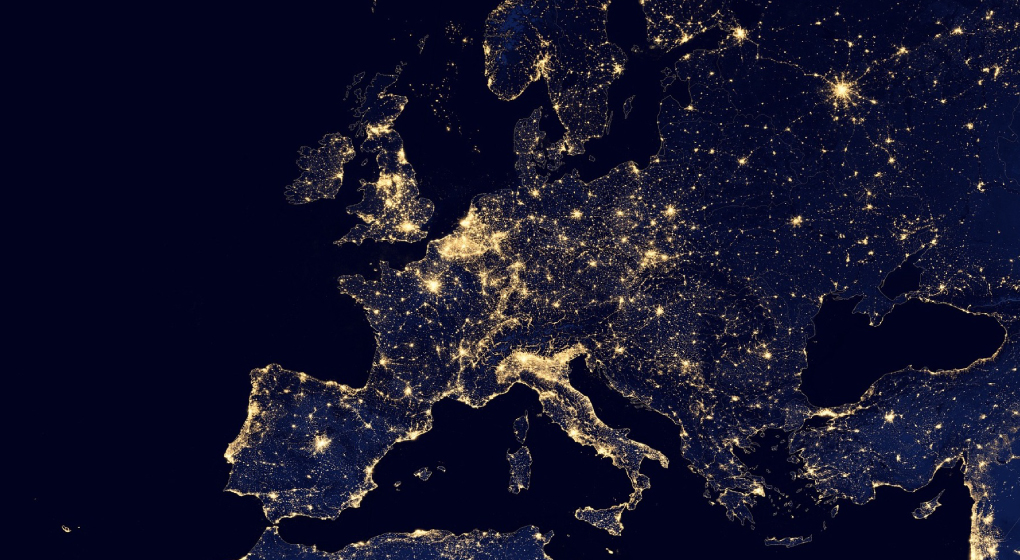
After the coronavirus pandemic, nothing will be the same as before. However, we must all continue to dream a Europe in which we can have a single army, a unified foreign policy, similar school and university training courses, safeguarding significant shares of our training, unique and unparcelled research which will receive adequate resources, rewarding spaces to offer young people and whatever else may in the short term lead us to the realization of the United States of Europe.
Article edited by Prof. Alessandro Calabrese