
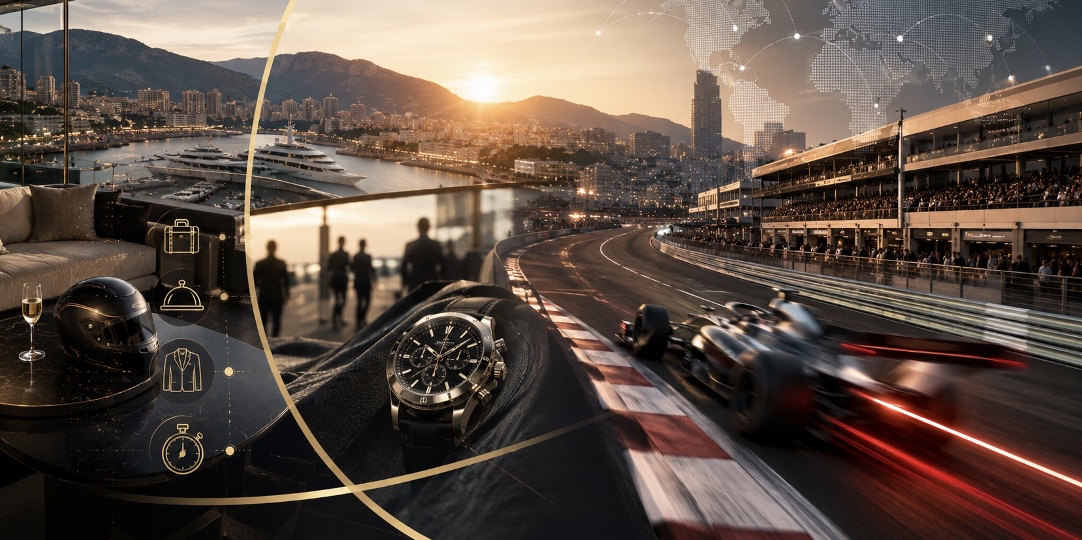
Formula 1 did not become many people’s favourite weekend event just because fast cars photograph well. A Grand Prix compresses access, travel, design, celebrity, engineering, and suspense into three amazing days. A weekend can feel like a fashion arrival, a private hospitality circuit, a city event, and a live technical contest at once. Luxury brands gain attention loaded with speed, scarcity, and taste. The modern Grand Prix matches how people follow sport. A fan may watch qualifying, see a driver outfit, hear team radio, and search the circuit before Sunday. A study on social media and sporting event satisfaction found that familiarity with a sporting event can shape how strongly people discuss and share it online. Formula 1 benefits from that loop. The more viewers learn, the more the weekend gives back.
The Weekend Became the Luxury Product
The clearest way to see the luxury weekend is to look past the champagne and toward the track itself. The glamour holds because the race has exact moving parts: qualifying position, tyre behaviour, circuit layout, Safety Car timing, fastest-lap pace, constructor form, and the pressure of a narrow overtaking window. For readers who want that race context in one place, Lucky Rebel Formula 1 provides Grand Prix odds and race details, including race winner, top three classifications, winning constructor, fastest lap, qualifying props, circuit history, and race stats. That matters for lifestyle readers because it turns the weekend from a backdrop into something legible and alive. A race feels richer when the viewer understands why track position, session pace, and team performance are shaping the mood. That same margin-led drama comes through in Lucky Rebel’s short racing video about Felix Rosenqvist’s Indianapolis 500 win by 0.0233 seconds, with David Malukas second. Although it is IndyCar, the lesson travels across elite motorsports. A number that tiny turns timing into emotion. It is the difference between a result and a moment people replay, quote, and remember. Luxury culture likes polish, but racing retains its power because that polish can be undone by a final-lap detail almost too small to see.
Why Luxury Brands Follow the Circuit
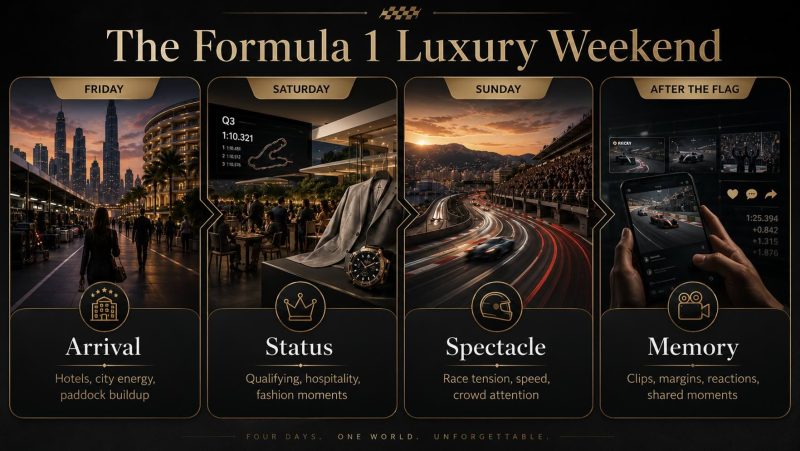
Luxury brands follow Formula 1 because the setting already speaks their language: precision, rarity, VIP access, private spaces, and performance design. A brand does not need to borrow meaning from the sport when the surrounding culture already rewards detail, timing, and presentation. The strongest race weekends give brands a full social arc, from Friday anticipation to Saturday hierarchy and Sunday consequence. A guest can move from hotel suite to circuit lounge, then from team garage glimpse to dinner, where lap times become conversation. That rhythm is difficult to recreate in a static campaign. Formula 1 provides a clock, a crowd, and a reason to keep looking. Monaco explains the relationship better than almost any city. Historic cars, marina life, old-world hotels, modern hospitality, and waterfront style all sit within sight of the circuit. A related piece on Ferrari, Riva, and the Yacht Club de Monaco captures that blend of motorsport, nautical design, and European elegance. F1 did not invent that atmosphere, but it gives it a sharper pulse.
The New Fan Does Not Need to Start with Engineering
Formula 1’s luxury boom comes from easy entry points. New viewers can arrive through fashion, celebrity, travel, driver personalities, team content, or a single dramatic clip. Technical knowledge can come later. This does not dilute the sport. It widens the front door. Once a viewer learns a few anchors, the weekend changes. Qualifying explains why Saturday matters. Tire life explains why a fast car may wait. Constructors explain why one driver’s result can carry a team story. The circuit layout explains why passing looks different in Monaco than at Monza or Austin. These details make the glamour less decorative. They give the spectacle a spine. That is why Formula 1 fits neatly beside supercars, yachts, private aviation, watches, and destination hospitality. It has the same taste for engineering and scarcity, with the tension of live sport. A watch can signal precision. A yacht can signal command of space. A Grand Prix does both.
The Memory Lives After Sunday
The most effective race weekends linger because they create clean stories: a pole lap, a late Safety Car, a tyre choice that changes the final stint, a celebrity appearance that travels through fashion pages, or a finish measured by fractions. These details give the weekend its afterlife. Formula 1 became luxury’s favourite weekend stage because it gives status something active to orbit. The cars bring force, the cities bring atmosphere, and the audience brings attention around the race. The Grand Prix weekend is not background decoration for luxury. It is one of the few settings where design, access, speed, and uncertainty can share the same calendar slot. The spectacle keeps spreading beyond the paddock because sport spectatorship remains tied to emotion, social connection, and the feeling of shared occasion, as explored in this study on watching sports events and residents’ subjective well-being.
Article edited by Alexander Elisab