
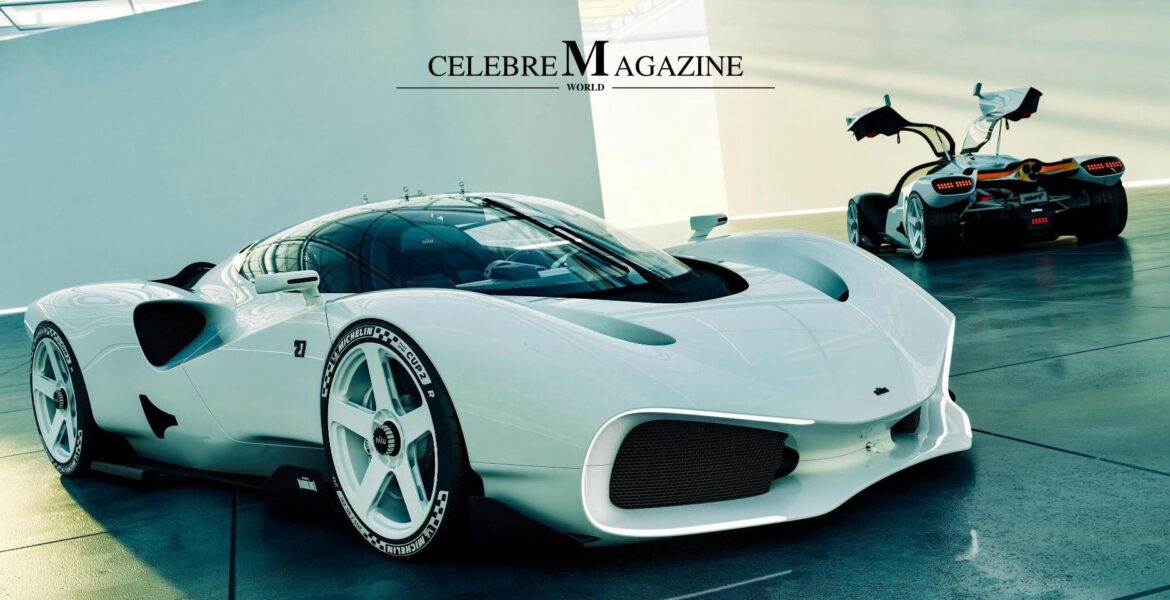
The world of hypercars represents the pinnacle of automotive exclusivity. Their blend of aerodynamic shapes and phenomenal power captures the imagination of seasoned drivers and beyond. These intense emotions are driven by traditional power units, sometimes hybrid and occasionally electric.
– ENJOY THE VIDEO –
Everything is about engineering, noble materials, beauty, and sensations beyond limits. Sports car brands often make collectors’ dreams come true, challenging their competitors with limited-edition and one-off models.
But even more, they fuel the fantasies of enthusiasts like Sasha Selipanov, the designer known for crafting Bugatti and Koenigsegg models. They are ready to share his immense passion and expertise with the Nilu 27, his own hypercar.
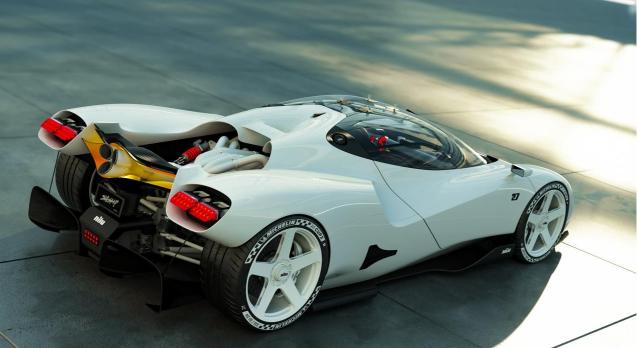
The Pebble Beach Concours d’Elegance has always been the stage for the most spectacular and rare automobiles ever. On the 18th of August, it was here in California that the Nilu 27 made its debut, receiving widespread acclaim amidst past masterpieces and discerning collectors. Its design echoes racing cars’ sleek lines punctuated by air intakes and diffusers. The surfaces appear sculpted by the wind, featuring extremely racing-inspired solutions like the rear section that exposes the engine and exhaust manifolds. The entire bodywork is finished in ceramic white, with brake callipers and 20- and 21-inch wheels all in pure white.
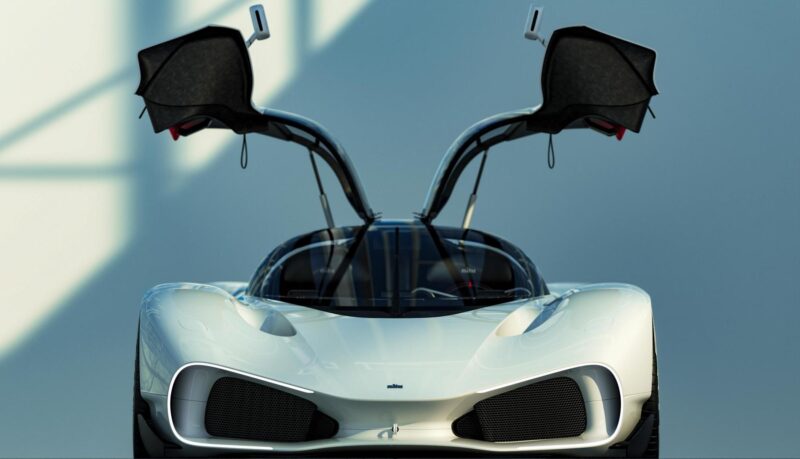
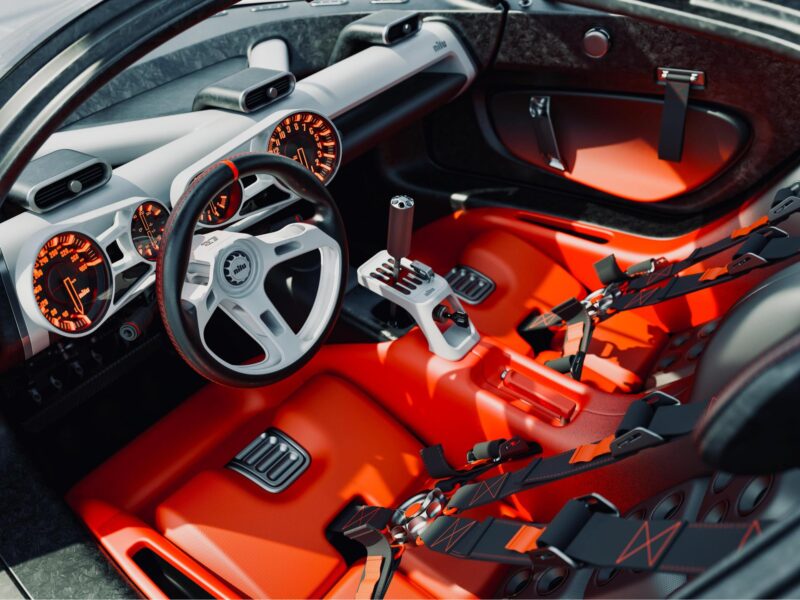
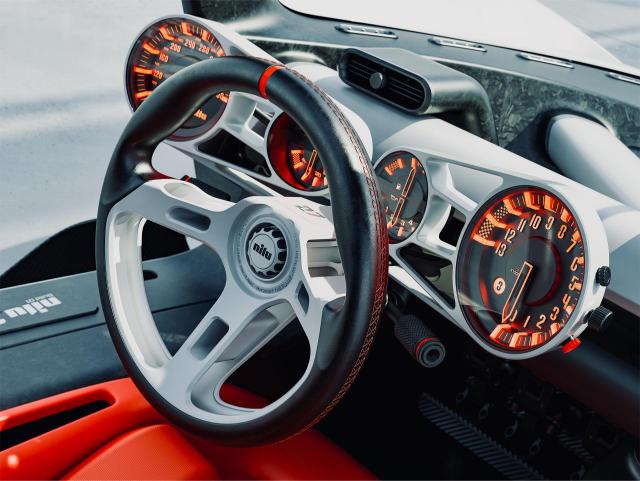
The two gullwing doors grant access to an interior that exudes strong character, leaving no ambiguity about the Nilu 27’s essential nature. The cockpit features fixed seats, akin to those in racing cars, with its forms shaded from red to black, embedded within a cell made of forged carbon. Here, both the pedals and steering wheel are adjustable. Its four circular elements support the instrumentation by architectural structures milled from solid aluminium. The dials hark back to an analogue world, as does the strictly manual gear selector, complete with a safety lever to prevent accidental engagement of the reverse gear.
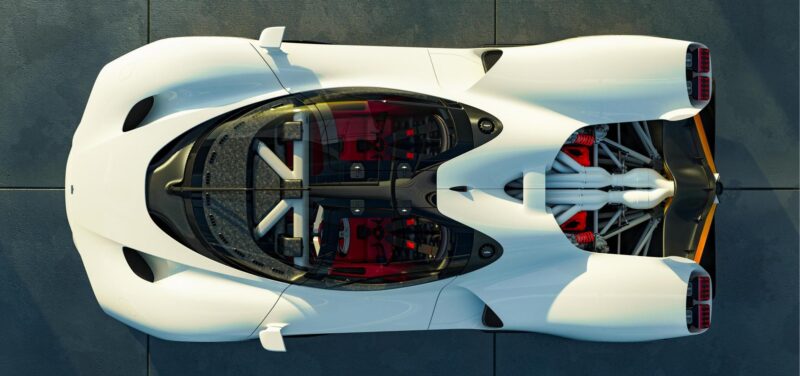
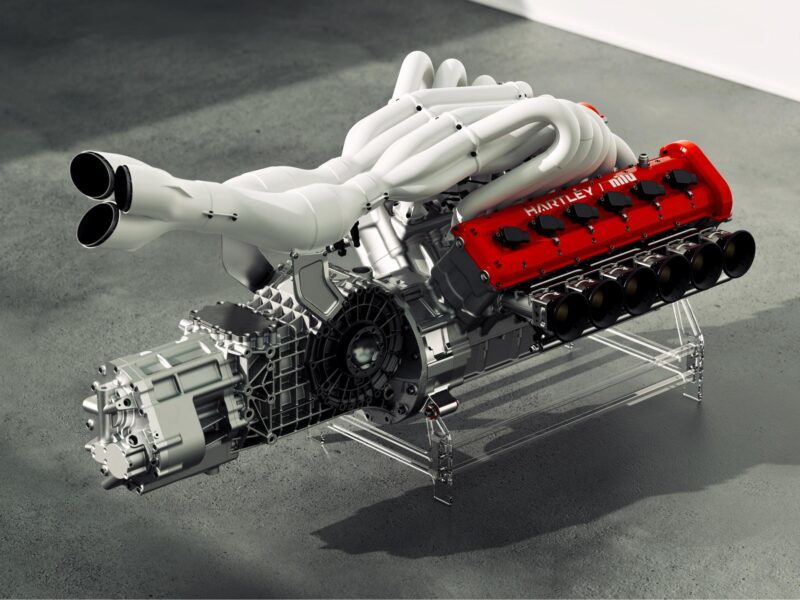
A transverse forged aluminium bar supports all the essential elements of the dashboard, a floating masterpiece that seems straight out of Bauhaus. Inside, you’ll find carbon snorkels for air conditioning and physical buttons accompanied by the classic “clack” sound. The only high-tech concession is a display in place of a rear-view mirror, enhancing rear visibility. The overall approach is analogue, evoking pure sensations. Pursuing absolute beauty, where performance and aesthetics meet, this is how the hypercar experience of the Nilu 27 is born, a return to its origins. The engine takes centre stage at the rear, set like a jewel between the two wheel arches: a naturally aspirated V12 developed by Hartley.
With a displacement of 6.5 litres, it delivers a maximum power of 1070 horsepower at 11,000 rpm and peak torque of 860 Nm at 7,000 rpm. The seven-speed manual transmission is crafted by the Italian company Cima, while the carbon-ceramic braking system is by Brembo, another Italian excellence. Thanks to advanced materials, the scales stop at just 1,200 kg for the Nilu 27… top speed? 400 km/h.
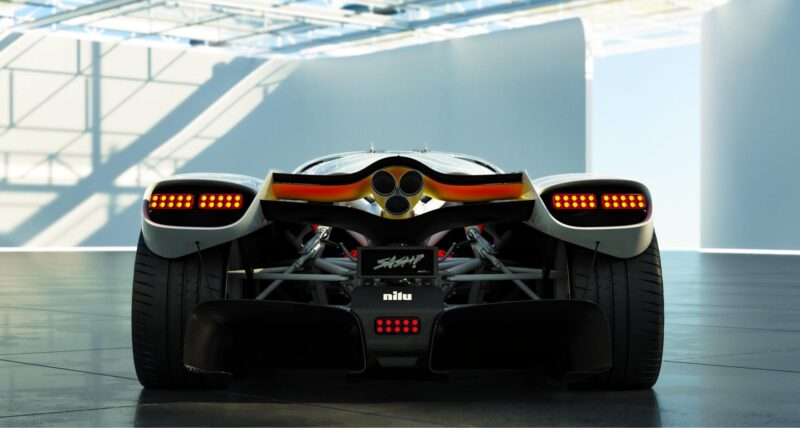
Special mention must be made of the exhaust manifolds, a sculptural masterpiece. They converge into three radial exhaust pipes reminiscent of a spacecraft’s reactors. The technical elements dominate the central rear section, flanked by four LED taillights and a central “racing” type flashing light at the bottom. During the presentation, the manufacturer announced that the initial run would consist of 15 units exclusively for track use, followed by 54 street-legal models. It will be produced in Irvine, California. This hypercar demonstrates that there is still room to dream in the automotive world and time to be bold.
We can say that Sasha Selipanov, with the Nilu 27, has fully achieved his goals with a car designed to be driven, where changing gears still means pressing the clutch… just like in the old days.
Article edited by Antonio Erario