
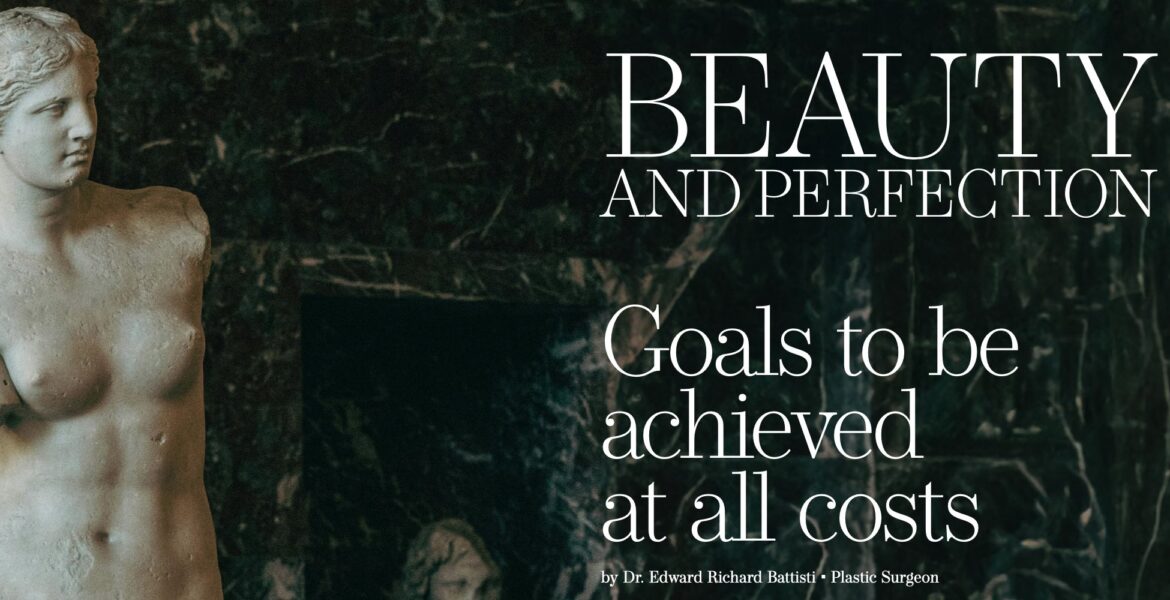
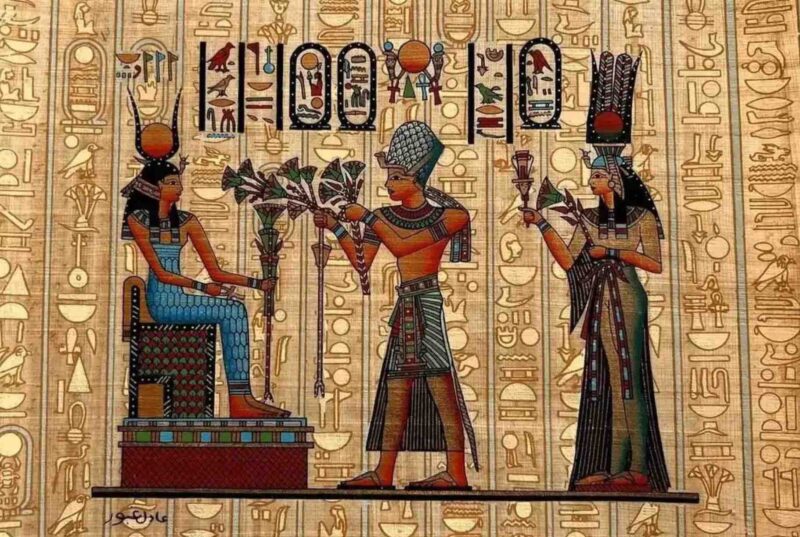
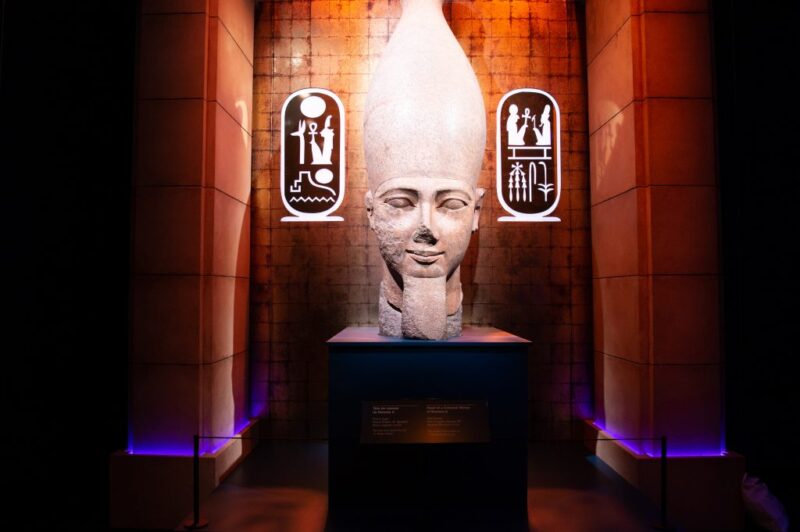
Beauty and perfection are two seemingly similar concepts, often considered almost synonymous, idealized, praised, and goals to be achieved at all costs, not only in a figurative sense. Already in antiquity, beauty and perfection were often associated. The Pharaoh was beautiful and perfect for the Egyptians and was always depicted with precise, youthful faces and full vigour, even though reality usually differed. For example, Ramses II had an aquiline nose and a slight hump due to cervical arthritis caused by his significant height, which approached 2 meters. In his numerous monuments, so much so that he was called the Builder Pharaoh, although he preferred quantity over quality, there is no trace of his physical flaws.

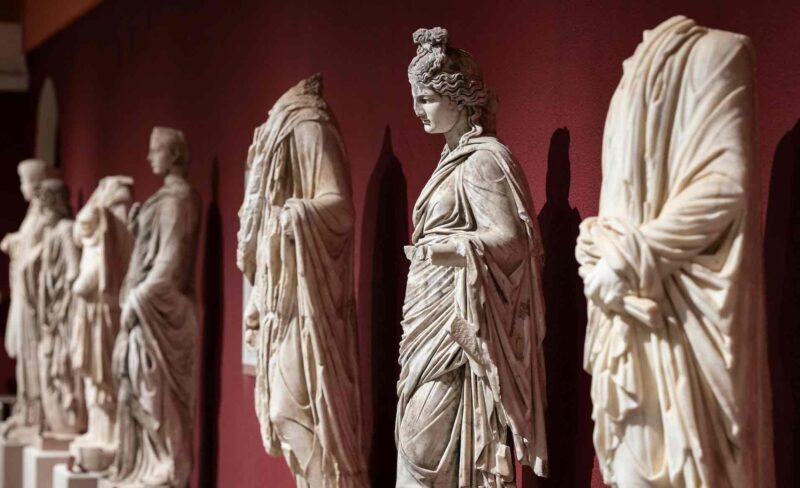
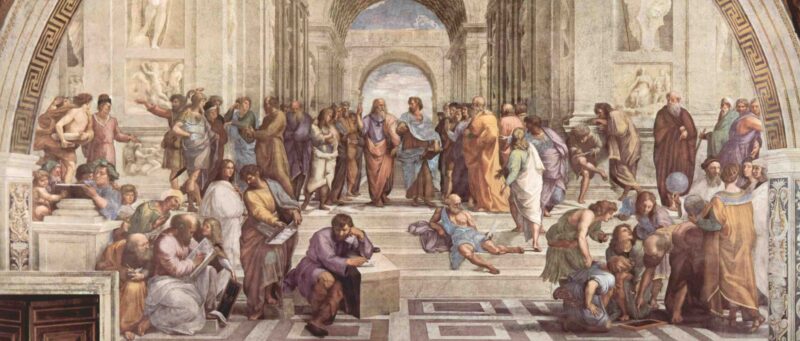
The Pharaoh had to be beautiful and perfect for Eternity; thus, he was to be represented. In Ancient Greece, the muscular body of an athlete was compared to that of a god, once again the perfection and beauty of the body approached the transcendent. For Saint Thomas Aquinas, beauty was what pleased, a perfect fusion of vision and enjoyment. Therefore, the concept of beauty necessarily implies some responses from the human intellect, concepts later taken up by Immanuel Kant. What pleases me may not please you; thus, no idea of beauty exists.
The sensations experienced when faced with a work of art can be different, as can be different when looking at a human body. A third aspect of beauty and perfection must be added, namely harmony. It can almost be defined as the glue of the two initial terms, a track on which beauty and perfection must not exceed. Everything that is harmonious becomes beautiful and perfect in art, music, and, once again, the human body. Everything done in aesthetic medicine or cosmetic surgery must meet specific parameters, which translate into respect for three-dimensional ratios and the play of light and shadow, which characterize, for example, our face or abdomen.
And it is precisely harmony that becomes the fundamental parameter in the execution of any aesthetic treatment. It is assumed that ageing is, unfortunately, an irreversible process, in which various factors, extrinsic and intrinsic, are involved that cannot be stopped but can be slowed down; therefore, the goal becomes to maintain a youthful appearance aided by a good diet and adequate physical activity because by living better, one lives longer. Aesthetic medicine can intervene in this sense, without exaggeration, providing us with a variety of products aimed at improving muscle tone and skin elasticity, a discipline in continuous evolution, with the introduction into the market of products often used in combination.
To deepen the effectiveness and safety of the products is the natural task of the professional who must navigate the not-easy forest of products, some truly effective, others instead entrusted to commercial operations rather than actual validity. The solutions available are numerous and valid, with treatments that are non-invasive or minimally invasive, which nevertheless require constancy in application to help the skin work, aiding in the production of collagen precursors, the fundamental matrix of our connective tissue, and to reduce as much as possible the causes of oxidative stress and the consequent production of toxic material, the infamous free radicals.
Therefore, well-known products such as botulinum toxin, hyaluronic acid, stimulating and traction threads, or body treatments with lasers, radio frequencies, and biotechnological machinery allow us to choose the most effective and long-lasting treatment, consistently placing the care and safety of the patient first.
 Article edited by Dr Edward Richard Battisti
Plastic Surgeon