
With the birth of the European community, using a common language failed to find agreement among the states, giving rise to a unique and unparalleled solution in multilingual countries or international organizations. Multilingualism was enshrined in the EU Charter of Fundamental Rights, thus EU citizens have the right to communicate in any of the languages of their home nations, and legal acts and summaries are drafted in all the languages of the member countries. Meetings of the European Council and the Council of the European Union are interpreted in all official languages by conference interpreters and translators, tasked with conveying spoken and written words in all EU official languages and, if needed, others, although acknowledging that certain subtleties of the produced acts may not find an exact placement in the target language.

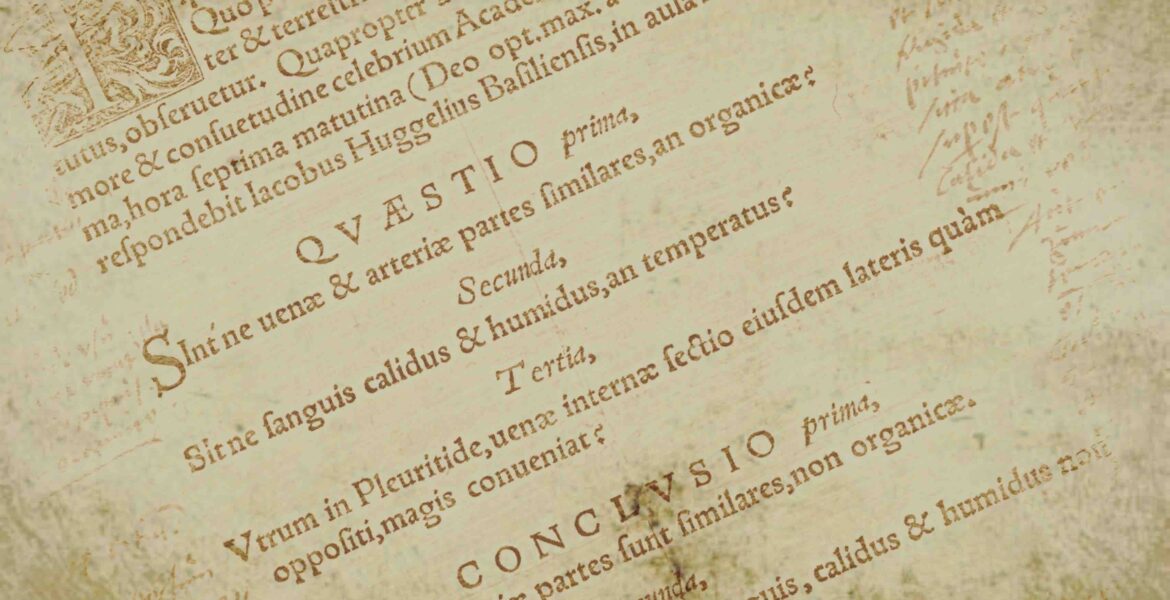
In the absence of unanimous agreement, the founding members decided not to decide, leaving linguistic sovereignty to the various participating states, yet conventionally adopting English as the community language, despite this language representing only a small minority of inhabitants of the United Europe. It is remarkable that to give a unitary connotation to the Union, the spoken language of a single state was utilized. In contrast, it would have been more appropriate to have a common language that does not belong to a singular part but could represent all member states without overriding cultures and traditions. It’s like saying that what is currently being discussed these days, the creation of a European army, would consist of soldiers and officers from only one nation. A suggestion comes from the thought of a great Italian journalist and writer, Giovannino Guareschi, who proposed, with motivation, the use of Latin as the official European language.

Guareschi said: “Latin is a precise, essential language. It will be abandoned not because it is inadequate for the new demands of progress but because the new men will no longer be adequate for it. When the era of demagogues and charlatans begins, a language like Latin will no longer be of service, and any boor can freely hold a public speech and talk in a way that avoids being kicked off the podium. And the secret will be that he, exploiting an approximate, elusive phrasing with pleasing sound effects, can speak for an hour without saying anything. An impossible feat with Latin.”

Latin represents the pinnacle in the drafting of legal acts globally, used to assert and define facts, situations, and commitments. Few know that the official acts signed with the Treaty of Nerchinsk between China and Russia on August 27, 1689, were not written in Russian, Chinese, German, or English but in Latin. According to an international customary practice on treaty interpretation, later adopted and recognized in the Vienna Convention on the Law of Treaties of 1969, the treaty’s official language is of significant importance in interpretation where differences arise among versions drafted in other languages; an issue strangely not yet addressed in the numerous translations of acts produced by current European bodies. The European community, while respecting its cultural and political sovereignty, certainly needs a common army, a common bank to oversee the banking system of member states, a model of essential learning levels that are not merely enumerative ones produced in Lisbon and not deeming the sole common monetary reference of the euro sufficient, but to reach the actual constitution of the United States of Europe, as postulated by Winston Churchill, in a speech to young Europeans in the aftermath of the conclusion of World War II, we also need a common language.

It is peculiar that Europe continues to use English as the official language of the European community, even in the aftermath of Brexit, which saw the United Kingdom leaving the European Union following the June 2016 referendum, while it would be appropriate to make a turnaround and, together with the establishment of a European army, finally arrive at the birth of a common language that is not that of a single nation but a solid, culturally high-profile language that silences the chatterboxes of the moment and restores the precision of languages, thus not Esperanto, as the language of all Europeans, but Latin. Truly educated people are those capable of inventing expressions worthy of the most incisive Latin maxims; today, to accuse someone of plotting a coup, we need so many words, whereas Cicero, who accused Catiline of plotting a coup, is remembered for uttering four simple words: “Quo usque tandem abutere,” meaning “How far will you abuse?”
But until the European community removes from its regulations that any modification or innovative introduction is subject to a unanimous vote, Europe will never be a true European Community, blackmailed each time by sovereign states exercising the right to veto, excessively delaying problem resolution, giving rise to a blackmail phase that can even lead to corruption.

Edited by Prof. Alessandro Calabrese