
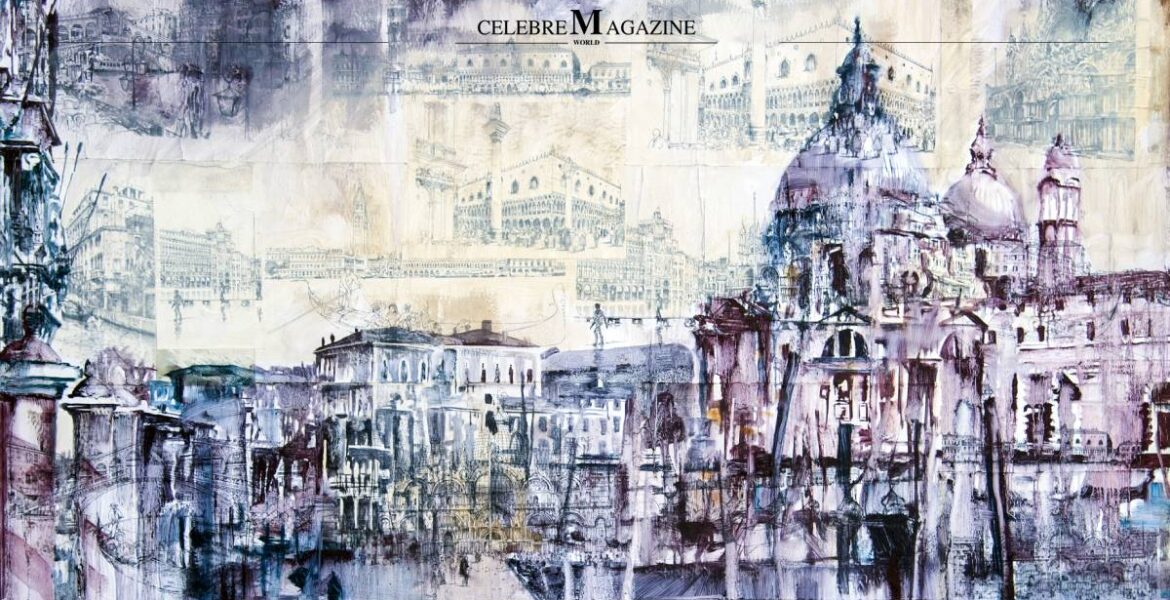
Walter Marin graduated from the Art School in Treviso at a very young age before enrolling in the Faculty of Architecture in Venice. His interest in art has always been an integral part of his life, a passion that led him to frequent, lively cultural circles with brilliant artists: Giuseppe Cendron, Anita Corbos Corradini, Mario Pozzebon and Mario Vizzini, with whom he founded the Cultural Association of Istrana (TV).
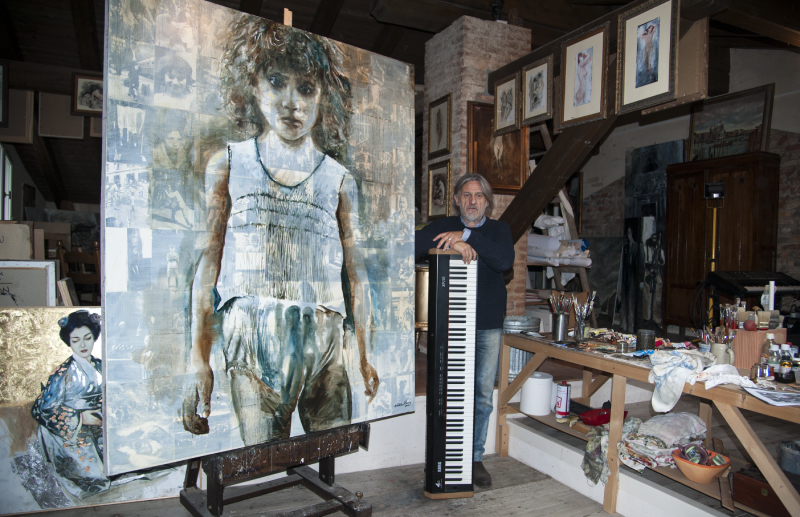
But it was in 1980, at the Academy of Fine Arts in Venice, he developed his artistic awareness, becoming a pupil of Emilio Vedova. Under his guidance, he learnt how to master new creative forms ranging from black and white to colours and from graphics to painting. It was then that the artist matured, pouring his instinct onto the canvas with the same enthusiasm with which a cheetah attacks its prey after having observed, studied and pursued it for a long time. He is an invisible artist, an abstract observer, who captures from the environment in which he has immersed those imperceptible vibrations that only the sensitivity of an artist can grasp.
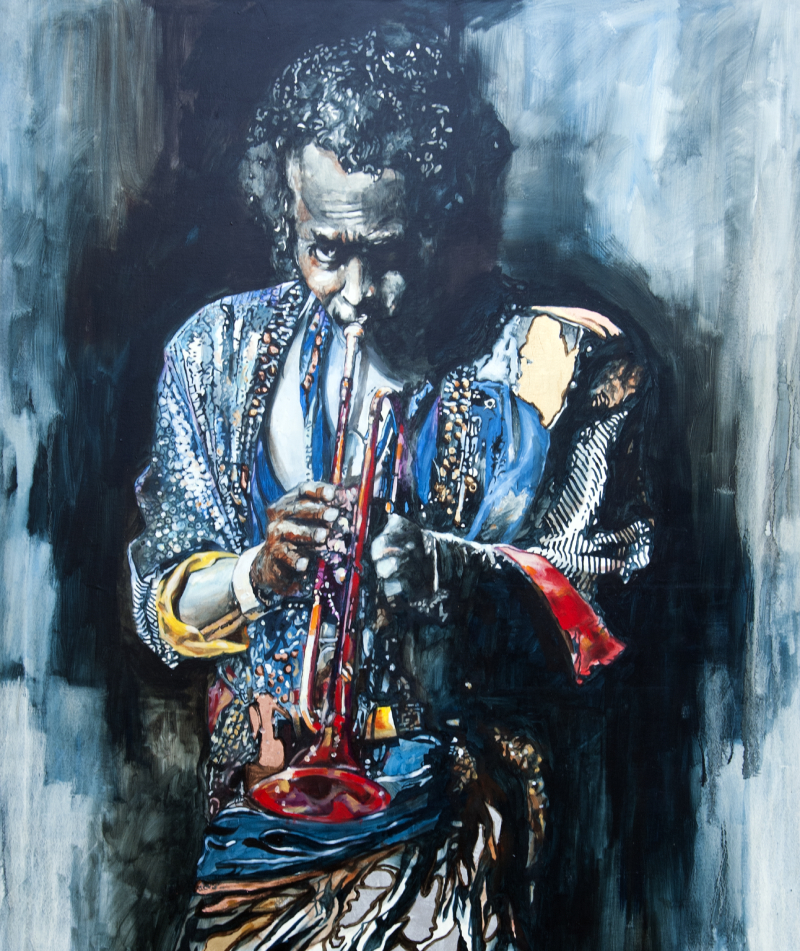
The music stumbles between improvised notes that chase each other, mixing with the ingredients of a drink, with the complicit voices of the amused audience, with the smells, the smoke, the alcohol and the taste of food mixed with the flavour of tobacco. He takes us to a historical jazz music venue that will remain forever, that forever typical of art, imprinted on the painted fabric, stretched like the strings of double bass on the frame of the canvas that itself becomes a musical instrument and a sounding board.
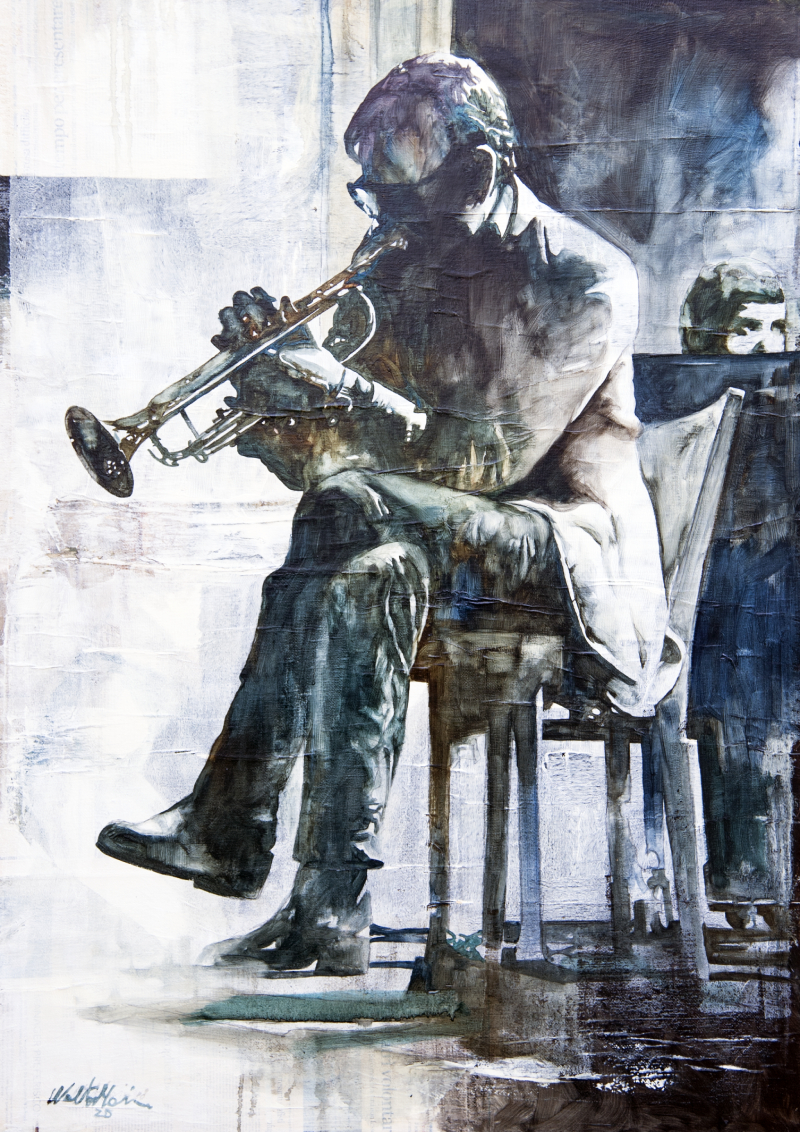
His art is bursting with life and brings back the sonority of the environments, restoring the echoes of full halls or empty depots, wide stations from which the silhouettes of baggage depart or arrive, making their contents explicit by their shapes: a guitar, a saxophone, a trumpet or a simple suitcase of someone running away or returning home. We can find ourselves in those works, which is why we desire them, to fix that instant in which we decided to run away or return. As in a novel of the early twentieth century, Walter tells us and tells himself. Just as in life, interests and passions take us to safe shores, distracting us from pain. In the same way, Marin protects the bare canvas with warm layers of colour, full-bodied material that defends the emptiness with which we are filled.
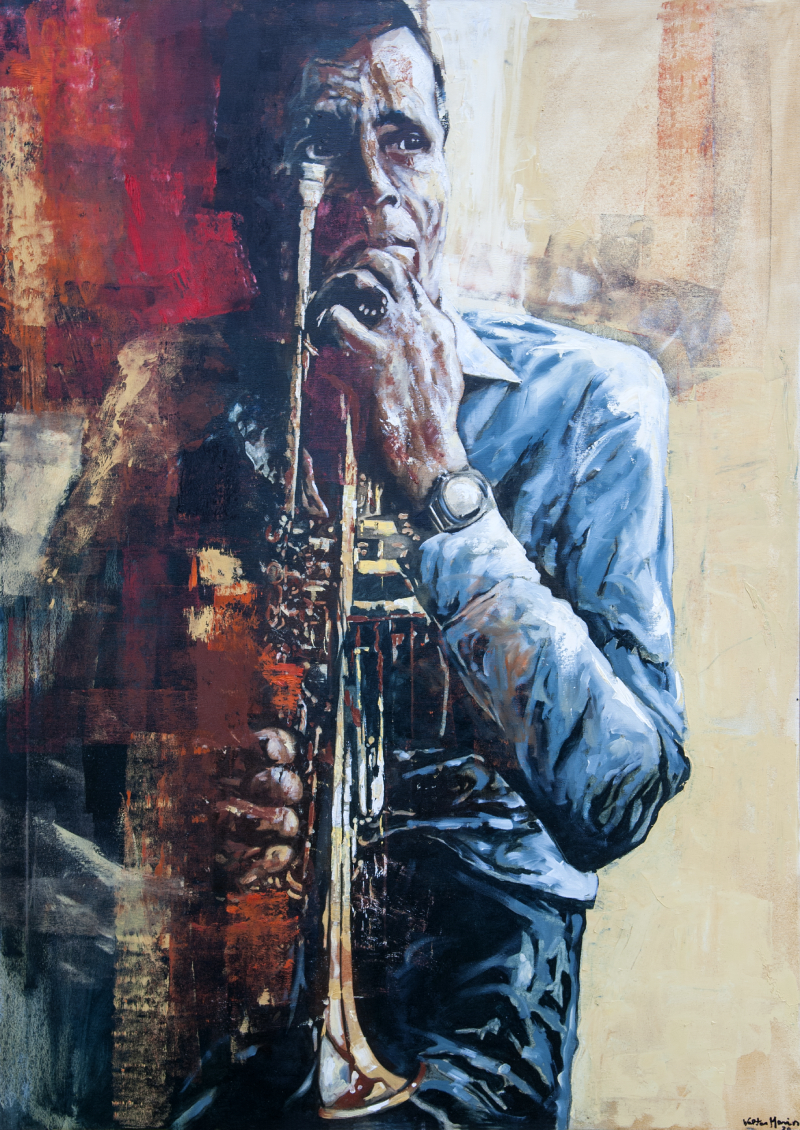
Like uncovered gums, the canvas is scratched and irritated by the artist who, with claws, removes the layer of colour protecting it. The material is the body of the work, the thick, voluminous oil, which he places, caresses and scratches while it is still fresh or when it has solidified. He spreads the colour carefully and then removes it, flays and tears it, plays and fights with it. He dilutes it to the point of making it pure and white, or as cloudy as a puddle compromised by car exhausts that trample on it and splash it on the canvas. Abstraction over figurative is the context of the clash, the balance that makes the master complete. There is no camera capable of faithfully reproducing those sensations, but the artist succeeds.
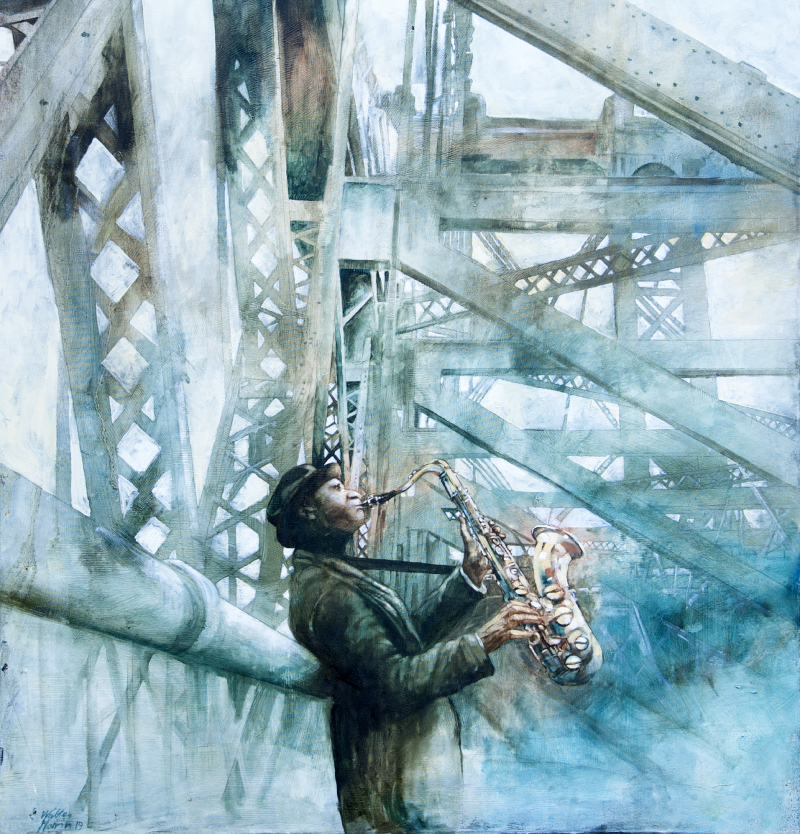
Art is a need, and Walter Marin’s need is to capture memories without letting emotions fade.
Discover more @ Walter Marin Art
Article edit by Prof. Luca Caricato
Luca Caricato – The World of Art
Leonardo Da Vinci Scholar
Art Historian – Art Expert