
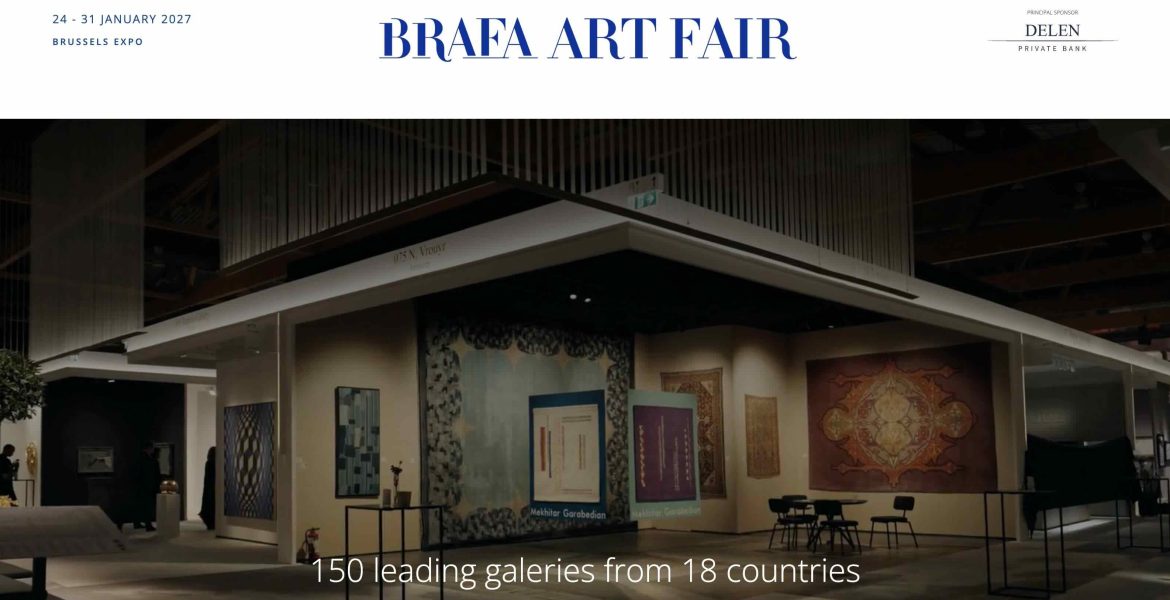
With its exhibitor list already complete months ahead of opening, the 72nd edition of BRAFA Art Fair promises new names, new disciplines and a much-anticipated Guest of Honour: the Ixelles Museum.
From Sunday 24 to Sunday 31 January 2027, Brussels Expo will once again become the meeting point for collectors, institutions and art lovers from across Europe and beyond, as BRAFA Art Fair opens its doors for its 72nd edition. Supported by Delen Private Bank, and with the Ixelles Museum as Guest of Honour, the Fair has chosen a motto that sums up its character perfectly: BRAFA, eclecticism has an address. The figures speak for themselves: 150 galleries, 18 countries and 27 disciplines. Remarkably, with several months still to go before the opening, the exhibitor list is already complete. The organisers note that the selection process moved at a particularly brisk pace this year, a sign of the Fair’s growing appeal and of its increasingly prominent place on the international art-market calendar.
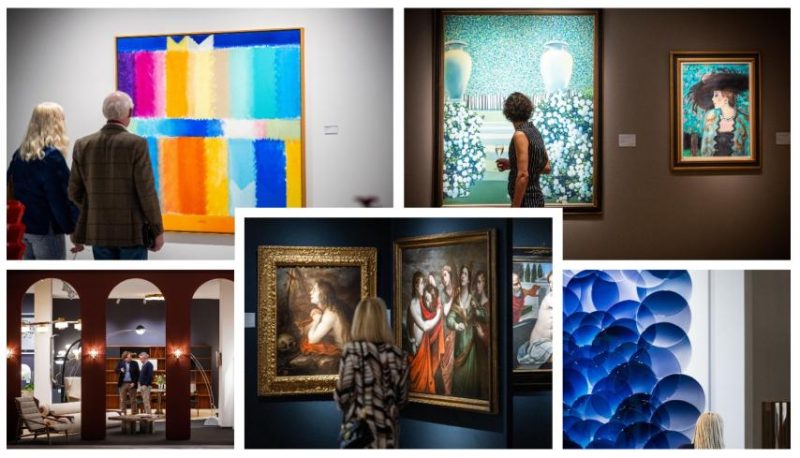
Klaas Muller, Chairman of BRAFA, is in no doubt about what lies ahead. “I am proud to announce that the 2027 edition will be even more impressive than the 2026 edition,” he says, pointing not only to the overall scenography but also to the newcomers. Thanks to an intensified focus on attracting leading international galleries, several renowned names from across the international art scene will be taking part for the first time, while the Fair’s diversity has been strengthened with a greater presence of Tribal Art, Old Masters and Design. The vast majority of the exhibitors who took part in 2026 have renewed their commitment. Alongside them, BRAFA welcomes a number of prestigious new galleries and significant returning exhibitors, further strengthening its international profile and broadening the range of specialities on show. Year after year, this momentum confirms BRAFA’s position among the world’s leading international general art fairs and reinforces its role in the European art market as a trusted destination for collectors, institutions and enthusiasts, where established expertise meets fresh perspectives.
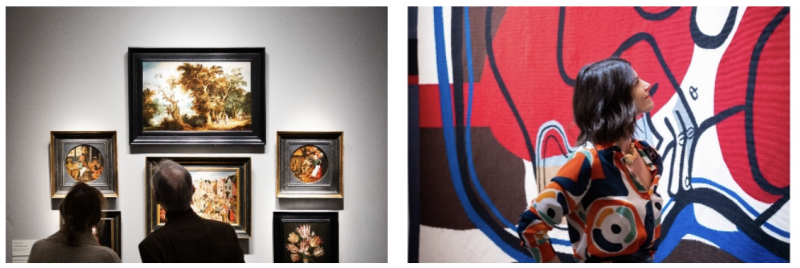
Modern and contemporary art – Among the first-time participants is the London-based Waddington Custot (London, Paris, Dubai), renowned for its work with the Nabis masters, modern art, photorealism and contemporary creation. It is joined by Stems Gallery (Brussels), which is dedicated to emerging contemporary artists and has a particular focus on introducing the American scene to European audiences.
Asian art – will enjoy a stronger presence thanks to two Parisian galleries with a particular interest in Japan. Galerie Tiago will present a cabinet of curiosities devoted to Japanese art, illustrating the richness and diversity of the country’s creative output, while Guillaume Castellano will offer a selection of objects chosen for their aesthetic value. Together, they provide visitors with two complementary approaches to the same artistic world.
Old Masters – Three new names enrich the Old Masters offering: W. Apolloni – Laocoon Gallery (Rome/London), presenting paintings, drawings, sculptures and works of art from the 17th to the 19th century; Argento Gallery (Netherlands), specialising in Dutch Golden Age masters and, in particular, 17th-century portraiture; and the Turin-based Caretto & Occhinegro (Italy), with its discerning focus on Flemish, Dutch and German painting from the 15th to the 17th century.
Watches and jewellery – For the first time in its history, BRAFA is opening its doors to vintage and prestige watches with the arrival of Bernardini Milano (Italy), a specialist in high-end collectors’ timepieces, thereby introducing an entirely new field to the Fair. The jewellery section is also expanded with Marjan Sterk Fine Art Jewellery (Amsterdam), specialising in signed antique and vintage jewellery.
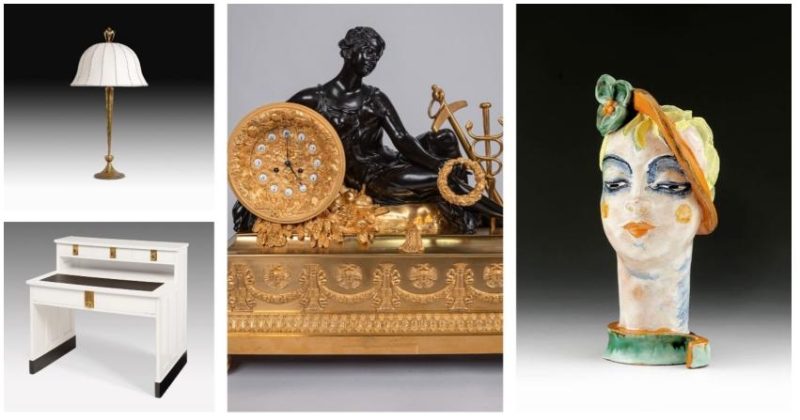
Antiques, design and decorative arts – This section is reinforced by several new galleries. Verdini Antiques (Rome) specialises in micro-mosaics, fine antique furniture and paintings by landscape artists depicting the vedute of Lazio; among its highlights is a gueridon with a micro-mosaic tabletop on a bronze base, signed and dated “Enrico Podio fece Venezia 1863”. Galerie bei der Albertina – Zetter (Vienna) is devoted to Austrian painting, sculpture and design of the 20th and 21st centuries, from Viennese Art Nouveau to the Wiener Werkstätte. Its preview selection includes Dagobert Peche’s Table lamp (1921), produced by the Wiener Werkstätte in hammered brass with floral decoration and a beaded-rim base, fitted with a new lampshade and rewired (H 87 cm, D 46 cm); Adolf Loos’s Lady’s desk (c. 1903/04), produced by Friedrich Otto Schmidt in Vienna in softwood with oil varnish, hammered brass and a replaced leather writing surface (H 106 × W 113 × D 67.5 cm); and Vally Wieselthier’s Lady’s head with green flower (1928), produced by the Wiener Werkstätte in red earthenware with polychrome enamel (H 28.5 × W 13.5 × D 14.5 cm).
They are joined by Spazio Nobile (Brussels), dedicated to contemporary applied arts and collectible design; the Venetian house Barovier&Toso, which has perpetuated the craft of Murano blown glass since 1295 and will show Peter Kogler’s Untitled (Globe), 2025–2026, a 30 cm Murano glass work signed “Peter Kogler 2026”; Anthony Short Antiques (Petworth), for period English furniture and decorative objects; and Snackers Antiques & Fine Art (Maastricht), specialising in religious art, antique furniture and collectors’ objects, which will present a Louis-Philippe mantel clock made in Paris around 1835 in patinated and gilt bronze (H 70 × W 75.5 × D 27 cm).
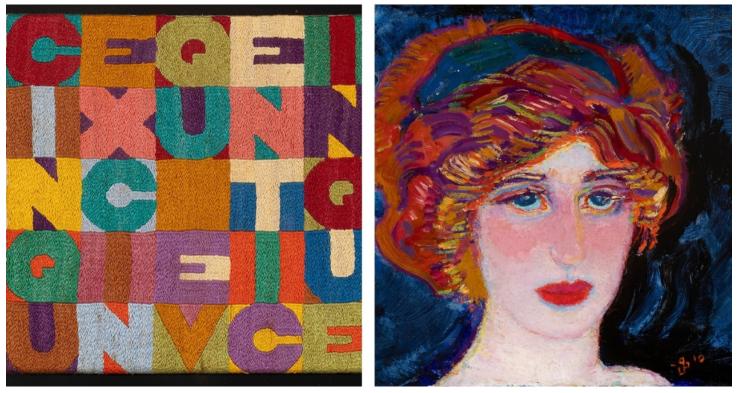
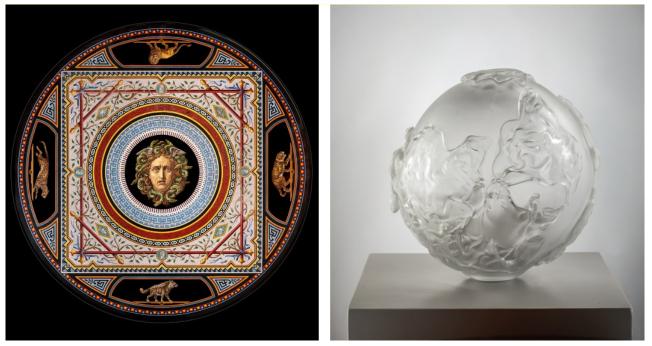 Four galleries specialising in modern and contemporary art return to the Fair. Stoppenbach & Delestre (London/Paris) focuses on French artists associated with major movements such as the Barbizon School, Impressionism and Post-Impressionism, spanning the 19th century to the mid-20th century. LUDORFF (Düsseldorf) specialises in Impressionism and German Expressionism, post-war art and contemporary creation. Opera Gallery (Geneva), now present in 12 cities, brings its selection of modern and contemporary art, while Rueb Modern and Contemporary Art, based in Amsterdam, organises a major exhibition each year and benefits from an extensive network of private collectors. Among the works it will present are Alighiero Boetti’s embroidery Cinque x Cinque Venticinque (1988, 21 × 22 cm) and Jan Sluijters’s Greet van Kooten with a headband (1910, oil on canvas, 35.5 × 42 cm).
Also returning are Brun Fine Art (Milan/Florence), with its expertise in 18th-century Italian art; Galerie Uzal (Brussels), presenting sculptures, paintings and works of art from the 19th and early 20th centuries; and F. Baulme Fine Arts (France), established on the Quai Voltaire in Paris since 2014, which presents European works of art from the 16th to the 19th century.
Switzerland will be represented by seven renowned galleries. Almine Rech (Gstaad, Brussels, Paris, New York, Shanghai, Monaco) specialises in modern and contemporary art; Repetto Gallery (Lugano) focuses on Italian post-war art, Arte Povera and Land Art; and Galerie von Vertes (Zurich) is dedicated to modern and contemporary art. They are joined by four Geneva-based galleries: CKS Gallery, standing for Impressionism, post-war and contemporary art; De Jonckheere, focusing on Old Masters and modern painting; Opera Gallery, specialising in modern and contemporary art; and Objects with Narratives (Geneva, Brussels), which places the emphasis on functional art and collectible design.
According to the organisers, the exhibitors break down as follows: Austria 2, Belgium 67, China 2, France 42, Germany 5, Greece 1, Ireland 1, Italy 12, Japan 1, Luxembourg 2, Monaco 2, Netherlands 12, Portugal 1, Spain 2, Switzerland 7, United Arab Emirates 1, United Kingdom 13 and United States 47.
BRAFA’s breadth is reflected in its 27 specialities: 20th- and 21st-century Decorative Arts and Design; Antiquities; Art Nouveau / Art Deco; Asian Art; Classical African Art and Oceanic Art; Clocks and Scientific Objects; Frames; Furniture; Glass; Graphic Arts; Islamic Art; Jewellery; Luxury Vintage Collectibles; Manuscripts, Rare Books, Engravings, Maps and Autographs; Middle Ages, Renaissance, until the 18th century; Modern and Contemporary Art; Natural History; Old Master Paintings and Drawings (14th–17th century); Original Comic Drawings; Paintings and Drawings (18th–19th century); Photography; Porcelain and Ceramics; Pre-Columbian Art; Sculpture (19th century to the present day); Silver and Gold Ware; Tapestries, Carpets and Textiles; and Works of Art.
For its 72nd edition, BRAFA will welcome the Ixelles Museum as Guest of Honour, at a pivotal moment in the institution’s history: the museum will celebrate its reopening in March 2027, following ten years of major renovation work. “To reopen is to connect: a rich past of nearly 135 years of artistic commitment with a present in motion; recognised heritage with living practices; and strong local roots with national and international perspectives,” explains Claire Leblanc, Director-Curator of the Ixelles Museum. “This reopening is a museum to be shared, a time to reunite with our loyal audiences and to forge new encounters: with new visitors, new generations, across disciplines, periods and viewpoints.”
Since its foundation, the museum has preserved, studied, enriched and shared a highly diverse collection devoted to Belgian art from the 19th century to the present day. Comprising nearly 15,000 works, it is now one of the major collections in its field. Beyond heritage, the museum has always supported the art of its time: many artists who were still emerging when their work entered the collection have since become leading figures, and this attentiveness to living creation continues to guide its acquisitions policy.
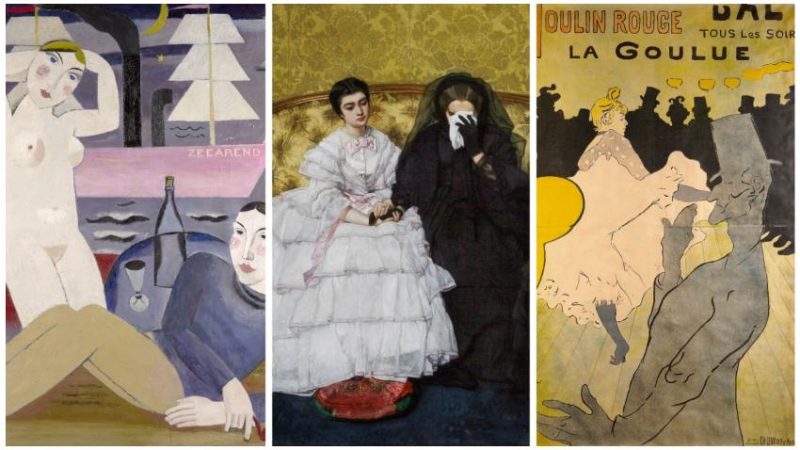
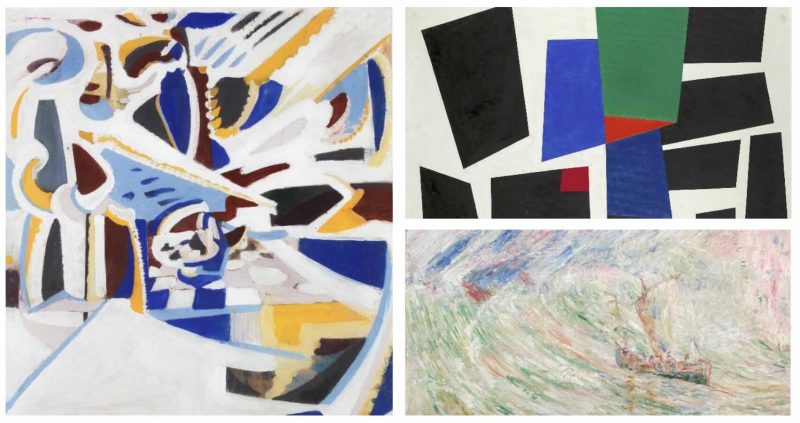
Among the works from its collection highlighted for the occasion are Gust De Smet’s De Zeearend (White-tailed eagle), 1926, oil on canvas (151 × 136 cm); Alfred Stevens’s The consolation or The condolence visit, 1857, oil on canvas (112 × 137 cm); Henri de Toulouse-Lautrec’s Moulin Rouge. La Goulue, 1891, lithograph (180 × 127.5 cm); Jules Schmalzigaug’s untitled, 1914, gouache on paper (94 × 82 cm); Jo Delahaut’s Rumours, 1956, oil on canvas (75 × 102 cm, © SABAM Belgium 2026); and James Ensor’s Christ calming the storm, 1906 (antedated 1891), oil on canvas mounted on panel (69.3 × 79.5 cm).
“We are particularly pleased to welcome the Ixelles Museum as Guest of Honour at BRAFA 2027,” says Klaas Muller. “Beyond the quality and richness of its collection, we were especially drawn to its profoundly human vision of the museum and its desire to create connections between works, artists and audiences. BRAFA and the Ixelles Museum are two institutions of a different nature, but we share an essential conviction: art derives its full power from encounter and dialogue.”
That vision resonates with BRAFA’s own. For all its international scale, the Fair remains above all a place of encounters, bringing together historic works and contemporary creations, decorative arts and design, and collectors, art lovers, professionals, journalists and visitors from every background. The museum’s presence thus celebrates a history, a collection and a vision of a human-scale, forward-looking institution. BRAFA can also be enjoyed beyond the stands, through a rich programme of encounters, discoveries and experiences designed to extend and deepen the visit. Throughout the Fair, visitors will be able to attend lectures and meet figures from the art world, including the KBF Art Talks, a lecture series organised by the King Baudouin Foundation, and the BRAFA Art Talks, as well as a series of short presentations devoted to works on the Ixelles Museum’s stand, organised by the museum itself.
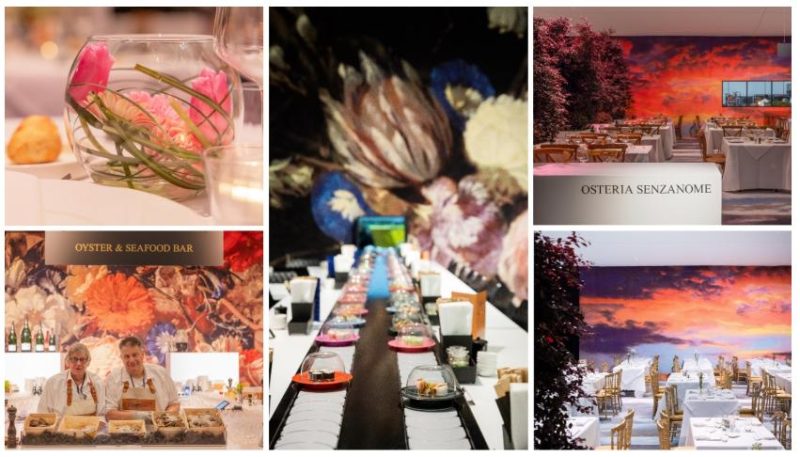
The programme also includes film screenings organised by the King Baudouin Foundation in collaboration with the Myriam Garfunkel Fund, along with guided tours, Kids Tours and many other activities. And because a day at BRAFA is also meant to be savoured, Hall 8, devoted entirely to dining and successfully inaugurated last year, will once again host several establishments, from the cuisine of chef Giovanni Bruno of Senzanome to the Oyster Bar, the Sushi Bar and the Brasserie. Everything is in place for visitors to browse, discover, exchange ideas, have lunch or pause over a drink and, above all, to be surprised by everything the Fair has to offer. At BRAFA, a visit is far more than the discovery of works of art: it is an experience to be lived, shared and savoured.
Discover more @ BRAFA Art Fair 2027

Article edited by Massimo Basile
Editor & Founder