
It is said that hers is the most famous face in the world, together with that of the Mona Lisa, with which, ironically, she shares the destiny of concealing a mystery. The quintessential blonde’s is a face of great depth, a prism of contradictions, as bright as a ray of sun and as melancholy as a waning crescent moon: two people in one, as she described herself. For the public, voilà, a femme fatale with exceedingly well-cared-for charm, like a siren whose inviting smile fascinates and confuses at the same time, a blend of sweetness and seduction. Instead, the sensitive, unstable girl was revealed to just a select few, a perfectionist, obsessive in her search of absolute truths she was unable to find, clothed in pain and disappointed by life, men and herself. A fragile soul who passed through the mirror, and was Marilyn forever.

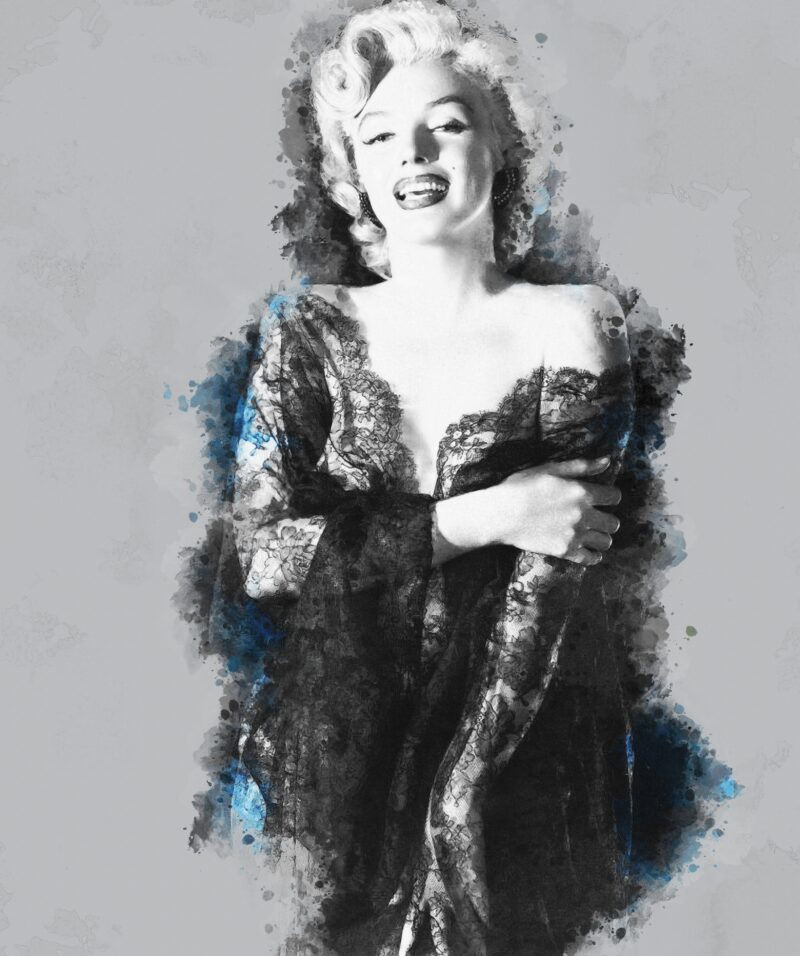
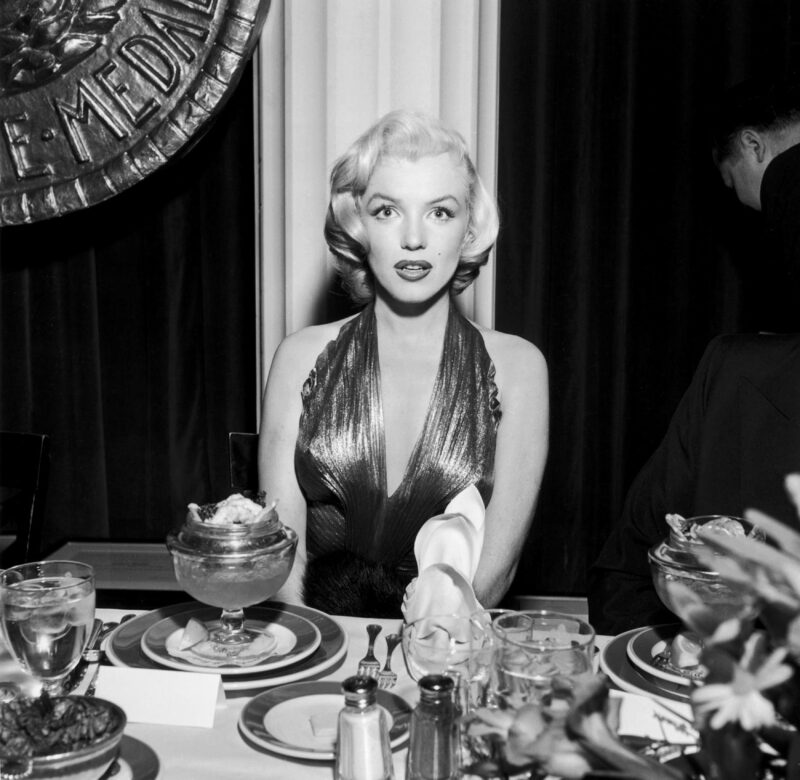
“I daydream chiefly about beauty. I dreamed of myself becoming so beautiful that people would turn to look at me when I passed,” she said. This young girl, the daughter of a frustrated, schizophrenic mother, who lived between children’s homes and orphanages, made it. Norma Jeane Mortenson Baker became an object of desire: intriguing blonde, red lips, an endless gaze, an artfully darkened mole, porcelain skin and the curves of a pin-up. A few drops of Chanel N° 5 was all she wore in bed. In the end, Marilyn Monroe even took the place of Norma as her legal name. Allan “Whitey” Snyder was her make-up artist until the unfinished “Something’s Got to Give,” and he kept his promise to do her make-up for her funeral. And so it was in the summer of 1962, in a green dress designed by her beloved Pucci, the last of the whirlwind of outfits, some of which she even took away from her films, like the fuchsia midi from “Niagara” and the gold lamé dress from “Gentlemen Prefer Blondes,” which turned her into a modern Cleopatra, with her beauty, her famous lovers, her much-talked-about reputation, the stars, and her tragic end. Iconic when she sings “Diamonds Are a Girl’s Best Friend” wearing pink, or when she sings happy birthday to JFK in a sheer crystal-covered outfit, and in her iconic dress, the white plissé dress blowing up above the subway grate in “The Seven Year Itch.” So scintillating under the lights, but so minimalist away from them, with her wardrobe of neutral colours, capri pants, ballerina flats and no jewellery.
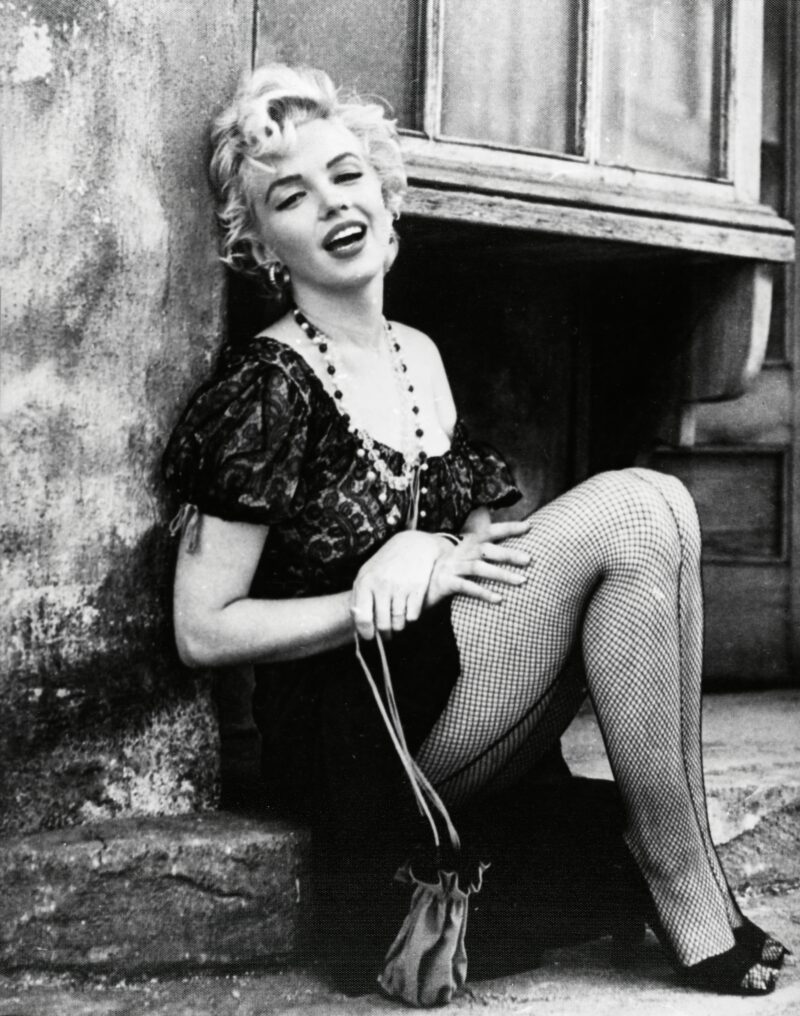
“I want to do the best that I can do at that moment when the camera starts until it stops. At that moment I want to be perfect,” was her credo. She used her light, scatterbrained air with great irony, to the point where Billy Wilder defined her as a comic genius, and directed her for the second time in “Some Like It Hot.” She stood out for her self-discipline and desire to learn, but it was not enough to win her dramatic rules from 20th Century Fox, even though she had proved that she was able to play them in “Don’t Bother to Knock.”
That was when events took a dramatic turn. She turned down a screenplay, put on a dark wig, and using the pseudonym Zelda Zonk, got on a plane to New York, where she would take lessons from the famed Lee Strasberg at the Actors Studio and set up a production company. After a year of legal threats, Fox gave in and renegotiated her contract, while Hollywood applauded her performance in Marilyn Monroe Productions’ “Bus Stop.” The blonde babe had won. And she made her voice heard again when, tired of seeing the same abuse and harassment she herself had suffered, she reported it. It caused a scandal.
Her last psychiatrist diagnosed paranoid masochistic reactions, intolerance of rejection and an obsessive search for a father she had never known. Exasperated by abortions, Marilyn had peaks of depression based on “nobody likes me”, was dependent on sleeping pills and champagne, and lit up when she saw her fans, as happened when she ran into reporters as she was leaving hospital: she managed to seem composed, polite and smiling, and said she was fine. She died two months later.
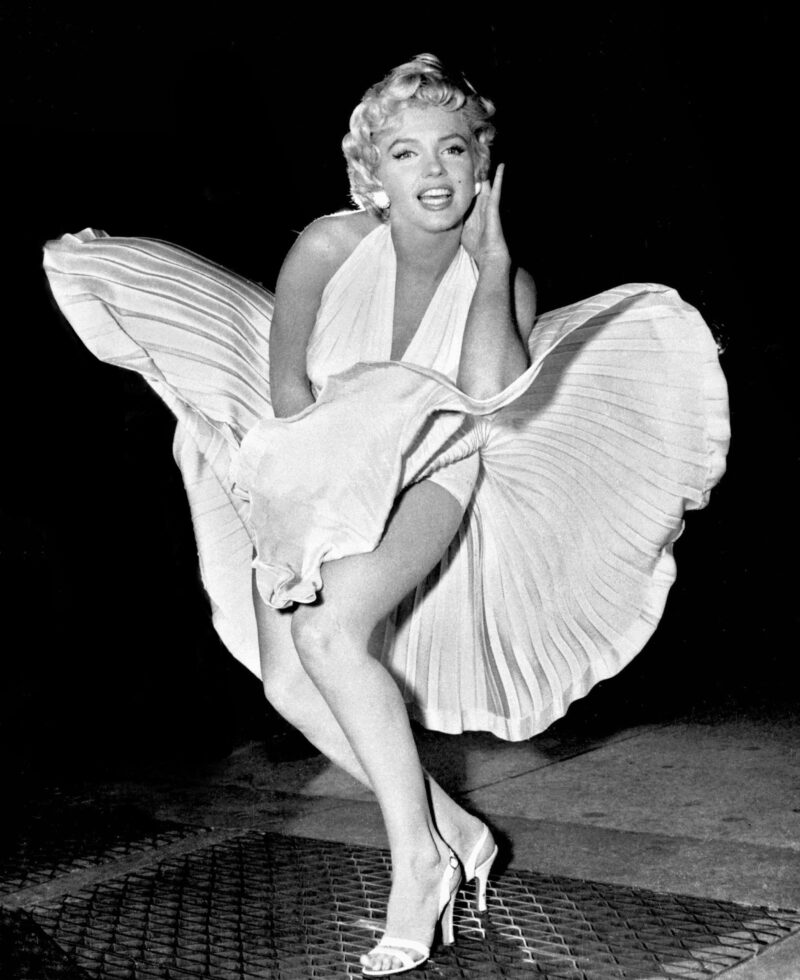
Her diaries, which were discovered in 2007, told of the other side of the image little Norma Jeane, the frightened child with the sweet face and big eyes, had built from nothing, between spectres of solitude – “Alone! I am alone I am always alone no matter what” – and the fear of disappointing people or not being good enough. A picture emerged of an insecure, shy young woman marked by an upbringing based on punishment and a sense of guilt; a woman who dreamed of being an avenger with men; and a mind with a great capacity for observation, as her third and last husband, Arthur Miller, who wrote the screenplay for “The Misfits” for her, allegedly said.
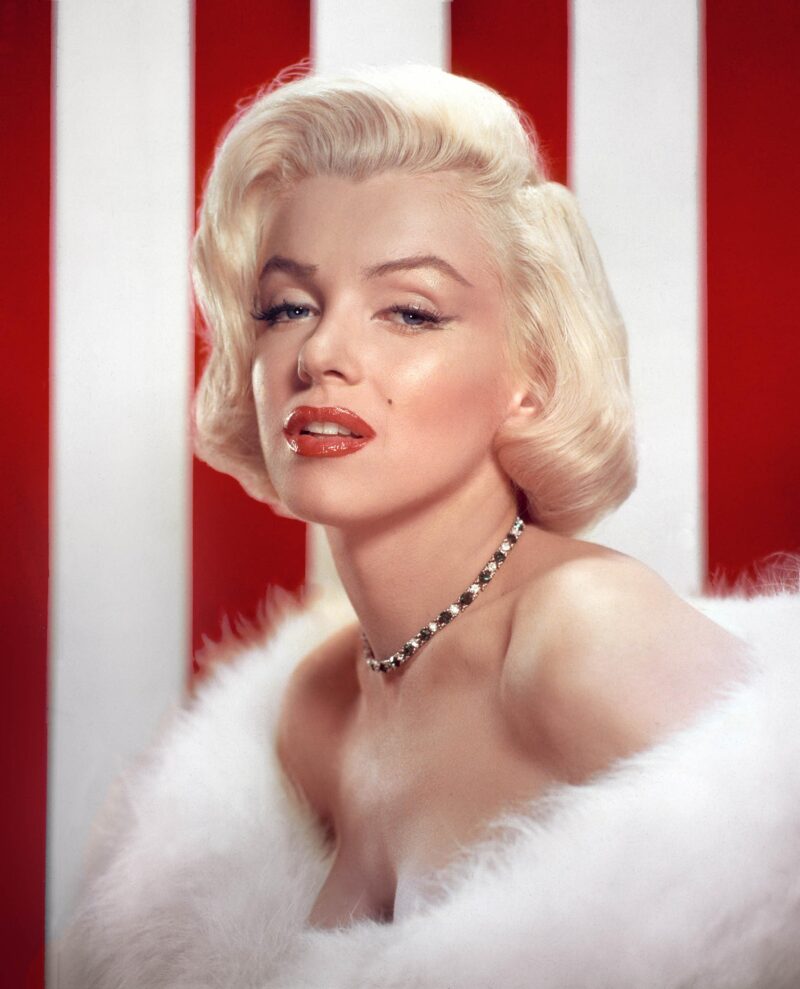
Twenty years after her death, which was ruled as a likely suicide, the Los Angeles City Attorney reopened the case, and then closed it as an accidental overdose. Homicide still remains a theory, and Marilyn’s threat to the Kennedy brothers that she would reveal their secrets never materialised. Joe DiMaggio took red roses to her tomb every year: it was Monroe’s briefest marriage because of his violent jealousy, but he never failed to respond to requests for help from the woman he loved for the rest of her life.

Article edited by Claudia Chiari
Celebre Magazine World Editorial Director