
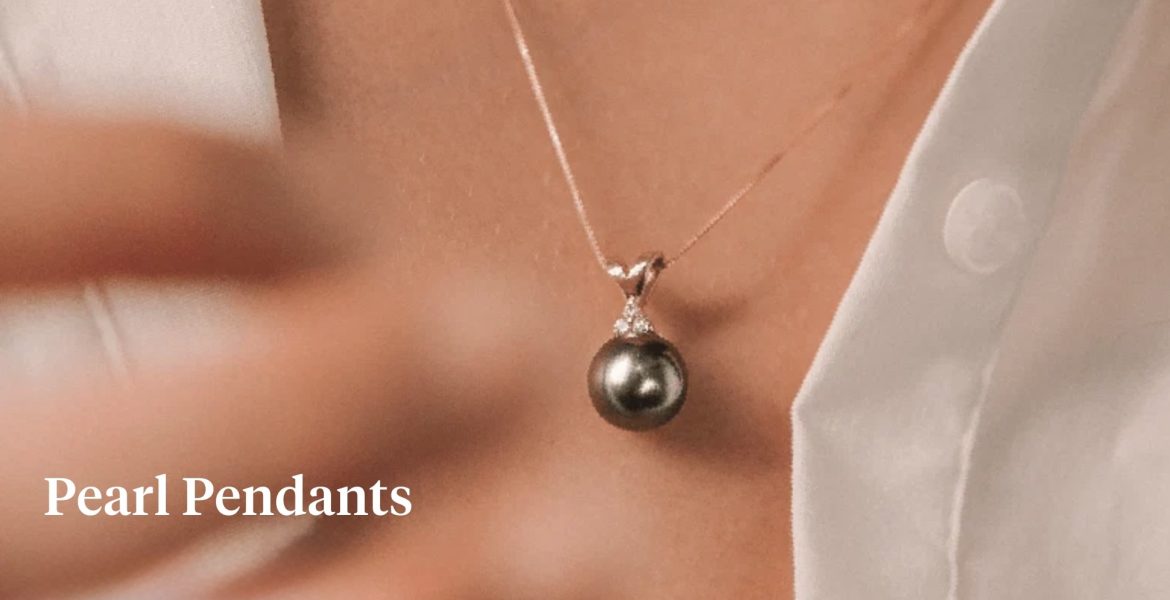
There was a time when a beautiful object required no explanation. A strand of luminous gems arrived in a velvet box, the box carried a famous name, and the conversation ended there. Provenance was a romance rather than a document, and anyone who pressed too hard on where the materials had actually come from was considered faintly impolite. That era has closed, and faster than most houses expected. The contemporary luxury client reads sourcing disclosures the way an earlier generation read auction catalogs, and the questions arrive before the purchase rather than after it. Which waters, which farm, whose hands, verified by whom. The answers now form part of what the piece is worth, as inseparable from its value as the cut of a stone. What makes this shift genuinely interesting is that transparency has not diluted opulence at all. It has concentrated it. When a piece can account for itself from origin to finished setting, it stops behaving like a purchase and starts behaving like a position, and the person wearing it knows precisely what they are saying without having to say anything.
The new grammar of luxury
Ask a fine jewelry client under forty what makes an object worth owning and the vocabulary has quietly changed. Craft still matters enormously. Rarity still moves prices. But the words that used to close a sale, heritage and prestige, now share the stage with terms borrowed from supply chain auditing, and a brand that cannot speak both languages sounds dated rather than distinguished. That expectation did not appear from nowhere. It migrated over from fashion and beauty, where buyers spent a decade learning to distrust soft claims, and it arrived in jewelry with its skepticism intact. The Responsible Jewellery Council now maintains a Code of Practices of forty-five provisions covering human rights due diligence, working conditions, emissions reporting and the verification of provenance claims. That much formalization tells you how little the industry’s own self-description used to be worth.
Traceability became the product
The practical consequence is that vague language now reads as evasion. A house that describes itself as committed to responsible practices, with nothing underneath the sentence, loses ground to a smaller studio that can name the body of water, the cultivation standard and the audit date. Specificity has become the luxury signal, and it is a difficult one to counterfeit, because the documentation either exists or it does not. Retail has adjusted accordingly. Showrooms that once sold on atmosphere now train staff on supply chain detail, keep farm-level documentation at the counter, and expect a serious buyer to read it. That is a remarkable inversion for a category that spent two centuries trading on mystique.
The Quiet Argument for Cultivated Gems
Within this landscape, cultivated gems occupy an unusually strong position, and pearls make the case more elegantly than anything else in the jewelry box. They are not extracted from the earth. They are grown in water, by a living animal, over a period of years, in conditions that have to be maintained rather than exploited. The ecological logic here is unusually direct. FAO technical guidance on pearl oyster farming devotes whole chapters to the conditions a culture site demands, including temperature, salinity, silt load and water current, because a farm placed in degraded water does not produce a harvest worth selling. Clean water is not a marketing position for a pearl farmer. It is the production line, so the commercial incentive and the environmental one point the same way, a rare alignment in luxury.
Learning to Read the Object Itself
Ethics and connoisseurship are not substitutes for one another. A responsibly farmed gem of mediocre quality is still a mediocre gem. The GIA assesses pearls against seven value factors, size, shape, color, luster, surface quality, nacre quality and matching, and considers luster the most consequential, since luster produces the specific depth of light people recognize across a room. Learning those factors takes an afternoon and changes how you shop permanently. Thin nacre gives itself away through a chalky, flattened surface. Well matched strands justify their premium the moment you compare two side by side. Buyers who understand the grading language stop being persuaded by story alone.
The Heirloom Test
Every serious purchase eventually faces the same question, which is whether the object still makes sense in thirty years. Trend-driven pieces fail that test quickly. Objects with genuine material intelligence behind them pass it, and they tend to accumulate meaning rather than shed it, which is the entire mechanism by which a piece of jewelry becomes a family document. The contemporary jewelry world has been exploring this territory seriously, treating a finished piece as evidence of an intellectual process rather than an ornament, and the collaborative projects emerging from Roma Jewelry Week show how far that conversation has traveled. Documented origin fits naturally inside that frame. The provenance file becomes part of the inheritance, and a grandchild who can trace a strand back to a specific bay owns something richer than a pretty object.
A Different Kind of Rarity
The consciously sourced heirloom is not a compromise between beauty and conscience, and treating it as one misses what is actually happening in the market. It is a more demanding standard applied to both, and the pieces that satisfy it tend to be better made, better documented and better understood by the people who own them. Scarcity, in other words, has relocated. It no longer lives only in the gem. It lives in the combination of an exceptional object and a complete, verifiable account of how it came to exist, and that combination remains genuinely uncommon. Which is precisely what makes it worth pursuing, and precisely what makes contemporary opulence feel like something more considered than it used to be.
Article edited by Mark Webber