
Born in Montenegro, he is an artist of Serbian origin that moved to Warsaw in 1991, shortly before the break-up of Yugoslavia. Jasmin Šoljanin is a multi-talented artist: he is an actor, chemist and journalist by profession and before devoting himself to painting, he played football professionally for Partizan Belgrade, represented both Yugoslavia and later Serbia at the national level, and also played for the Polish actors’ national team. He is also a singer, and keeps his Serbian roots alive by organising events celebrating Serbian culture and conducting guided tours in the Balkans. He restores, maintains and frames paintings. Having also written poetry and novels at a young age, it is difficult to find an artistic medium that Jasmin has not explored.
Šoljanin’s oeuvre spans abstract forms and evocative portraits – particularly those of women. His canvases are distinguished by a rich and vibrant colour palette, suffused with profound emotional depth, intensity and sensuality. His work in decorative wall painting has led him across continents, from England, France and Italy to the United States, Australia and Indonesia. Meanwhile Monaco, St Petersburg, Budapest, Switzerland, Berlin, Poland and his native Serbia, are among the countries where he has exhibited his art, with over one hundred exhibitions to date. Represented by Sylvia Lodziewska Art Advisory, the artist generously shared further insights into his creative world during our recent interview.

Jasmin Šoljanin
What does your painting talk about and which techniques do you prefer?
I come from the south. In my Serbia the climate is warm, and it influences the way people live, behave and follow their traditions. We are a cheerful nation, singing, smiling and open. That is why I like to paint people: the smiles on their faces, their emotions, their looks, their characters, and above all, love. My main motif is girls and women – their portraits, semi-nudes and nudes. I believe that women are one of the most beautiful creations of nature, and that is why I enjoy painting them as much as I admire them.
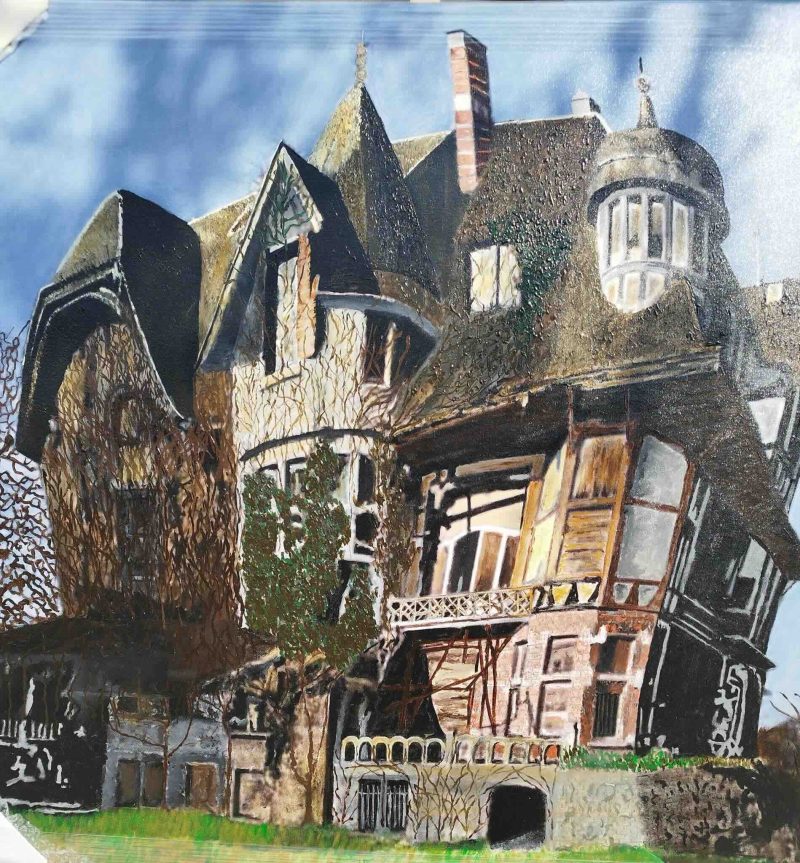
Another important motif is architecture, which I view as the work of human hands. Just as people differ from one another, so do houses and other buildings. Each has its own history and character, which tells a lot about the people who lived there, the climate of the region and the standard of living at the time. When I paint a house, nothing else needs to be added to the canvas for it to be understood. I do not like painting flowers or still life, because for me they are too static and predictable.
At the beginning of my artistic career I did a lot of drawing. For a long time I was afraid that by applying paint I might ruin the precision and detail of my work, so I mainly focused on graphic work. At that time I lived in Montenegro: I often walked through its mountains while observing and admiring nature. During that period I drew forests and trees using a technique made up of thousands of tiny lines.
Only many years later did I finally dare to add colour to my drawings. It happened after coming to Poland, which means I have been doing it for about thirty years now. Even today I usually begin with a drawing and only then apply paint. Whenever I travelled around the world, I always took my sketchbook and pencils with me and drew old buildings, streets and cafés.
The painting “The Battle of Belgrade 1456” was created using coloured ink, while the work “The Goat Dancer from the History of Coffee” was made with oil pastels. Once, while I was working with oil pastels, a drop of turpentine accidentally fell onto the drawing. It spread across the surface and unexpectedly changed part of the image. That moment encouraged me to start experimenting with paints. I chose acrylic paints because I work quickly and did not want to wait a long time for oil paints to dry. Sometimes I also use a technique similar to an oil print, which means I apply small amounts of paint by hand onto the print and finish the work with varnish.
In order to give my paintings more texture and a stronger sense of form, I later began using structural gel, which I apply first and then paint over after it dries. One of the works created with this technique is “Life After Life.” I also painted my work “Three Women” directly on a wall in a large private house. The mural measured 2.5 by 2.5 metres. For this project I used the grid method to transfer the drawing accurately onto the wall and then painted it.
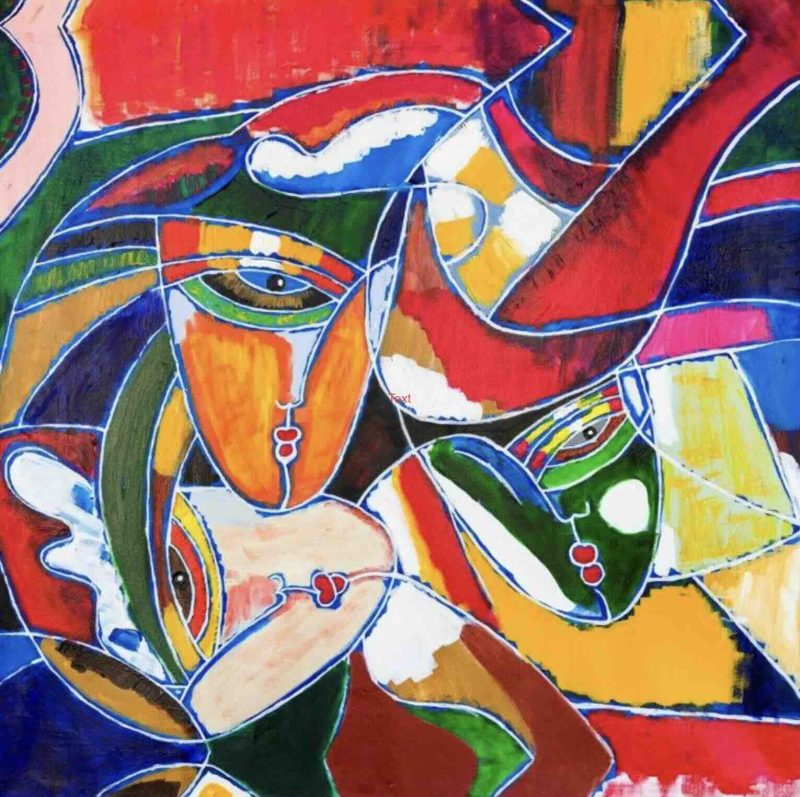
Three Women by Jasmin Šoljanin
At the moment, I am painting two more works in my series “Belgrade in the 19th Century,” bringing the total in this series to six for now. These paintings are not for sale and perhaps I will organise an exhibition to coincide with Belgrade Day. At the same time, I am preparing new works for an exhibition in Katowice, which will take place during a business conference and a fair of beautiful objects.
What inspires your art?
My painting is the joy of life. My motifs come from the world around us, from what we see and encounter every day, but I always try to show it in a better light, using warm colours and plenty of brightness, such as reds, yellows, and oranges. I am a southerner, and on every occasion I seek out the sun and warmth.
I call my work decorative painting, because it allows a client to order a painting in any size or colour scheme. Paintings in this category can be reproduced. In contrast, unique, one-of-a-kind paintings cannot be altered in any way as each is entirely original. The art I create, along with sport, are two things that always give me joy and energy.
My father, who was also a painter, was a strict and demanding man. He painted his works in dark and cold colours with lots of grey and blue that I don’t like. By contrast, I use the colours of the sun and warmth and through this I have become calmer, more cheerful, optimistic, and gentle in my relationships with people, animals, nature, and life in general. The optimism that was born in me through my art has given me a reason to think, and to see the world from a different perspective. I have come to understand that the people around us in life are incredibly important and that it is worth giving them more attention, even by capturing them on my canvases.
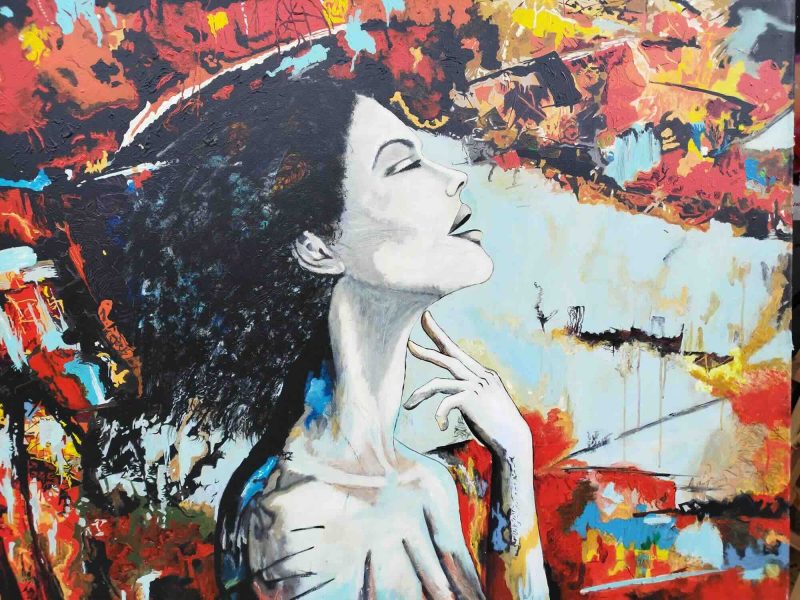
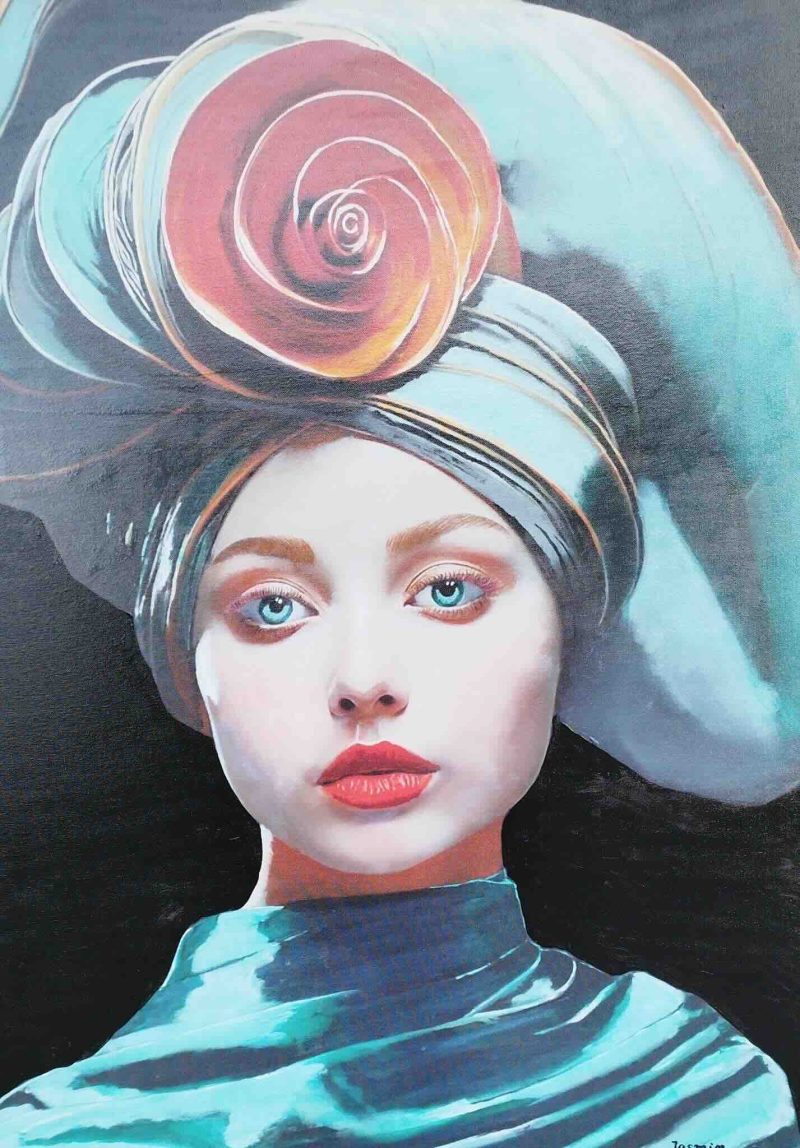
Autumn Girl by Jasmin Šoljanin
Your largest project is a collection of Serbian rulers. How did this idea come about?
I am a native Serb with a very strong sense of belonging to my origins and to the Serbian nation. My patriotism manifests itself in many ways, and one of them is an inner need to preserve the rich, but also tragic and heroic, history of my people.
This led me to the idea of painting a gallery of Serbian rulers, from the emergence of Serbian statehood as a small independent state up to the 20th century, when Serbia changed its political system and later united with other South Slavic nations to create a new state, Yugoslavia. Before that, the Kingdom of Serbs, Croats and Slovenes was established, headed by its first king, Petar of the Karadjordjević dynasty. Apart from the rulers, I have also painted icons of Serbian saints, such as the famous White Angel and an icon of Saint Sava.
I would like to emphasise that I achieved something unique: I am the only person in the world who has painted the complete gallery of Serbian rulers. The entire collection consists of 28 portraits of tsars, kings, tribunes, despots, leaders and princes. As references for their appearance, I used old books, historical documents, church records and ancient illustrations. They were painted with acrylic paints. Afterwards, I applied brown bitumen to give the paintings the appearance of old works. Finally, each portrait was individually protected with a satin oil varnish and framed in very rich, thick frames.
Within these portraits lies the story of a great and courageous nation which, despite the long Ottoman occupation – which lasted 500 years – managed to preserve its language, its script – Cyrillic – as well as its customs, songs, dances and everything else that defines a people. The only thing that divided the Serbian nation was religion. The majority remained faithful to Orthodox Christianity, while a part of the population adopted Islam in order to survive under the rule of the Ottoman Empire.
The entire collection is not for sale. I attempted to donate this work to the National Museum in Belgrade and to the Historical Museum, but the donation was not accepted – not because of its artistic value, but due to bureaucratic reasons. Therefore, the entire gallery of rulers is currently kept in my storage.
Before painting, there were football and music in your life. Tell us more about your story.
A long time ago, while living in Yugoslavia, painting was not my priority and I was passionate about music. Together with my younger sister Jasmina and my friend Zoran Balaš, we formed a band called “Kolima po Wybuchu,” which seemed to emerge suddenly, like from the ocean. The name was meant to symbolise our explosion onto the music scene of former Yugoslavia.
We quickly started receiving invitations for concerts, performances at various events, and gigs in discos and other venues. I played a classical Gibson guitar from 1968, which I still own, and I also played the harmonica and sang in a duet with my sister. We even started earning money from our music, but then Zoran and I were drafted into the army, which we could not refuse, and that brought our serious music adventure to an end. After nearly two years, none of us had the desire to start a music career from scratch again.
After returning from the army, I went back to sports, but only for a short time because I suffered a serious knee injury, which I still have today. Before that, however, a promising football career had been ahead of me: I began at Partizan Belgrade, but my father worked in the oil industry, which required frequent relocations, so I often changed clubs. Despite this, I played for the national teams of Yugoslavia and Serbia, as well as for the team of Polish actors.
I should also mention that after finishing middle school, I enrolled in the Film Academy in Belgrade. I did not complete it because my girlfriend at the time, who later became my wife, did not get accepted into the acting program. To stay with her, I left the academy and enrolled in journalism, which she had been accepted to. Unfortunately, I did not finish journalism either, but I worked for a long time as a journalist for youth organisations in Belgrade. My future wife later gave birth to our son, Igor.
In addition to football, I practiced athletics: running, high jump, and long jump. Privately, I also trained in diving, including difficult and dangerous stunt dives. In general, I have always loved swimming.
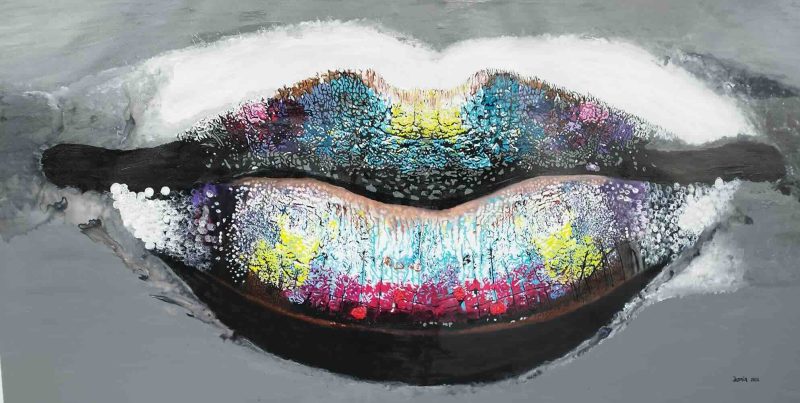
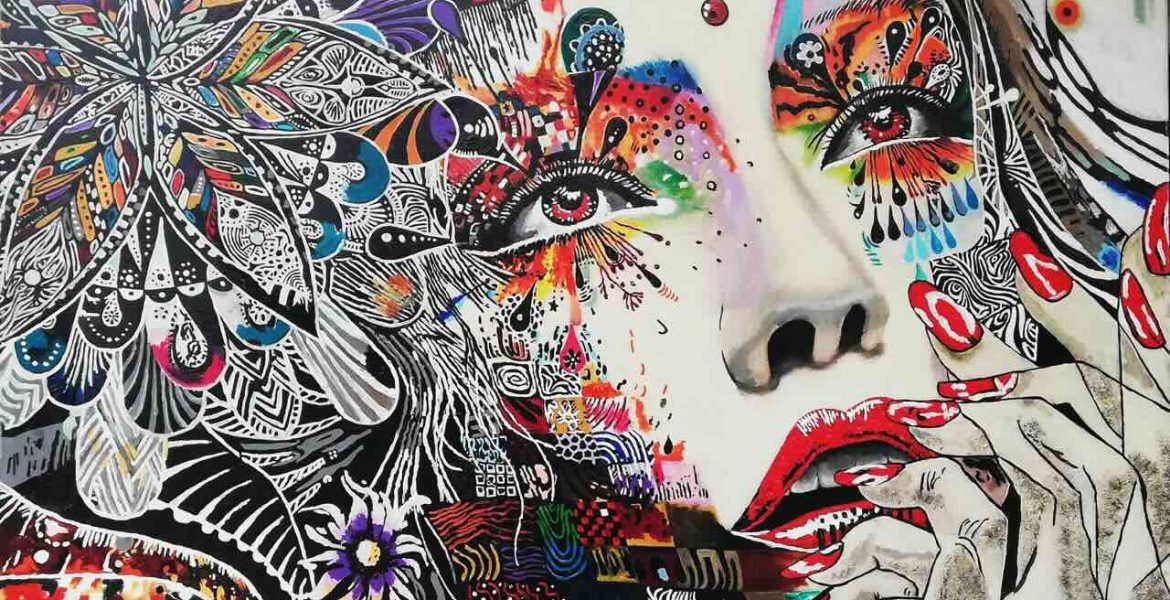
Lips by Jasmin Šoljanin
For enquiries:
Contact the artist’s representative at www.elitevanta.com
Contact the artist’s representative Sylvia Lodziewska www.linkedin.com/in/sylvia-l
Cover photo: Nostalga by Jasmin Šoljanin
Article edited by Claudia Chiari
Editorial Director Celebre Magazine World