
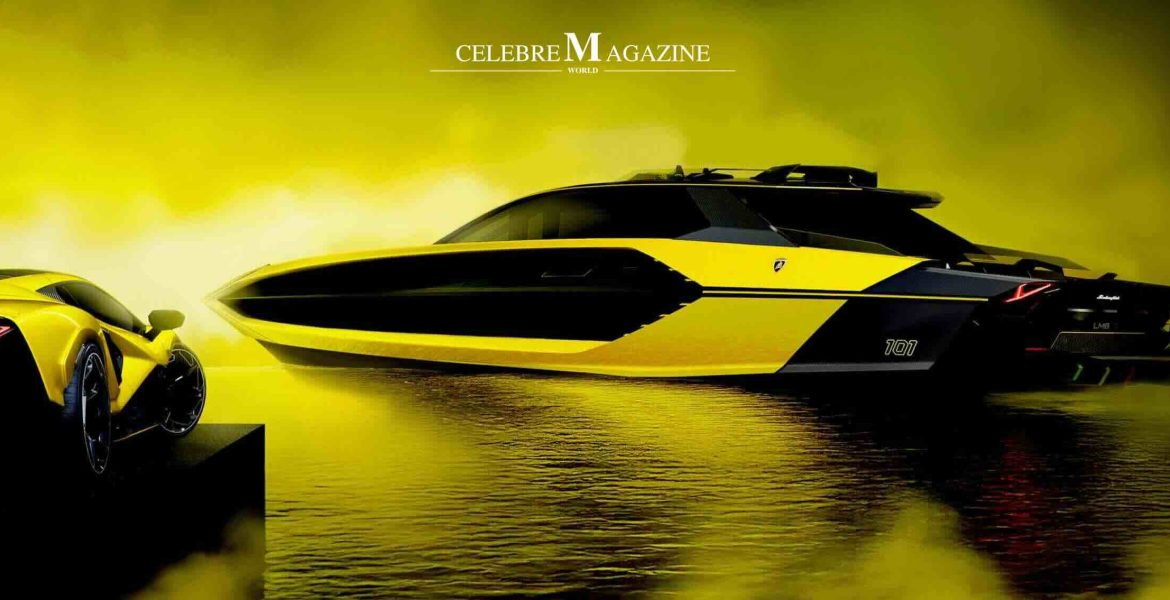
It is not often that an object appears on the water with the same theatrical presence as a performance car streaking down an open stretch of tarmac, yet the Tecnomar for Lamborghini 101FT manages exactly that. Born from the unlikely but irresistibly logical meeting of supercar dramatics and nautical engineering, this 7,600-horsepower creation carries the unmistakable DNA of Sant’Agata while carving out an entirely new identity of its own. The result is an expression of speed and intent that seems almost to hover between land and sea, borrowing freely from both without feeling indebted to either.
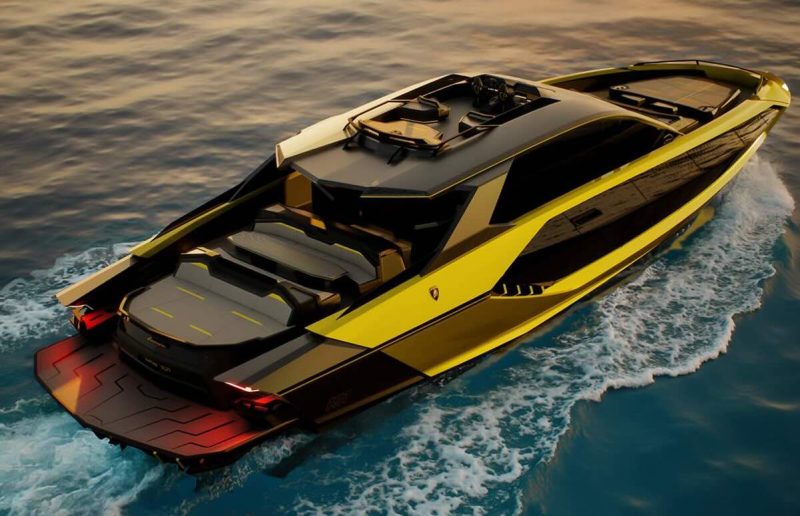
What strikes one first is the stance. Even when moored, the yacht appears to be gathering itself, as though preparing to surge forward at the slightest provocation. Its lines are crisp, angular and unapologetically sharp, evoking the silhouette of a modern Lamborghini without lapsing into imitation. The design language is authentic: the familiar wedge attitude, the interplay of light and shadow, the manner in which each surface is sculpted not for extravagance but for aerodynamic and hydrodynamic purposes. It looks fast because it is fast, and because its makers understand that genuine speed begins long before the throttle is ever touched.

The collaboration between Tecnomar and Lamborghini has produced something that transcends the usual design partnership. Instead of merely placing automotive cues onto a marine platform, the teams appear to have translated an entire philosophy. It feels as though it could just as easily belong in a supercar prototype as atop a vessel commanding the open sea. Materials are used with consideration rather than showmanship, and the tactile response of each control reveals a lineage not of yachts but of high-performance machines bred for precision.

Yet, despite its spectacular silhouette, the yacht avoids feeling contrived. It does not strain for attention; it simply possesses it. There is a clarity of vision behind its construction, one that respects the technical demands of marine architecture while embracing the emotive power of automotive design. The Kevlar-reinforced hull, the lightweight superstructure and the carefully calculated balance all come together to produce a vessel that handles with a nimbleness surprising for its size. It is the maritime equivalent of a grand tourer capable of erupting into extraordinary performance when required, yet composed and predictable during long stretches on open water.
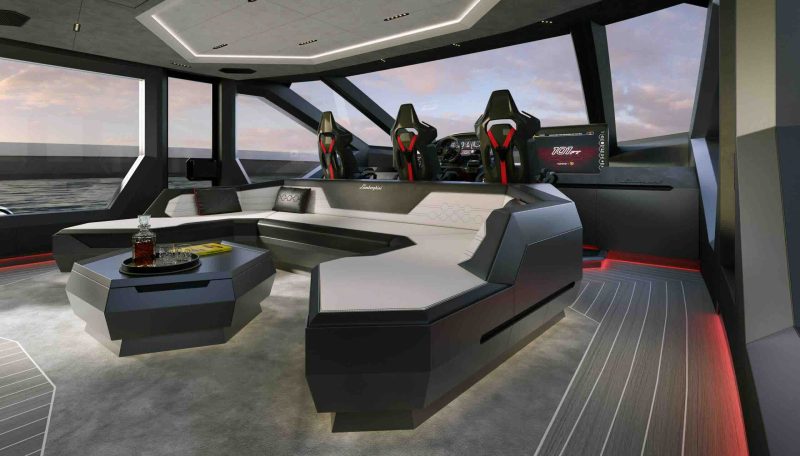
Much has been said of its power, and with good reason. The twin MAN engines deliver a combined 7,600 horsepower, a figure that could easily feel gratuitous were it not so meticulously harnessed. There is a particular elegance in the way the yacht channels this energy, rising to planing speed with measured assurance rather than brute force. It cuts through the water with a clean, confident motion that belies the immense mechanical drama occurring beneath. It is power refined into grace, velocity distilled into clarity.
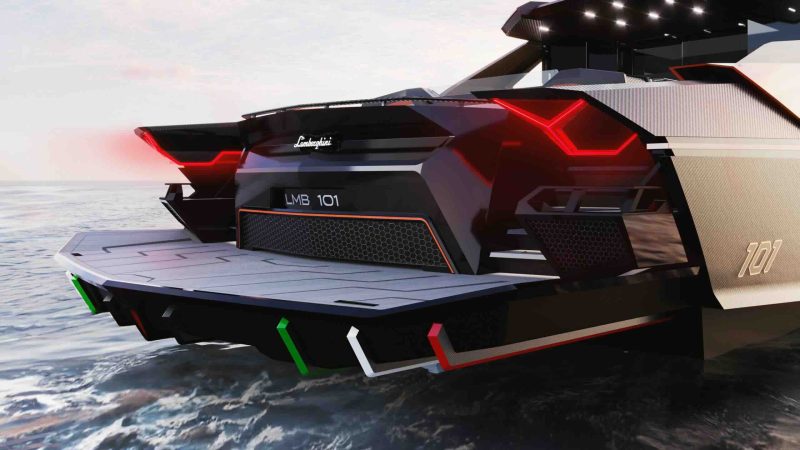
Perhaps the most compelling aspect of the Tecnomar for Lamborghini 101FT is that it represents a shift in how performance objects are conceived. It is not merely a yacht with a famous badge, nor a supercar repurposed for another environment. It is an exploration of what happens when two worlds, each driven by mastery of movement, are permitted to inform one another without restraint. The result is a vessel that feels both familiar and uncharted, a dialogue between road and sea that suggests future possibilities rather than repeating past successes.
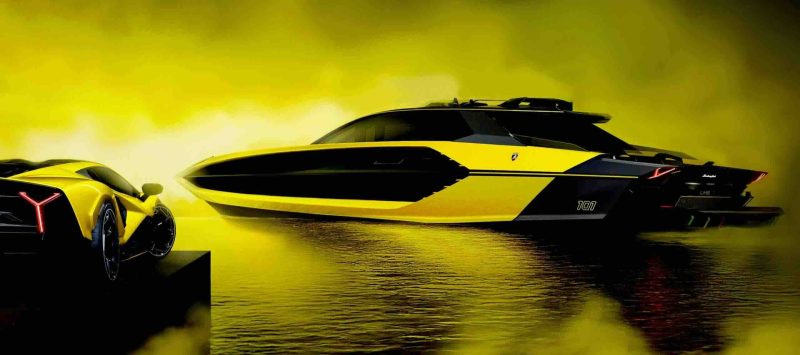
In a landscape crowded with statements, this yacht chooses a different approach: it does not shout; it resonates. Its presence lingers not because of extravagance but because of intention. Every angle, every surge of power, every quiet moment at berth contributes to a narrative of purposeful design and meticulous engineering. It is, in essence, a celebration of motion, an object conceived for those who find meaning not only in the destination, but in the sheer exhilaration of the journey.
Article edited by Mark Webber