
The $40 million Ferrari and the new math of record-breaking wins
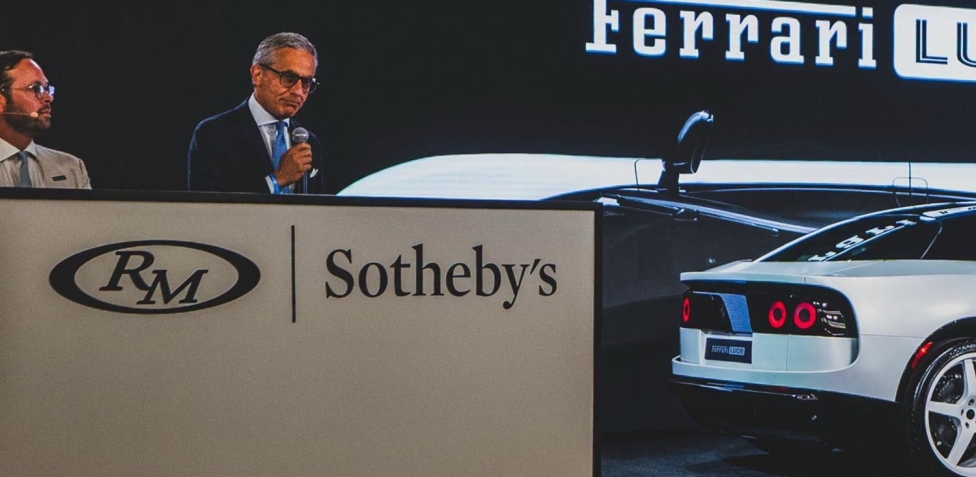
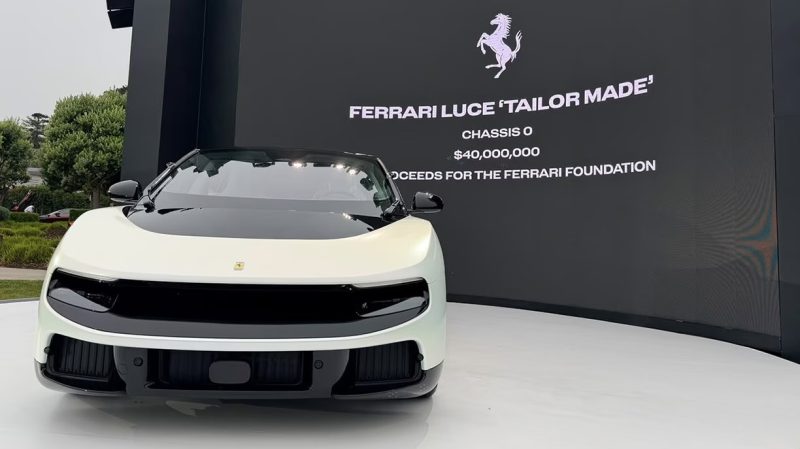
Someone paid $40 million for a car that will never touch a public road the way its badge suggests it should. The Ferrari Luce, unveiled as a one-off electric concept and sold at a charity auction this month, went for roughly 36 times its pre-sale estimate. Not a typo. Thirty-six times. CNN reported the final hammer price made it the most expensive new car ever sold at auction, full stop. That number does something strange to people. It’s not really about the car anymore. It’s about the fact that a number that large now exists, attached to an object, attached to a name. Ferrari has always understood this instinct better than almost any manufacturer alive. The Luce sale isn’t an outlier. It’s the latest data point in a pattern that stretches back through Ferrari’s entire auction history, and understanding that pattern tells you more about human psychology than it does about horsepower.
Why we keep paying more for the same story
Go back to 2023. A Ferrari 250 GTO sold for $51.7 million, and at the time CNN called it the most expensive car ever auctioned. Three years later, a different Ferrari, built on an entirely different premise (electric, not combustion; concept, not classic race car), sells for a figure in the same stratosphere. The mechanics couldn’t be more different. The psychology is identical. People aren’t buying transportation at $40 million. They’re buying the sentence they get to say afterward. “I own the most expensive Ferrari ever sold at a charity auction” is a piece of social currency that appreciates independent of the asset itself. Spear’s has tracked this pattern across decades of Ferrari auction results, and the throughline is consistent: rarity plus story plus a headline number beats raw engineering every time a gavel comes down. Here’s the part that gets overlooked. Once, records like this belonged exclusively to people who could write eight-figure checks. That exclusivity was the entire point. But the underlying craving, the need to chase a number that makes people stop scrolling, isn’t actually confined to the auction room. It shows up anywhere a leaderboard exists.
The leaderboard is the new auction paddle
Strip away the champagne and the Sotheby’s paddle, and what’s left is a simple loop: compete, climb, get recognized, screenshot the proof. Browser-based multiplayer games have built an entire economy around that exact loop, minus the eight zeros. Players grind for a top-ten spot on a public leaderboard the same way a bidder grinds through increments to land the winning bid. The stakes are wildly different. The dopamine circuitry firing underneath isn’t. Anyone curious about that instinct up close doesn’t need a Christie’s account to see it in action. A few minutes spent with io games online makes the parallel obvious pretty fast: you drop into a match with dozens of strangers, and within seconds the entire session becomes about one thing, climbing past the name currently sitting above yours. No entry fee. No velvet rope. Just the same itch that made a room full of collectors push a car’s price past $40 million. Gambling involves risk. Please play responsibly and only wager what you can afford to lose. If you feel gambling is becoming a problem, visit BeGambleAware.org or call 1-800-GAMBLER.
What auction houses understood before anyone else
Sotheby’s and RM Sotheby’s didn’t invent the record chase. They just figured out how to monetize it decades before the internet made the same trick available to anyone with a phone. Every major sale is staged as an event: a paddle held up, a room holding its breath, a number flashed on a screen that climbs in real time. Strip out the cars entirely and you’ve got the exact theatrical structure of a livestream tournament final. The Luce sale worked precisely because Ferrari understood the theater. It wasn’t sold through a standard collector-car channel. It went through a charity auction, tying the record price to a cause, which gave bidders a story to tell that was bigger than the metal itself. “I paid $40 million for a car” sounds gauche. “I paid $40 million and the proceeds went to charity” sounds like philanthropy with a very nice side effect. That reframing matters more than people admit. A record without a narrative is just a large number. A record wrapped in story, in cause, in exclusivity, in scarcity, is something people will talk about at dinner for years. Ferrari’s marketing team knows this. So does every game studio that ever built a seasonal leaderboard reset, because a reset means the story of “who’s number one” gets to be told all over again.
Scarcity doesn’t need eight figures to work
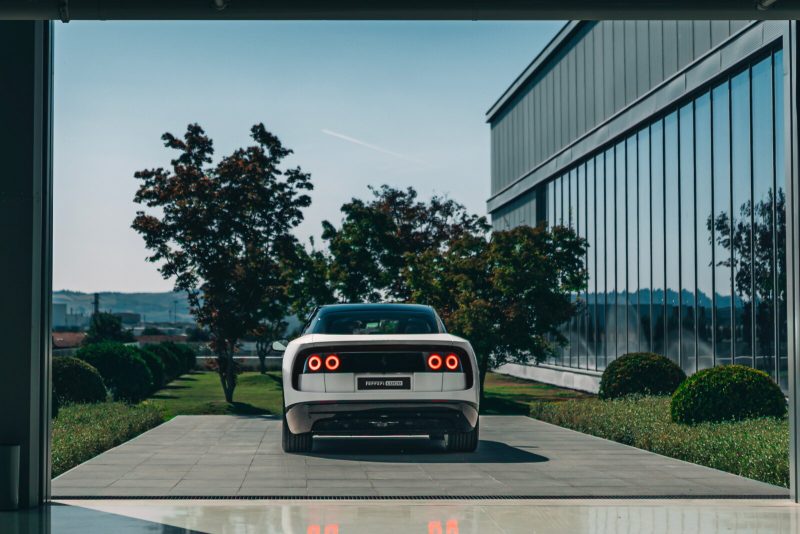
The Luce was a one-off. Literally one unit exists. That scarcity is engineered, deliberate, and central to why the number climbed as high as it did. Ferrari’s Special Projects program has built an entire business line around exactly this kind of manufactured rarity, producing bespoke commissions for clients willing to pay enormous premiums for something nobody else on the planet can own. Compare that to a browser game’s seasonal skin, available for two weeks before it disappears from the shop forever. The dollar values aren’t comparable in any serious sense; nobody’s claiming a limited-time character skin belongs in the same sentence as a $40 million supercar. But the mechanism driving demand runs on the same rail. Scarcity plus a countdown clock plus social visibility equals demand that outpaces the object’s actual utility. Nobody needs a Ferrari that will spend its life in a climate-controlled garage. Nobody needs a cosmetic skin in a game with no functional advantage. Both purchases are about being seen owning the unrepeatable thing. Once you notice that pattern in one context, you start seeing it everywhere, from sneaker drops to numbered art prints.
Why the chase never actually ends
Somewhere in Maranello right now, an engineer is probably sketching the next one-off that will eventually break whatever record the Luce just set. That’s not cynicism. It’s just how markets built on story and scarcity function. A record exists to be broken, and the breaking of it is the whole reason anyone was watching in the first place. This is a permanent condition, not a phase. Auction houses will keep staging events built for maximum tension. Manufacturers will keep manufacturing scarcity on purpose. And somewhere online, right now, someone just took the top spot on a leaderboard nobody else has heard of, and for the next few minutes, it’s the only thing that matters to them.
Frequently asked questions
Why did the Ferrari Luce sell for so far above its estimate? The Luce was a one-off charity auction lot, meaning scarcity, cause marketing, and Ferrari’s brand equity all stacked together. Bidders weren’t just buying a car; they were buying a unique, unrepeatable story tied to a philanthropic cause, which pushed the final price roughly 36 times past the pre-sale estimate.
Is the Ferrari Luce a production car? No. It’s a one-off electric concept built through Ferrari’s Special Projects program, meaning exactly one unit exists. It was never intended for showroom sale, which is part of why its auction price climbed so dramatically above typical collector-car benchmarks.
How does the Luce compare to Ferrari’s previous auction records? The 2023 sale of a Ferrari 250 GTO for $51.7 million previously stood as the highest price for any Ferrari at auction. The Luce didn’t top that overall figure but set a separate record as the most expensive new car ever sold at auction, a distinct category.
Why do people care so much about record-breaking sales? Records convert into social currency. Owning or witnessing something record-breaking gives people a story worth repeating, independent of the object’s practical value. That psychology drives behavior across auctions, collecting, and competitive online spaces alike.
Does manufactured scarcity always drive higher prices? Not automatically, but it’s a powerful lever when paired with a compelling story. Scarcity alone doesn’t guarantee demand; it needs narrative, timing, and social visibility to translate into the kind of bidding frenzy the Luce sale produced.
Article edited by Marco B.
Luxury culture writer, 6 years covering collector cars and auction markets.