

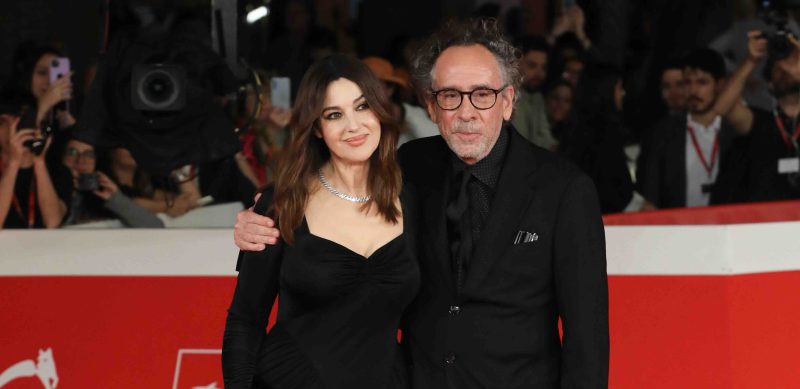
If a client commissioning a painting were to ask for an image of a woman who was the incarnation of perfect beauty, Italian elegance, fascination and sensuality, the painter would find himself representing the quintessence of femininity, and the face of Monica Bellucci would appear on the canvas. It would have the timeless flavour of la dolce vita, the sharp, fresh perfume of the Mediterranean, the graceful sweetness of a Renaissance Madonna, the intensity of black-and-white and the seduction of red lips. There would be lace, the atmosphere of Sicilian vespers and a corset squeezing the shape of an hourglass between its ribs. The actor, who was born in Città di Castello, is still the fairest of them all, harmonious and far from any contrived cliché, is fresh from her transformation by her partner Tim Burton on the set of “Beetlejuice Beetlejuice” into the corpse bride who is cut into pieces by her former husband Beetlejuice. “Delores is a monster, but she’s a creature I loved very much, because she’s a woman who literally succeeds in putting all her pieces together. She is as beautiful as she is dangerous, and she’s a metaphor for a life in which we all have emotional wounds, but are still ready to get back up on our feet. And despite the pain, she comes back to life strongly. I like to think that she’s a great symbol for women,” Bellucci says about her character, and probably about herself, too.

Monica and Tim, who are so different and yet so much in love, describe their mature love as a meeting of two souls, and last year, Vogue made him a photographer to celebrate her sixtieth birthday among the fantastic creatures of the ante litteram Burtonian Sacro Bosco in Bomarzo. Bellucci is a champion of the kind of aesthetics that follow the passage of time, and she offered us a lesson in positive ageing when she said: “I think that gradually losing biological beauty gives us the opportunity to look at life from another perspective. Perhaps we might call it the privilege of experience and maturity.” However, she explains that she has loved make-up since she was a little girl because it brings fantasies to life and allows us to get away from reality and invent characters. She started to escape everyday life early. At the age of sixteen she was already flying to Milan and Paris to work as a model, and then going back to the reality of a high school desk, a double lifestyle that still keeps her anchored to reality and equilibrium. While she was at university, she trod the catwalks of the biggest designers, until she made her debut in a television series directed by Dino Risi. “My desire to do this job came from the many characters I saw being portrayed by these great actors: Sophia Loren, Anna Magnani, Giulietta Masina, Lea Massari and Monica Vitti. These women made me dream with their femininity, which was powerful, sensual, maternal and dangerous, all at the same time. I always try to dedicate time to my passions, the cinema, opera and the theatre, so that my artistic self does not just develop and evolve through my work,” recounts the actor, who still today drives away a fear of getting on to the stage by listening to Callas.
In the 1990s, she was immortalised as a sexy icon in photos by Richard Avedon, Fabrizio Ferri and Giampaolo Barbieri, made her entrance in Hollywood in the celebrated director Francis Ford Coppola’s “Dracula” and became the eternal muse of Domenico Dolce and Stefano Gabbana: it was love at first sight during a casting. She created an unbreakable bond that was sealed by Giuseppe Tornatore and recounted in the sophisticated beauty of the book entitled “Monica,” published by Rizzoli. It was the Sicilian director who then directed her in the sensational ad for their first perfume, accompanied by the unmistakable music of Ennio Morricone. In her first leading role in a film, in “The Raffle,” she played a beautiful young widow who is the object of desire. It was a role she would go on to play several times in her film career, and one that would consecrate her forever with the return of the Bellucci, Tornatore and Morricone triad, when she played “Malena” in the film of the same name, in which during the Second World War, she divides an entire village in Sicily between obsessive longing on the part of the men and poisonous jealousy on the part of the women. She wore a black veil once again when at the age of just over fifty, she became the oldest Bond girl ever alongside Daniel Craig.
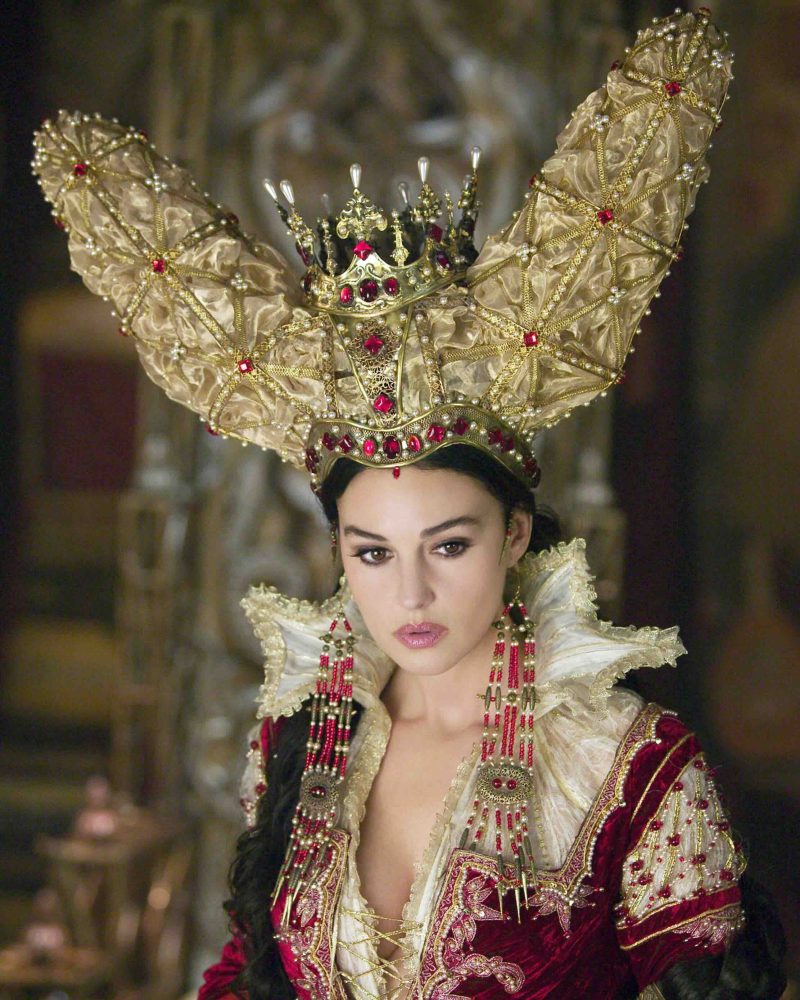
She also acted in American productions like “Under Suspicion,” the sequel to “Matrix,” Mel Gibson’s “The Passion of Christ” and “The Brothers Grimm,” and in 2017 she was invited to join the Academy of Motion Picture Arts and Sciences and was therefore able to vote as a jury member for the Oscars. She also starred in French productions such as “Asterix and Obelix: Mission Cleopatra,” but first came “The Apartment,” when she met her ex-husband Vincent Cassel, with whom she began an artistic partnership, the most controversial of their films being “Irreversible” because of its long, realistic rape scene. However, her greatest love bears the names of Deva and Léonie, her two daughters from the marriage, a love from which she derives her strength and which is everything for her.
Article edited by Claudia Chiari