During Parisian Haute Couture Week, Van Cleef & Arpels (VCA) presented the first volume of “The Van Cleef & Arpels Collection (1906-1953)”, which came out on 24 June 2024 at Hôtel Mercy-Argentau. This publication represents a significant milestone for the Maison. For the first time, its jewelry work is the subject of a scientific study in the form of an inventory of the Heritage Collection. The volume, dedicated to the period from 1906 to 1953, presents approximately 700 jewels, precious objects and watchmaking creations, along with 200 archival documents, which are meticulously analyzed considering the historical, artistic and cultural context in which they were created, namely the first half of the 20th century.

Volume 1 of the VCA Collection (1906-1953)
Nicolas Bos, President and CEO of Van Cleef & Arpels, explained that this is the first detailed analysis of the Collection’s history. Created in the 1970s and continually enriched, the Collection now includes over 2,700 pieces, showcasing the Maison’s creativity in inspirations, materials and techniques. This volume is a comprehensive catalogue of their work. Bos highlighted their scientific approach, rare in high jewelry, which positions jewelry within the decorative arts. Initiatives like L’École des Arts Joailliers and the Jewelry Gallery at the Musée des Arts Décoratifs in Paris reflect their commitment to education and the integration of jewelry with other art forms. The project’s first volume, published in 2024, covers 1906 to 1953, marking the opening of their first boutique and the birth of boutique jewelry.
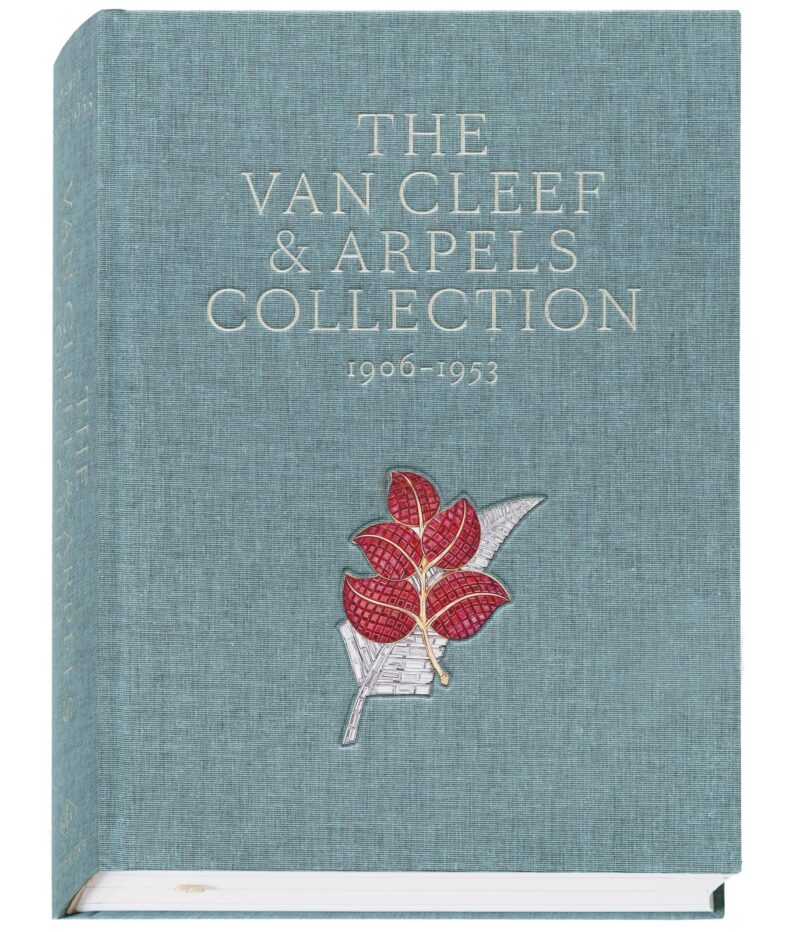
The second volume, covering 1954 to 2000, will explore significant moments such as the evolution of social and stylistic codes post-WWII and the return of major thematic collections in 2002. VCA looks forward to its release in about two years. The Flower brooch, from 1936, chosen as the cover of the first book, is a pivotal creation as it represents a transitional work. Aesthetically, its two overlapping leaves reflect the evolution of the floral iconography of the time. This creation features some characteristics of Art Déco, such as the geometric lines of the lower motif, while also anticipating future stylistic developments through the simplified curves of the upper leaf.
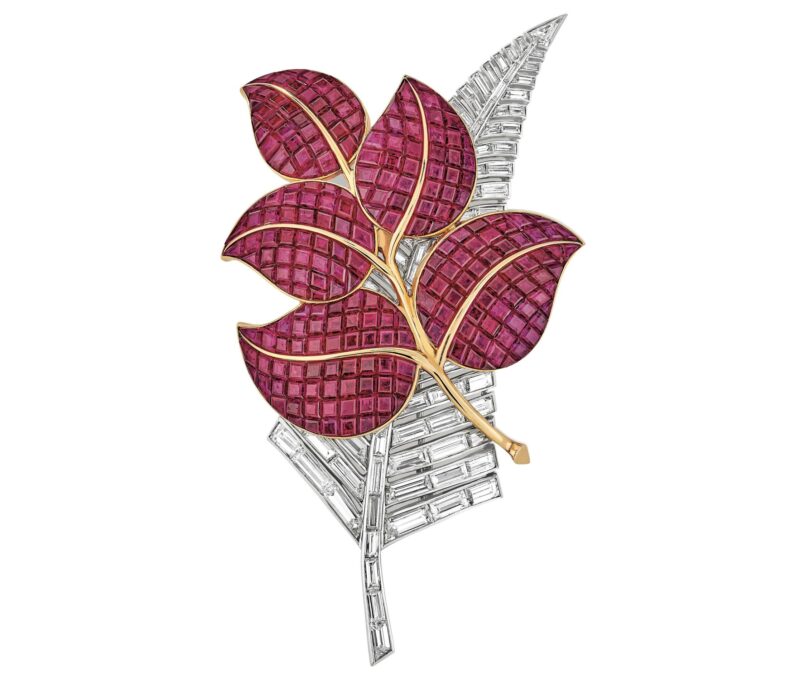 The Flower Brooch
The naturalism of the latter is achieved using the Serti Mystérieux technique, which makes the metal structure invisible to the naked eye. Patented for the first time in 1933, this savoir-faire – now emblematic of the Maison – was modified to adapt to three-dimensional forms in 1935, becoming the subject of a second patent in 1936. Created in the same year, the Flower brooch is one of the earliest representative examples of this fundamental evolution. Demonstrating the influence of technical developments on stylistic evolution, this jewel – one of the oldest creations in Serti Mystérieux that VCA preserves – perfectly expresses the essence of this work. Acquired by the Heritage department just as they finished the first volume, this brooch seemed the ideal image for the cover.
 Sequins Ballerina clip from 1953
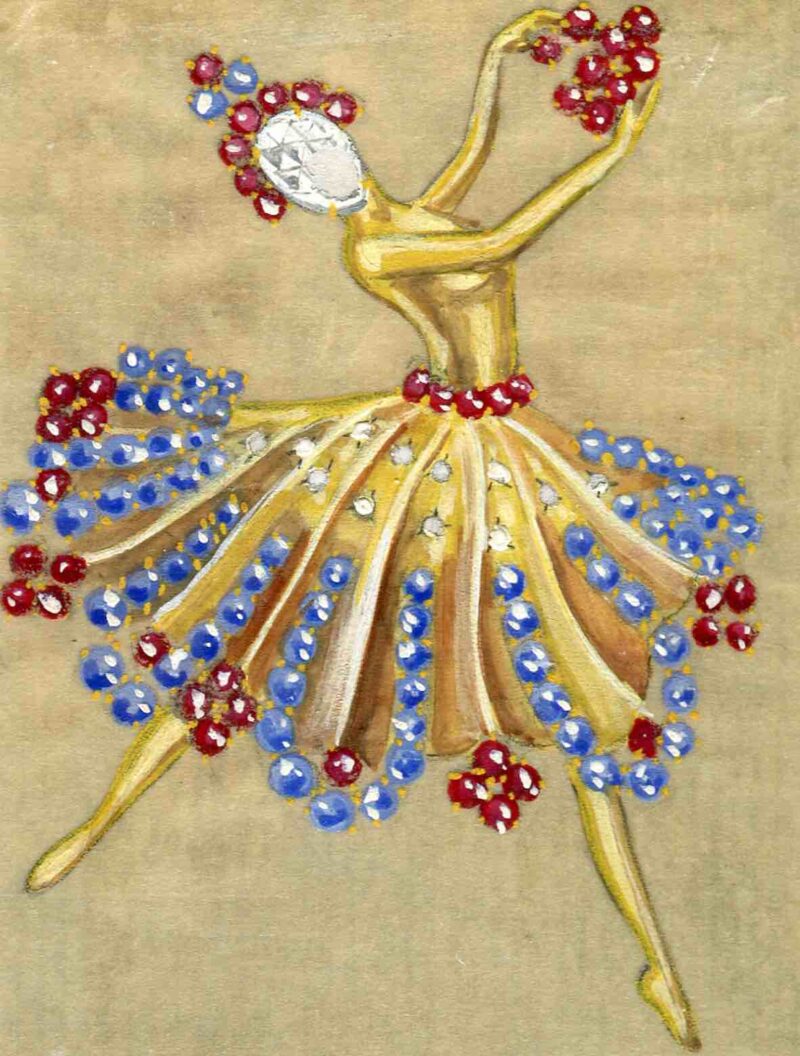
Design of a Ballerina Brooch, circa 1945
Atelier EXB publishes the first volume of the Van Cleef & Arpels Collection catalogue and also released in a digital version, available free online in both French and English. Alexandrine Maviel Sonet, Director of the Heritage and Exhibitions Department at Van Cleef & Arpels stated: “The Heritage Collection is a unique ensemble, representative of the art of jewelry and the principal artistic movements of the 20th century. It bears witness to the creative coherence that has distinguished the Maison since its foundation. Resulting from the scientific approach adopted by the Heritage department, this volume provides a new perspective that enhances the Collection in unprecedented ways”.
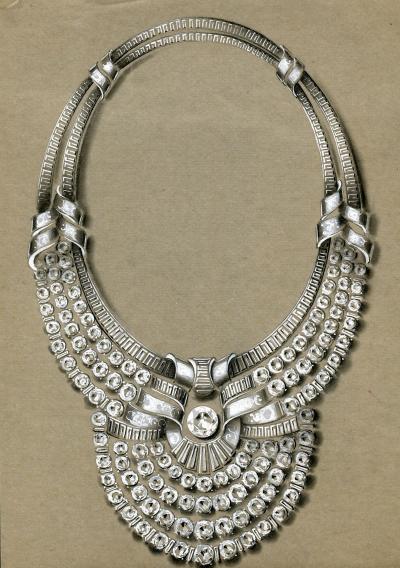
Collar, 1939, worn by Her Majesty Queen Nazli of Egypt on the wedding day of her daughter Princess Fawzia to the future Shah of Iran Mohammed Reza Pahlavi
The texts are written by Émilie Bérard, Mélodie Le Lay, Cécile Lugand, Marion Mouchard, Florie Sou and Solène Taquet.
 Chat Malicieux brooch
Through variety, formal and aesthetic research, and invention in the field of jewelry, these creations immerse the reader in VCA’s creative universe, offering a panorama of the artistic and cultural scene of the first half of the 20th century.
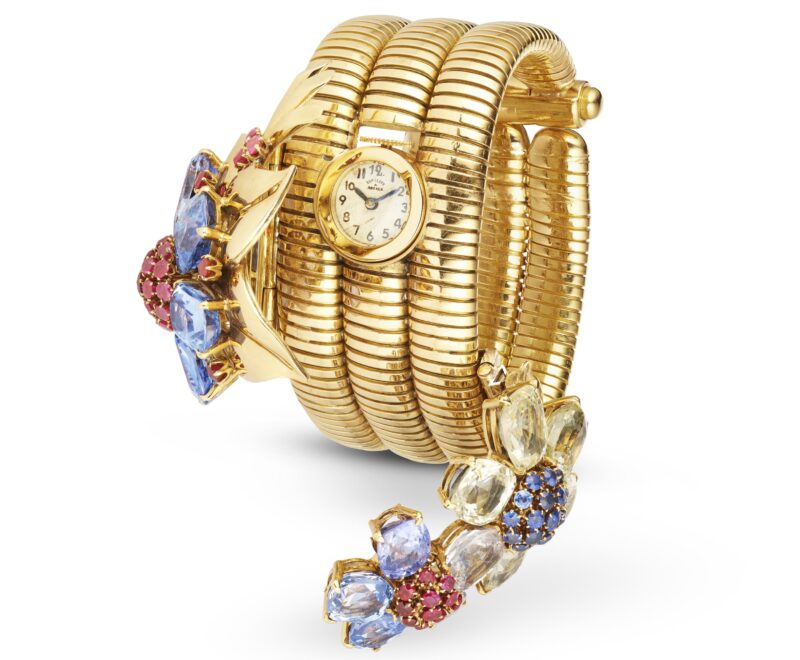 Bracelet-watch, 1939. Two removable brooches
The volume is divided into three chapters: “The Creative Surge (1906-1925)”, “A Unique Identity (1926-1937)”, and “From Paris to New York (1938-1953)”.
 Bouquet de violettes brooch, 1938
Like a story, the Maison’s history is marked by moments whose outlines are illustrated through the main jewels of the Collection, which have distinguished its creativity or refer to the history of art.
Article edited by Laura Astrologo Porché
Instagram @journaldesbijoux