
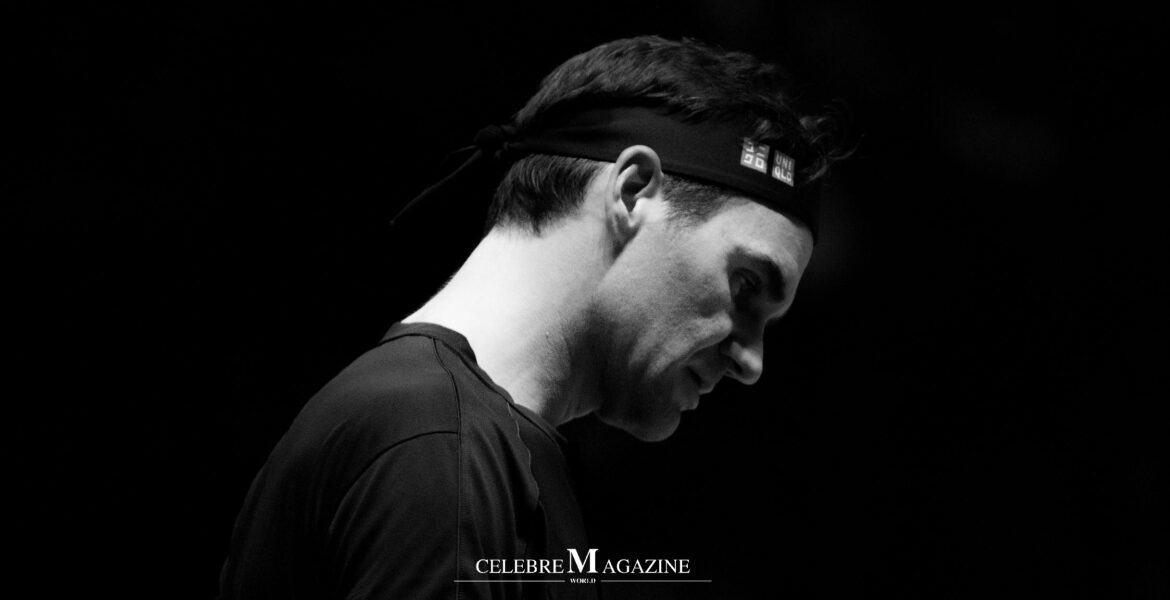
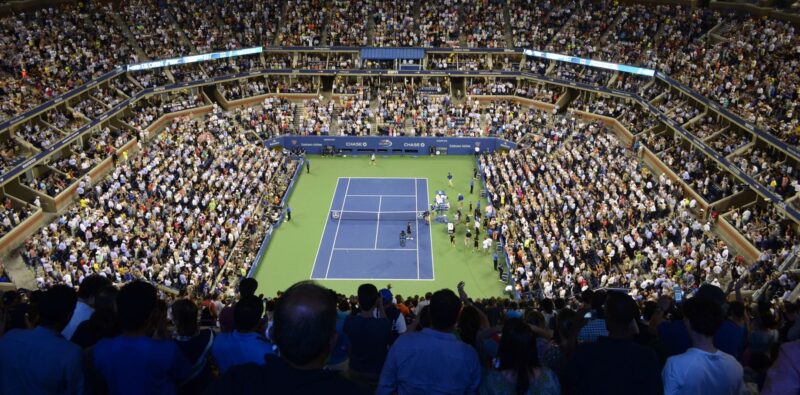
“Of all the gifts that tennis has given me over the years, the greatest, without a doubt, has been the people I’ve met along the way: my friends, my competitors, and most of all the fans who give the sport its life. Today I want to share some news with all of you.” Last September, with these words, The Swiss Maestroegan made his speech announcing his retirement from the courts he had played on for twenty-four years, in over one thousand five hundred matches in forty countries.
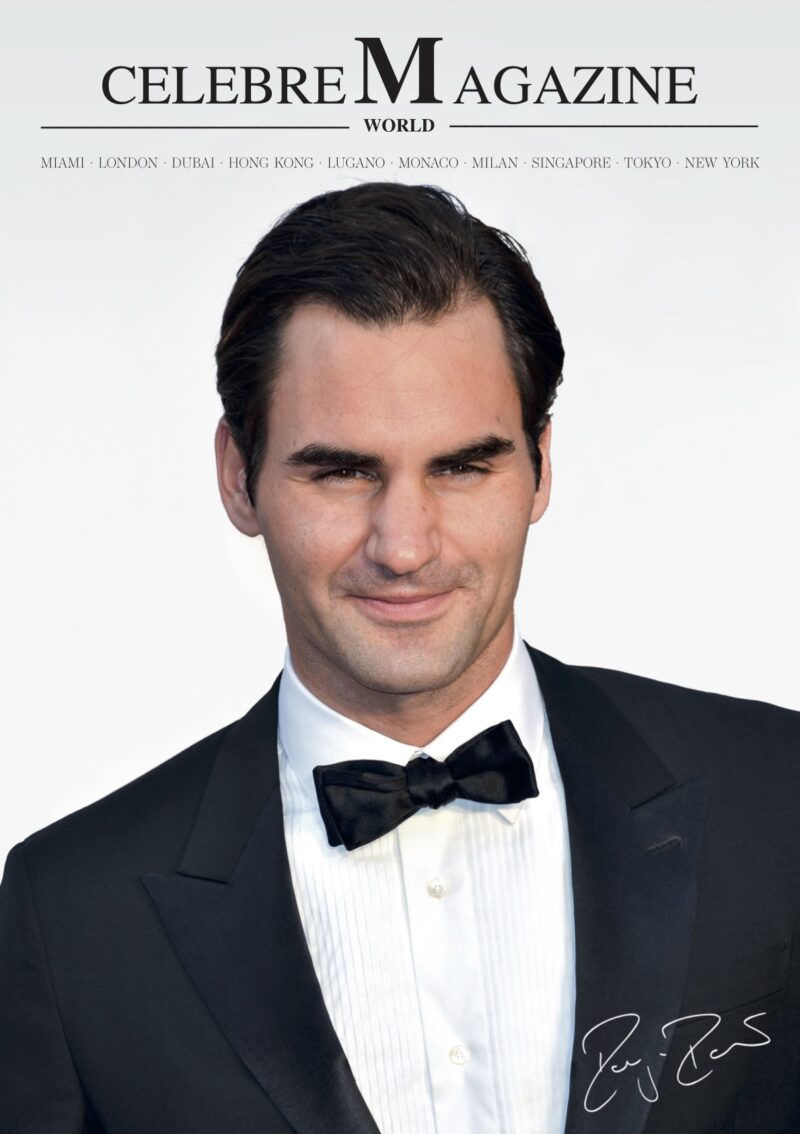
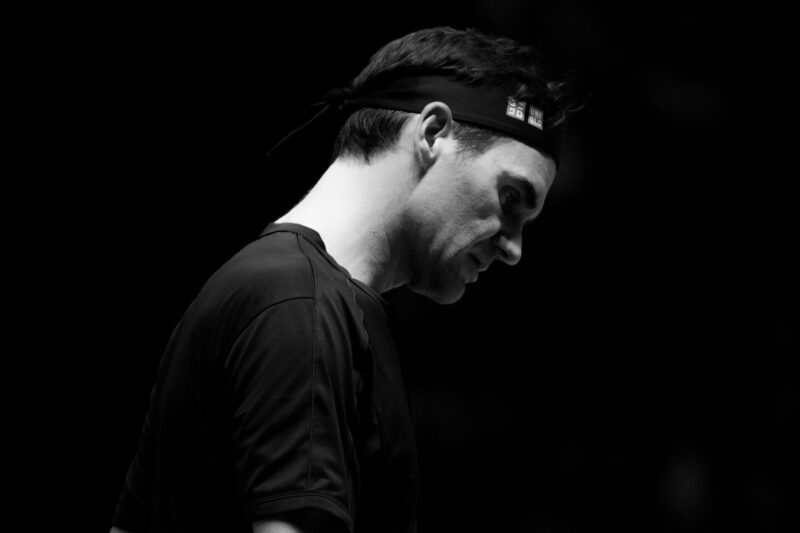
If he were the one painting a portrait of himself, he would do so in three words: authentic, modest and loyal. If it were his medal cabinet doing it, on the other hand, the description would be significantly longer: he is the third winning tennis player in Grand Slam competitions, and among his other victories he won Olympic gold, five Australian Opens, one Roland Garros and five US Opens, and he holds the unbeaten record of eight victories at Wimbledon. The tennis player dressed all in white, with his samurai headband and thoughtful gaze and that slightly sad expression around his mouth remembers his victories with these words: “I consider myself one of the most fortunate people on Earth. I was given a special talent to play tennis, and I did it at a level that I never imagined, for much longer than I ever thought possible”.
He does not shine because he is number one in terms of records, and he has not become a legend because of them. The press has gone wild, describing Federer and his tennis in a thousand different ways: an idealised perspective of sport in which an incredibly technical game becomes a spectacle of pure art; the player who made the finest tennis since the time of Adam and Eve flow from his racket; the man who took tennis to a new dimension of class and elegance. And that is just a few of them.
He is, therefore, a kind of meeting point between the modern brand of tennis marked by extreme athleticism and the classic style, of which he retained the gesturality. To give just one example, he is one of the very few players to still hit forehands from a neutral stance, with his right foot parallel to the baseline. His style is one of grace and self-control that drew from a model catalogue of tennis manners that calls for essential movements and rejects snorting when the ball is struck, preferring game management and avoiding lengthy defensive approaches.
When all of this is translated into a performance, it means a limited expenditure of energy and great resistance on the court, away from which Federer became the symbol of the qualities that are typically associated with Switzerland, making him a much sought-after spokesperson for sponsors of all kinds.
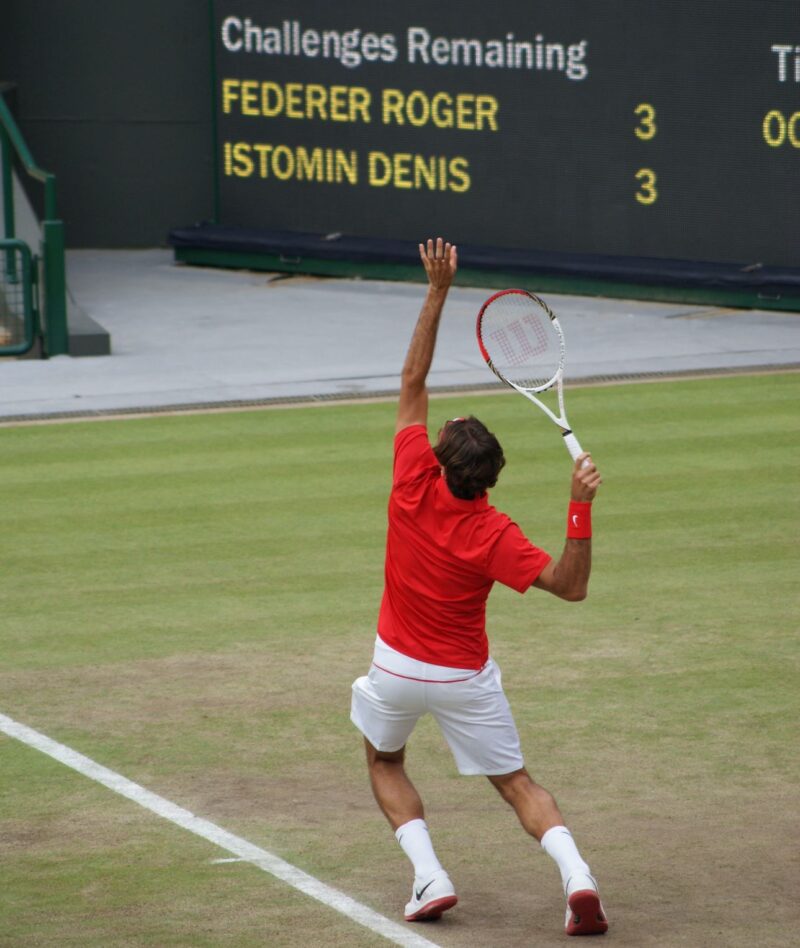
In actual fact, his cool head is a point of arrival, and his early matches betrayed a complete lack of discipline: he was as quick to explode with tension as he was to throw his racket on the court. After he lost a match in Hamburg in 2011, he decided to outlaw these gestures, and in his words, things went better: “When I’m in difficulty, I focus on my game. In the past, when I was losing, I was overtaken by fear and tried to change something. Now I’m calm, and I have confidence in my shots”, he said later. His favourite band is AC/DC, which proves that his disorderly world still exists somewhere.
The Swiss player’s greatest gift, however, is the glance that enabled him to sense his opponent’s shots and to begin moving early. “When someone is about to hit the ball, I sense that I know the angle and movement of the shot. It just seems to me that I have already seen it. And this is an enormous advantage”, he once said. In response, Roger is an unpredictable player with a wide variety of shots, so much so that he actually created one, the SABR (the Sneak Attack By Roger), which is a very early return to surprise his opponent as he recovers from a serve.
He moved from unchallenged domination to his infinite rivalries with Rafael Nadal and Novak Djokovic, until victories became rarer than defeats, which is something he never failed to joke about. “We all hope for a fairytale ending. He’s how mine went: I lost my last singles and doubles, my last team event, my voice during the week and my job. So don’t overthink that perfect ending, yours will always be amazing in your own way…”
“I love you and I will never leave you”. His last words were for tennis, with an open ending.
Article edited by Claudia Chiari
Editorial Director celebreMagazine World