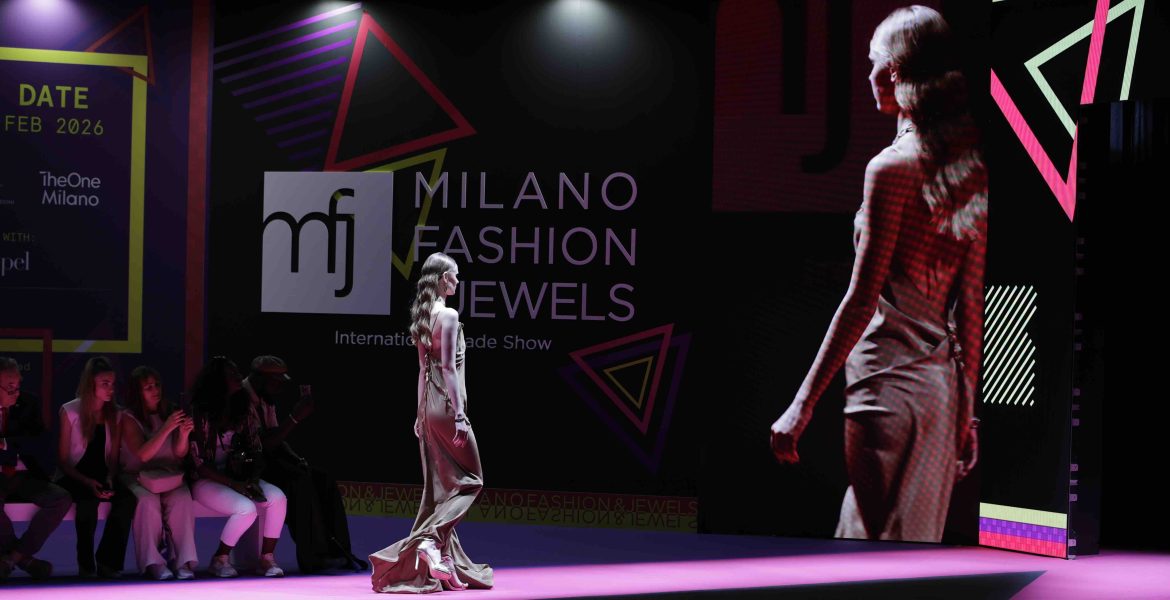
From 21 to 23 February 2026, Milano Fashion & Jewels (MF&J) returns to Fiera Milano – Rho, confirming a role that extends well beyond that of a conventional trade fair dedicated to fashion jewelry, accessories, and everyday wear. Rather than defining itself through scale or product accumulation, the event has progressively consolidated its position as a platform where design research, market logic, and international exchange are read together, reflecting how the fashion system operates today.
Milano Fashion & Jewels no longer functions primarily as a place to present novelties. It increasingly acts as a working environment in which buyers, designers, and brands evaluate what is structurally relevant. Products are assessed for their coherence, positioning, and long-term usability within a retail context shaped by selectivity, narrative clarity, and risk awareness. In this sense, the fair mirrors contemporary buying behavior, where value is generated less through volume and more through precision.
A defining characteristic of MF&J lies in its cross-category approach. Jewelry, accessories, and everyday fashion are not presented as separate domains, but as interconnected elements within broader visual, material, and cultural systems. This reading aligns closely with how assortments are actually built at the retail level, where categories are combined to construct identity, storytelling, and margin balance. The fair’s structure encourages professionals to evaluate products in relation to one another, enabling a more accurate understanding of how collections function together rather than in isolation.
This approach responds to a clear market reality. Today’s buyers, particularly independent retailers, concept stores, and international operators, do not purchase categories as closed units. They invest in combinations, coherence, and adaptability. MF&J reflects this logic by offering an environment in which products can be interpreted within a shared ecosystem, supporting more informed and efficient decision-making.
Within this framework, accessories and fashion jewelry assume a central role. They are not treated as secondary complements to apparel, but as strategic drivers of identity and accessibility. In many markets, accessories are where experimentation takes place on materials, proportions, sustainability practices, and formal language, while maintaining manageable commercial risk and faster turnover. The fair recognizes this function and positions accessories as a primary lens through which innovation and market responsiveness can be assessed.
Rather than relying solely on product density, MF&J integrates curated and analytical content designed to support interpretation. These elements are conceived as operational tools rather than inspirational side features, providing professionals with frameworks to contextualize what they see. Design research, cultural signals, and material experimentation are made legible within a market-oriented perspective, reinforcing the fair’s role as a place for analysis as much as for sourcing.
The Made in Italy dimension is strengthened through collaboration with Confartigianato Imprese and CNA Federmoda e Artistico, alongside the participation of the Region of Sicily, represented by a collective of 26 fashion and jewelry brands. This presence highlights craftsmanship, production know-how, and territorial expertise as active components of contemporary fashion, integrated into present-day design and market dynamics rather than positioned as static heritage references.
A central contribution to the fair’s research-driven approach is provided by BEYOND BODY, the first chapter of the BEYOND exhibition cycle curated by Alba Cappellieri. The exhibition investigates the relationship between body and design, examining jewelry and accessories as elements that modify volume, posture, gesture, and spatial perception. Ornament is approached not as decoration, but as an active design device that reshapes how objects are worn and perceived.
This body-centered perspective carries particular relevance for the market. By focusing on interaction rather than embellishment, BEYOND BODY offers buyers and designers a framework for identifying emerging formal languages before they are absorbed into mainstream production. Experimentation is not isolated from commercial reality, but translated into a readable and anticipatory design vocabulary.

With DESIGN DIRECTIONS – FASHION FORECAST, MF&J further reinforces its role as a strategic reference point. The initiative translates macro-scenarios into clear, actionable directions for fashion jewelry and accessories, interpreting materials, forms, colors, and visual languages as operational levers. These tools support both development and buying decisions, helping brands and retailers navigate complexity while building coherent and distinctive assortments.
Sustainability is addressed within this same analytical framework. It is not treated as a separate theme or moral narrative, but as a structural parameter influencing design choices, production processes, and market positioning. For professionals, sustainability increasingly translates into traceability, durability, material intelligence, and production coherence. These factors directly affect pricing strategies, margin stability, and long-term retail credibility. By embedding sustainability within design research, forecasting, and curated content, the fair enables responsible practices to be evaluated in relation to real products and real commercial conditions.

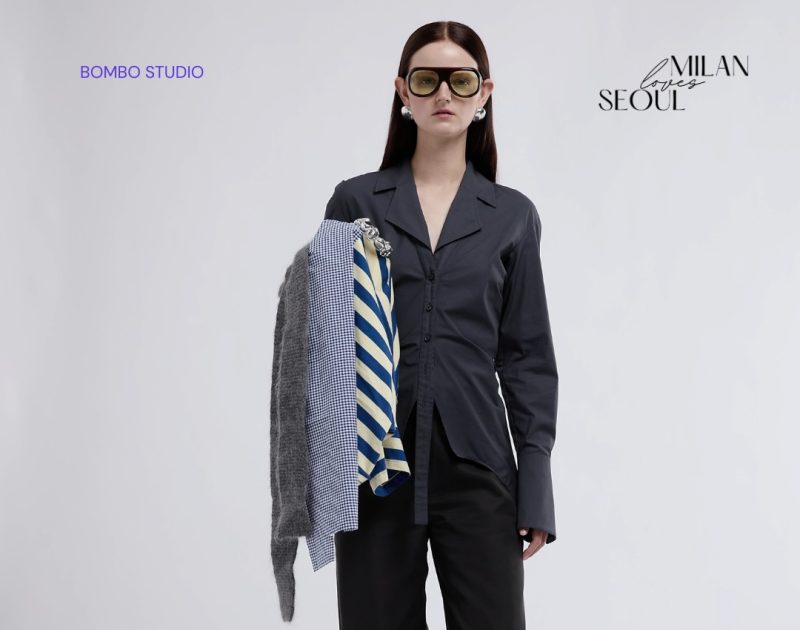
An international dimension is introduced through Milano Loves Seoul, a project conceived as a platform for accelerating creative exchange between Europe and Asia. Bringing together five young designers, the initiative is based on a shared design process rather than symbolic collaboration. Internationalization here functions as a working method, placing different approaches to materiality, craftsmanship, production timing, and technology into dialogue within a market-oriented context. For industry professionals, the project offers insight into how emerging generations are developing transnational design languages already aligned with commercial realities.
The integration of research-driven jewelry is further reinforced through the consolidated collaboration with Roma Jewelry Week, founded and curated by Monica Cecchini. Within this context, Milano Fashion & Jewels awarded Ellence as Best Contemporary Jewelry Designer for the necklace Lux, recognizing a project centered on conceptual clarity, formal research, and the relationship between jewelry and the body. The award signals a clear position. Experimentation and market relevance are treated not as opposing forces, but as interdependent ones.

From 2026, MF&J becomes part of Fashion Link Milano, alongside Micam, Mipel, TheOneMilano, and Sì Sposaitalia Collezioni. This alignment reflects a systemic understanding of fashion as an interconnected set of segments rather than a sequence of isolated categories. For buyers, it reduces fragmentation and supports more efficient decision-making. For brands, it offers greater contextual visibility. For Milan, it reinforces its role as a commercial convergence point where multiple layers of the fashion industry can be read together.
In an industry characterized by compressed timelines and heightened risk, this evolution is not marginal but strategic. Milano Fashion & Jewels 2026 demonstrates how a trade fair can operate not merely as a place to visit, but as a framework to work within. It reflects the complexity of contemporary retail, the importance of design research, the operational role of sustainability, and the value of international dialogue. It is in this capacity to connect experimentation, market logic, and cultural exchange that this trade fair defines its relevance for the future.
Article edited by Laura Astrologo Porché
Instagram @journaldesbijoux