

The MUDEC – Museum of Cultures in Milan is holding an exhibition on Roy Lichtenstein. Multiple Visions from 1 May to 8 September 2019. Lichtenstein’s sophisticated art is recognizable at first glance and seems easy to understand, and since the early years of pop art his work has fascinated generations of creative artists working in advertising, photography, design and fashion.
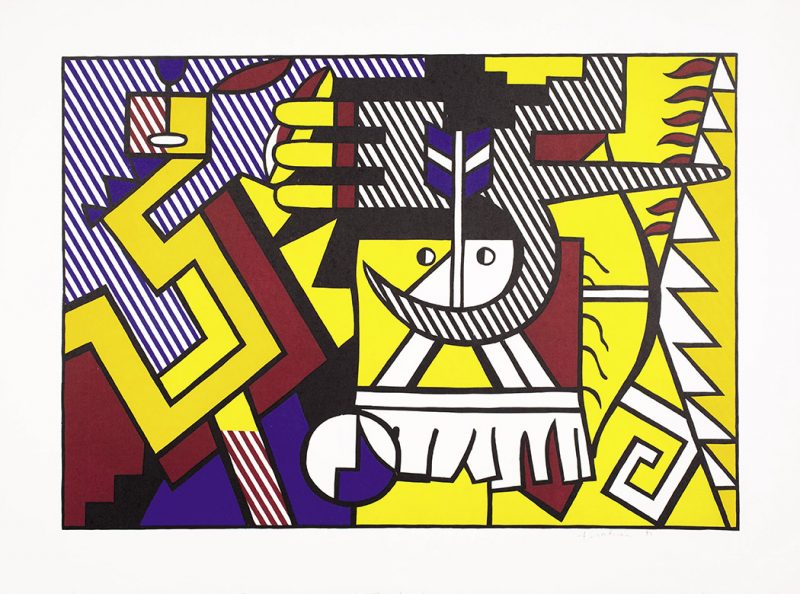
Around 100 works will be on display ranging from prints (including some large ones) to sculptures, tapestries, videos and photographs. The exhibition shows how elements from different cultures converge in his deconstruction and reconstruction of the image, which are then interpreted in pop art style through his own very personal language. His themes span early American history and the epic Far West, but also include avant-garde European art forms and the contemplative spirit of oriental landscapes.
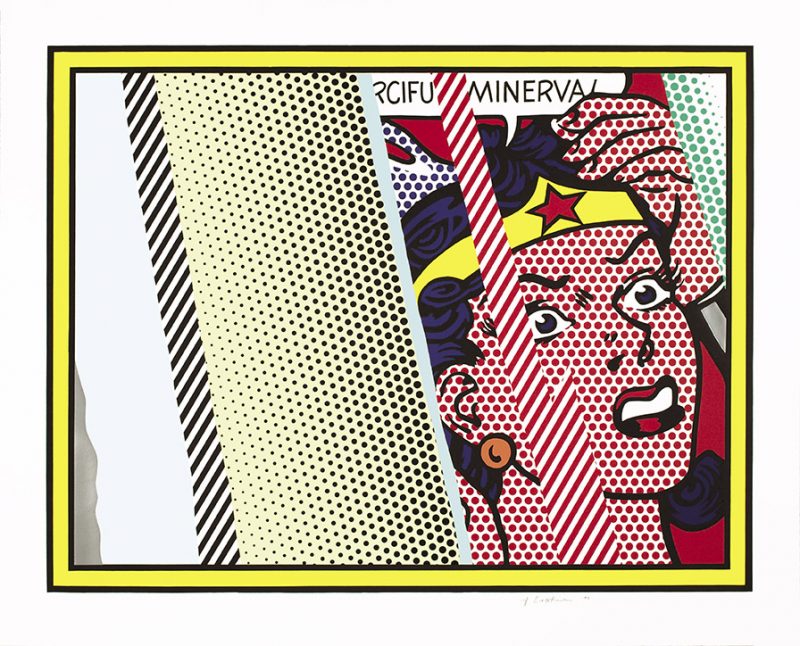
“All my subjects are always two-dimensional”, Lichtenstein commented, “or at least they come from two-dimensional sources. In other words, even if I’m painting a room, it’s an image of a room that I got from an ad in a phone book, which is a two-dimensional source”. Lichtenstein’s interiors are everyday environments, but ones which are inanimate, uninhabitable, almost metaphysical.
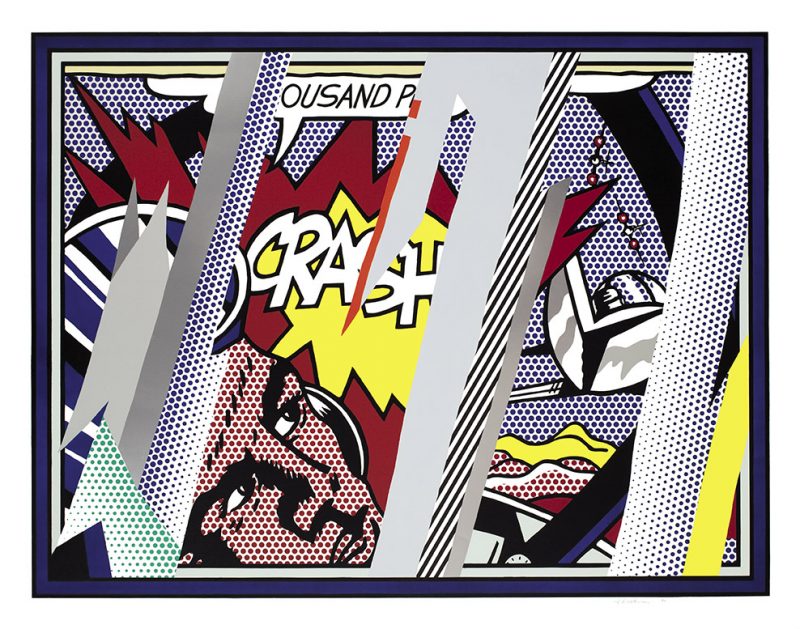
His early Sixties woman is inspired by adverts for cosmetics and household products. Seen as a happy housewife in an affluent material environment, she reflects the social stereotypes of the time. In the Seventies he made changes to the way he portrayed women, probably coming under the influence of feminism. Until 1977, the female figure was virtually absent from his work, but then she reappeared, seen through the lens of 20th century avant-garde masters, eventually becoming the sole theme of his work from 1994 and 1995 in his series of nudes. From 1963, Lichtenstein started to reinterpret typical themes and 20th century avant-garde masters. “I was doing comic strips and other commercial images and it simply came to me that I could do a Picasso, make something simple out of it, which I could use more or less in the same way that folk art objects can be used”. In this playful manner, Lichtenstein can be seen as a trail-blazer in the complex environment of the late 20th century, which would ultimately take shape as Postmodernism.
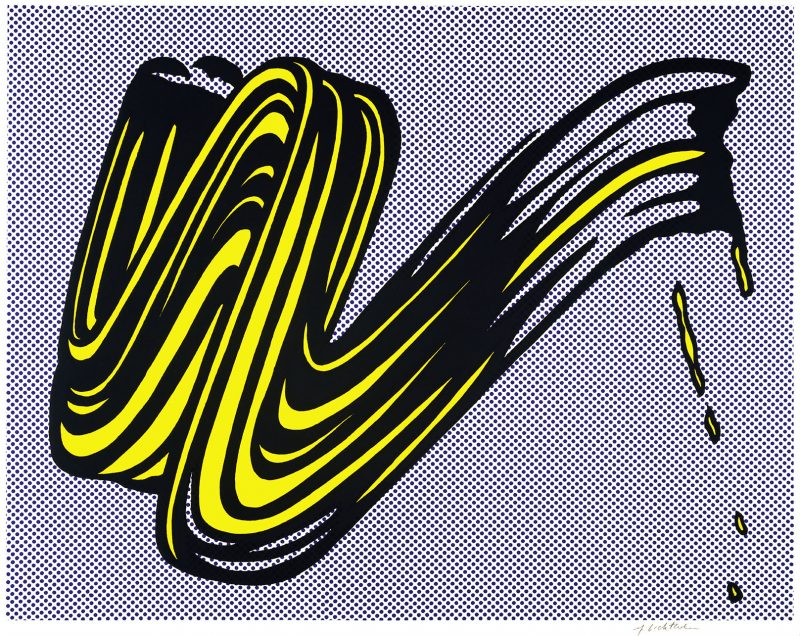
Roy Lichtenstein. Multiple Visions is curated by Gianni Mercurio and promoted by the Municipality of Milan-Culture and Gruppo 24 Ore, which is also producing the event.
Article edited by Claudia Chiari